Day 5
Saturday, June 27, 2026
Kruger — the private day
▶ Watch the videos from this day
| 05:00 | Up. A box of breakfast and coffee. |
|---|---|
| Dawn | Into the open vehicle. Just the three of us. |
| All day | Leopard. Lion. Buffalo. |
| Returning | The rest stop, and the rhinos with no horns. |
Five in the morning. A cardboard box with breakfast in it, and coffee, and the particular silence of a lodge that is not awake yet. And then the vehicle — and it was just us. The driver, Bonnie, and me. The Brazilians had their guide and their itinerary and their van. We had this man, an open jeep, and the whole day, which is the trade that a botched booking had accidentally handed us.
Cold
I need to explain about the cold, because I got it wrong, and I got it wrong on the one morning it mattered. I left my raincoat at the lodge. It is not a warm coat — it is a shell, a thin nylon thing — and I looked at it and thought: it is not going to rain, so what is the point. What I had failed to understand is that a raincoat is a windbreaker, and that the difference between a windbreaker and no windbreaker, at dawn, in an open vehicle, in June, in the southern hemisphere, is the difference between a chilly morning and a genuine ordeal. The vehicle is open on purpose. That is the entire design: no glass, no roof, no sides, nothing between you and the animal — which is exactly what you want in the moment there is an animal. It is not what you want for the forty minutes of driving between animals at twenty to forty kilometers an hour, when the air comes through the vehicle like it has somewhere to be, and goes through a fleece as though the fleece were a rumor. He gave us a blanket. God bless that man for the blanket. It helped the way a blanket helps, which is to say it moved the problem around rather than solving it.
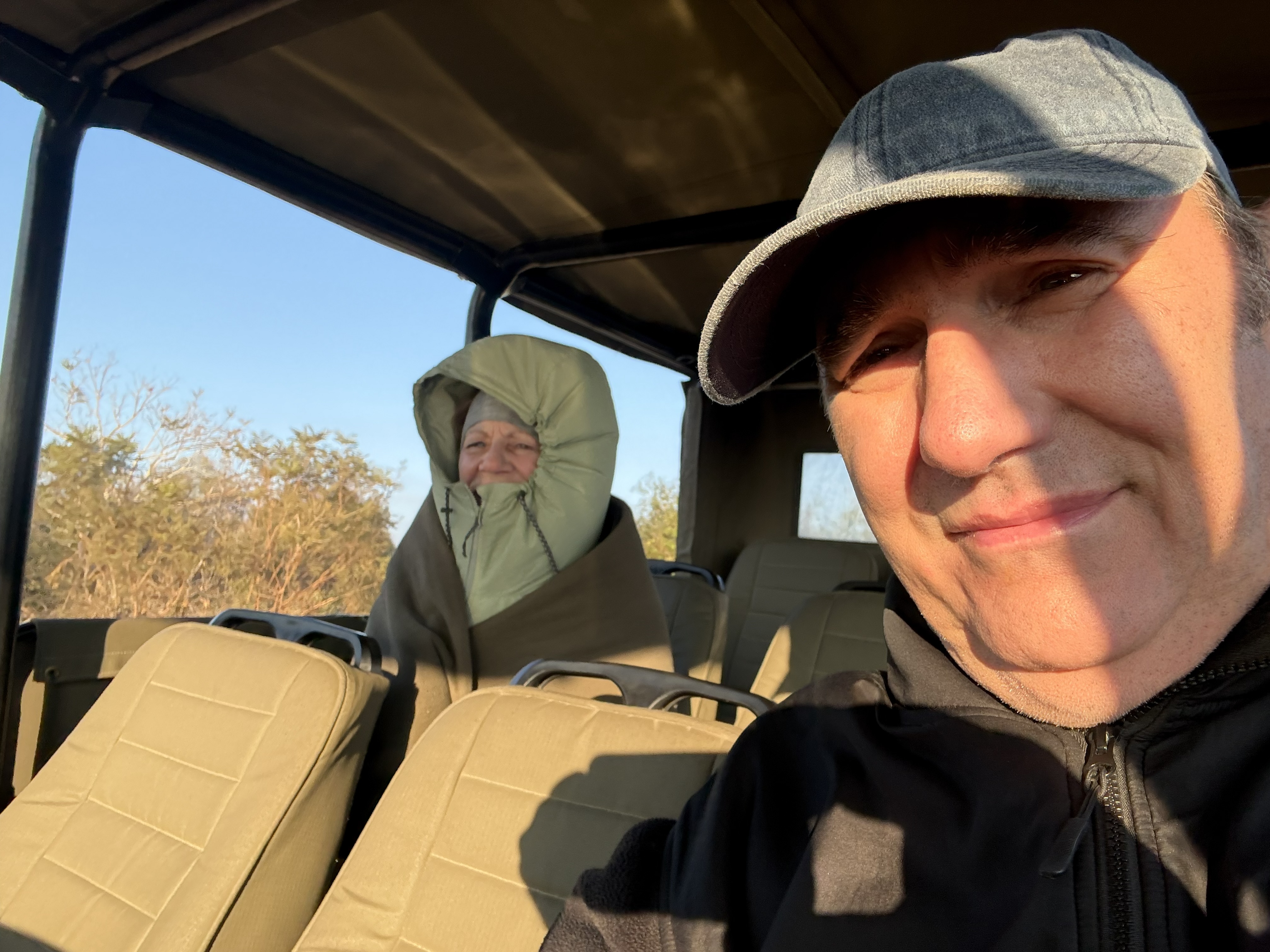
Nobody photographs this part for the brochure. The brochure photograph is taken at eleven o'clock, when the sun is up and the fleeces are off and there is a leopard in the frame. Nobody photographs two people at dawn under a blanket, gray-faced, having made a serious error of judgment about a coat.
The Leopard
Everybody wants to see a leopard. Almost nobody does. They are solitary, largely nocturnal, and superbly camouflaged, and they spend a great deal of their lives being a pattern of light and shadow in a tree you are looking directly at without seeing. Guides talk about them the way people talk about lottery tickets. We found one. I want to be honest about what “found” means, because it was not the photograph in your head — no leopard draped along a branch in golden light with its tail hanging down. We saw it walking, a few seconds at a time, before the brush closed over it again. The driver would reposition, and we would get another couple of seconds of it moving through the cover, and then lose it. We did that three or four times. We never got a good, long look — but once or twice I managed to snap a recognizable picture.
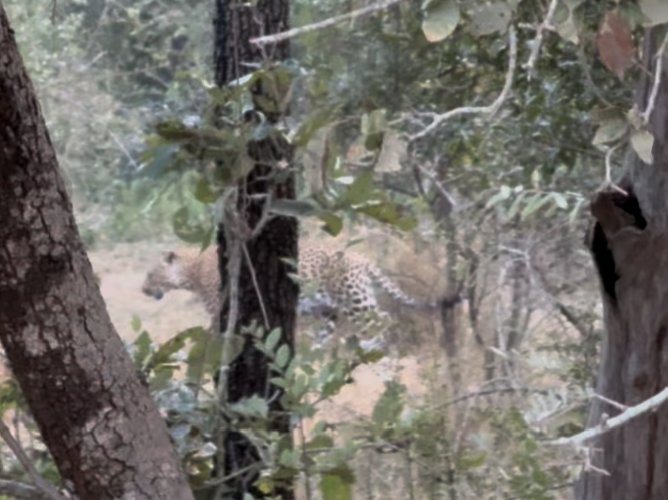
That is what seeing a leopard usually is: a few seconds of it at a time, and never quite enough.
Lion. Buffalo. Everything Else.
And then the day simply kept giving.
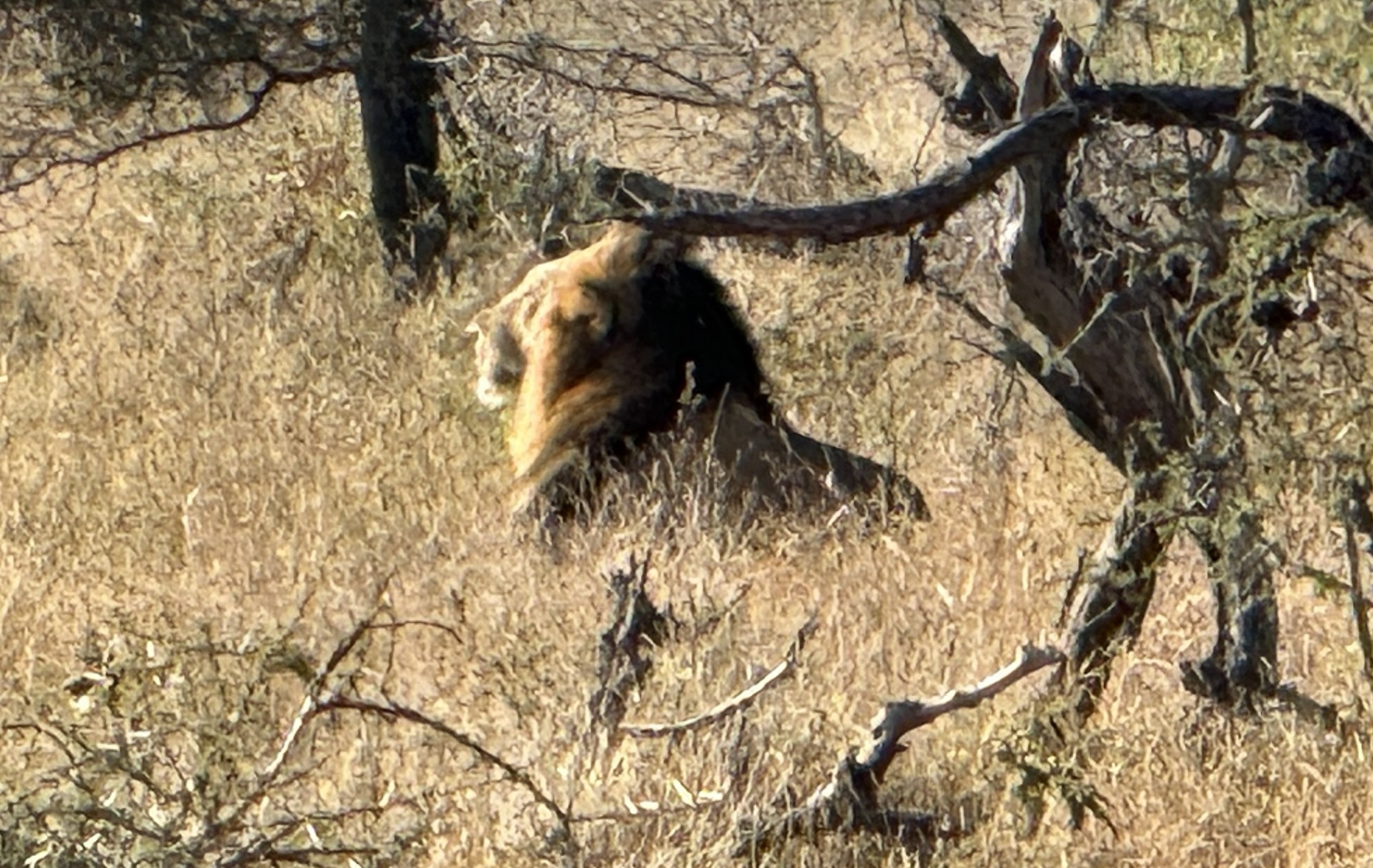
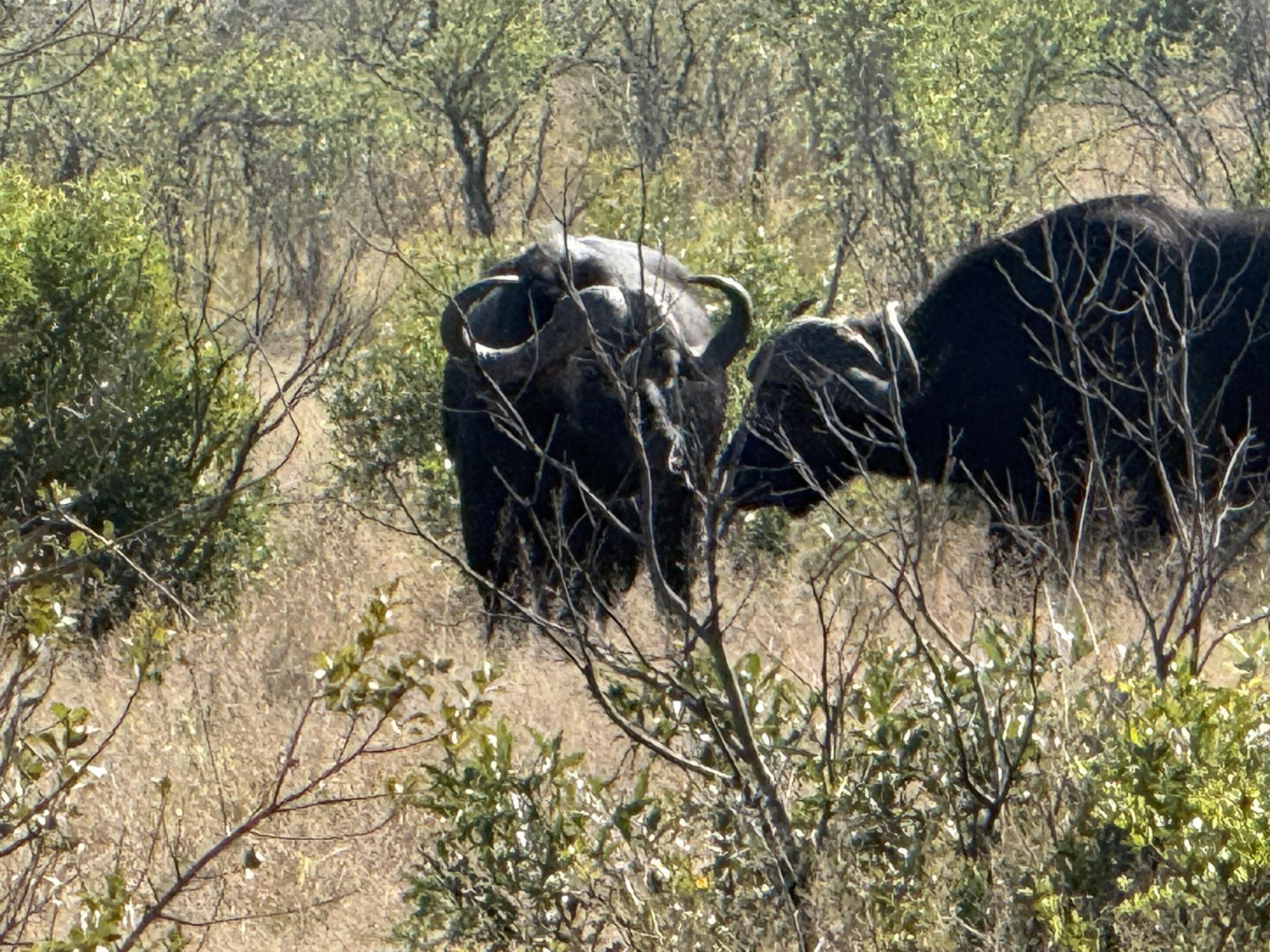
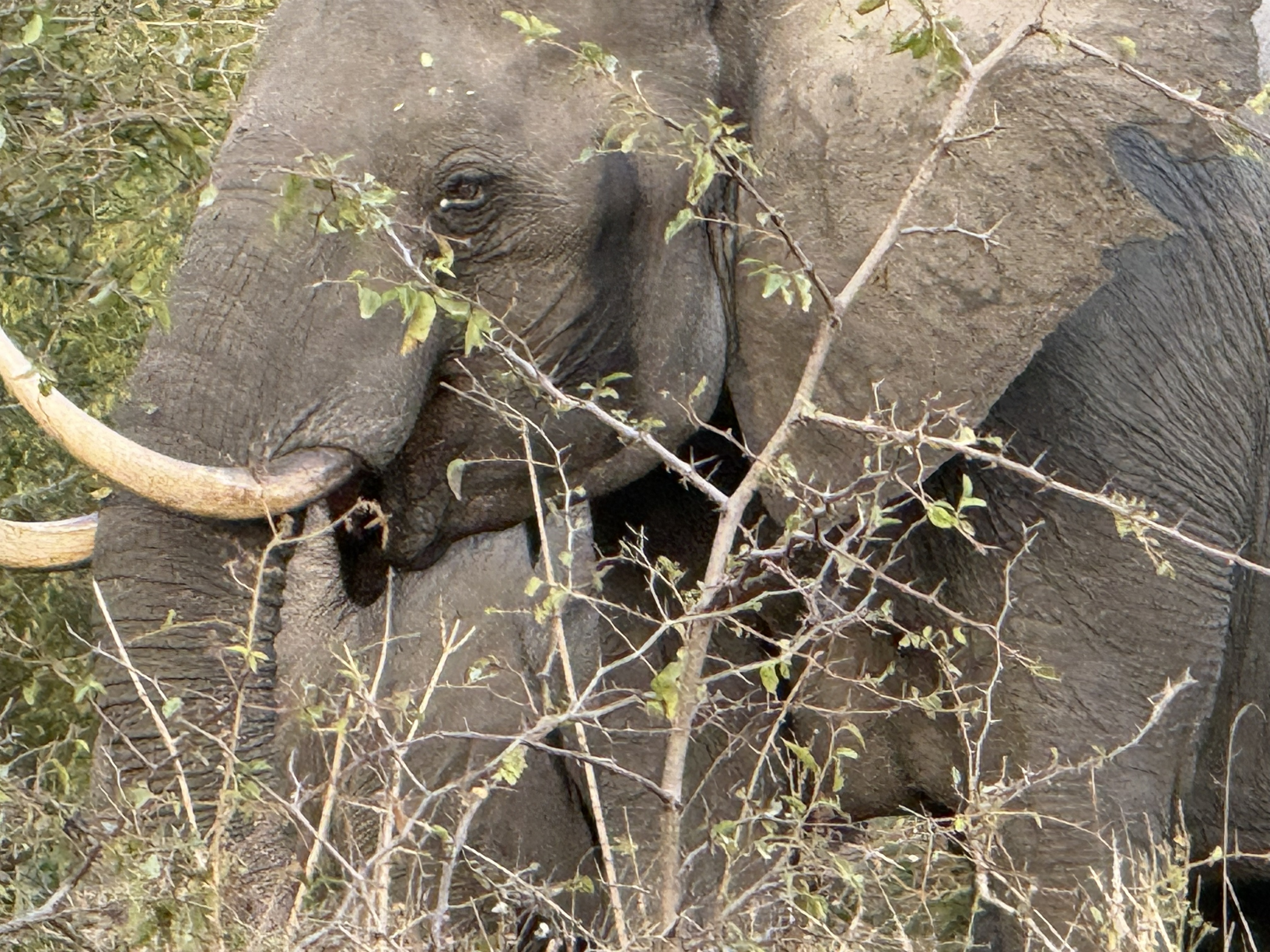
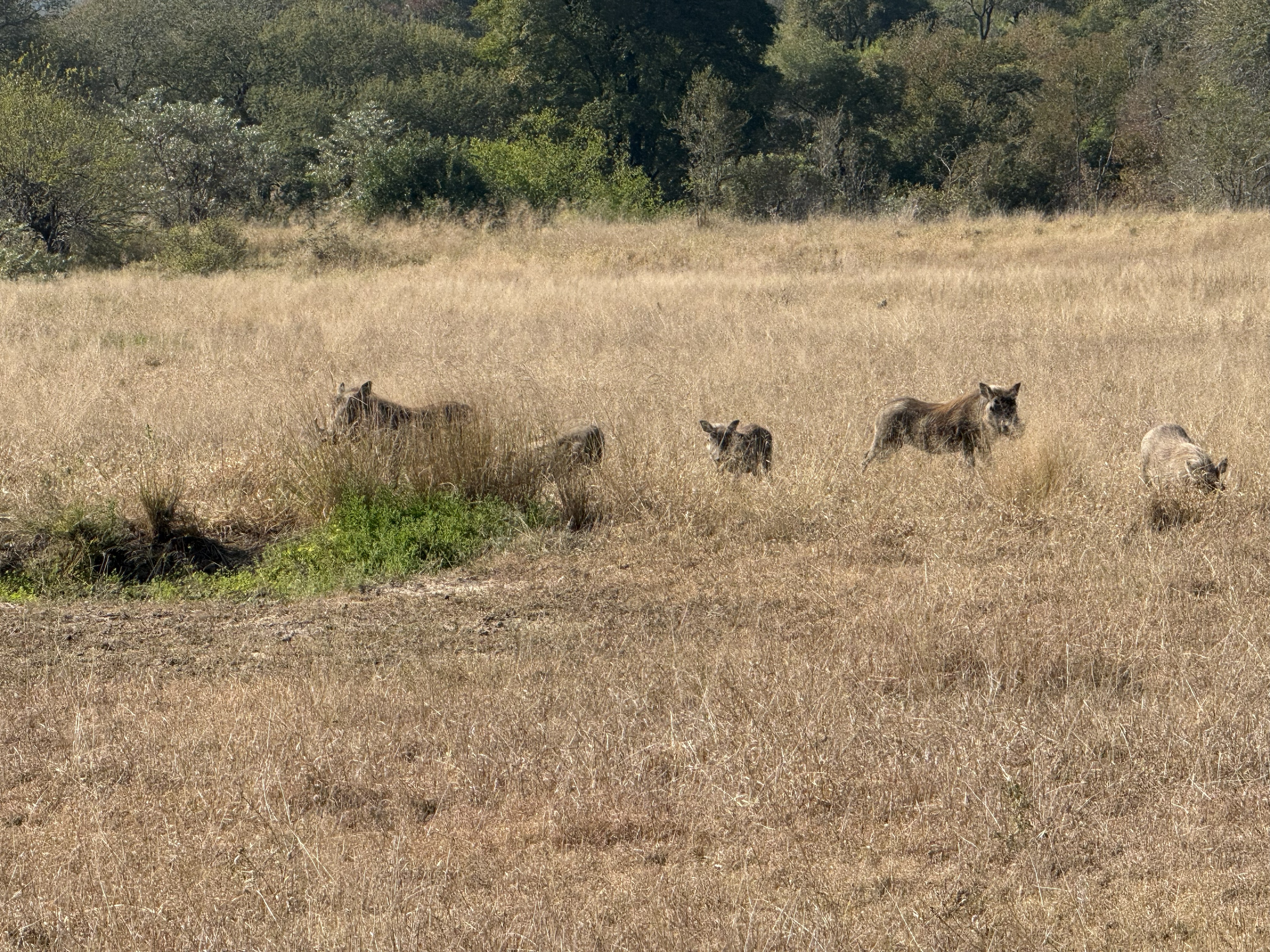
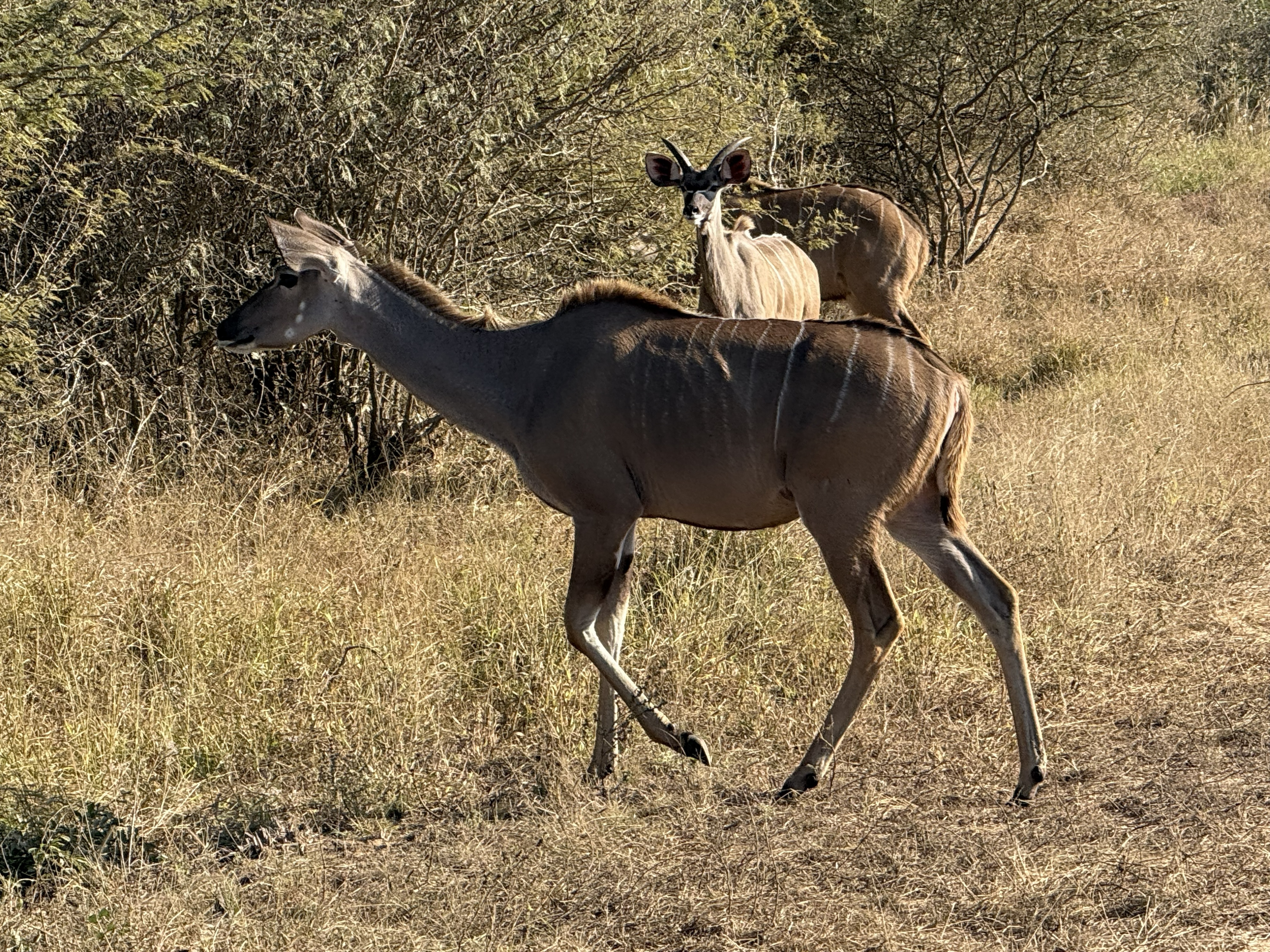
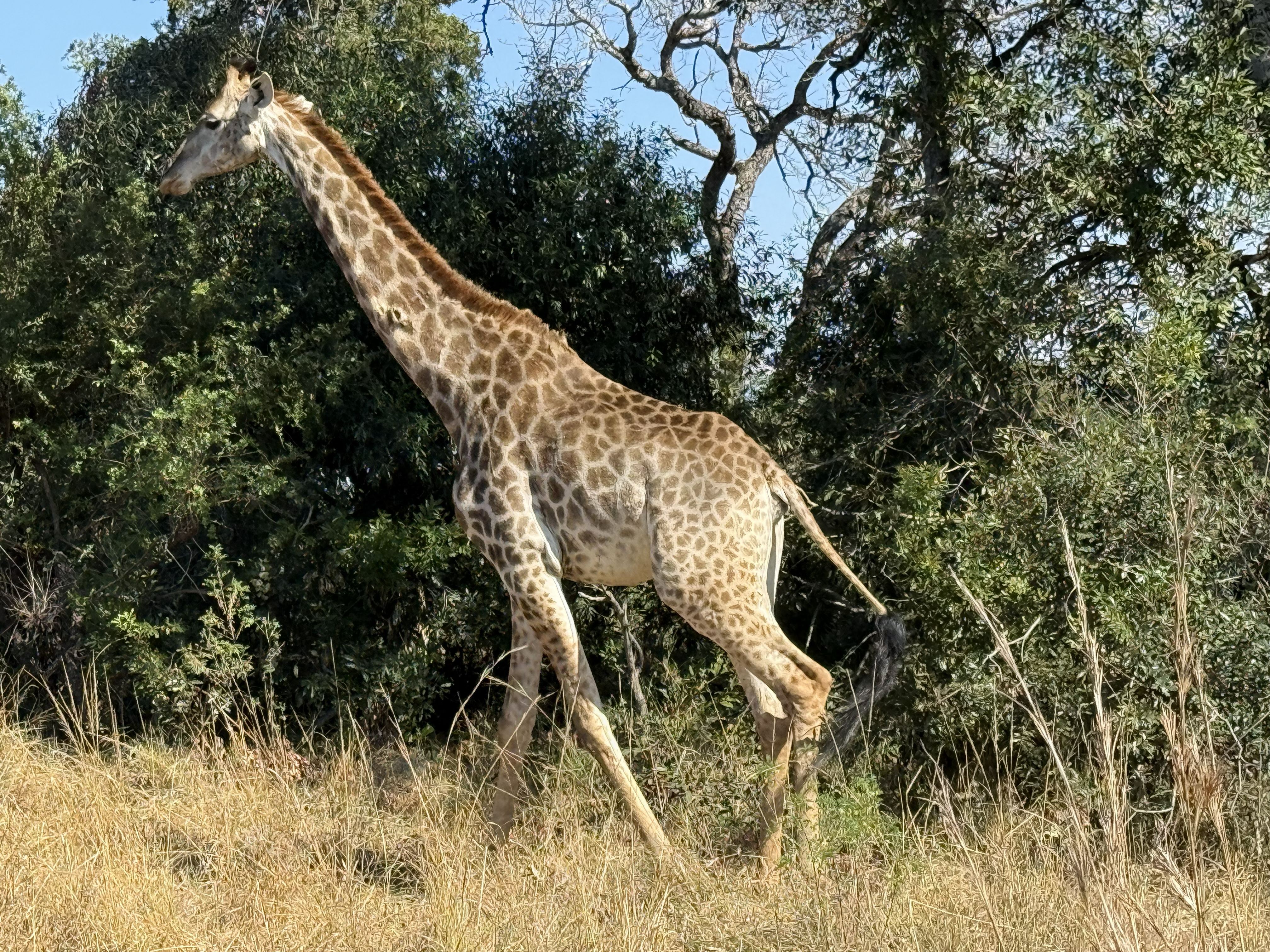
Ask anybody who works in the bush which animal actually frightens them, and a surprising number will say buffalo, and say it quickly. It is the flat, unbothered, entirely unreadable stare that does it — an animal with no visible opinion about you, right up until it has one. With the elephants from the day before, that made four of the Big Five in thirty-six hours — on a budget two-day tour we had bolted onto the front of somebody else's itinerary.
The Rhinos with No Horns
On the way back we stopped again at the roadside place — the one with the coffee and the snakes and the pen out the back. This time we got out and photographed the rhinos properly. Because by now we understood something we had not understood on the way in: this was it. This was the rhino. Kruger had given us leopard, lion, buffalo, and elephant — and had not given us, and would not give us, and, as it turned out, nowhere else on this entire trip would give us, a wild rhinoceros.
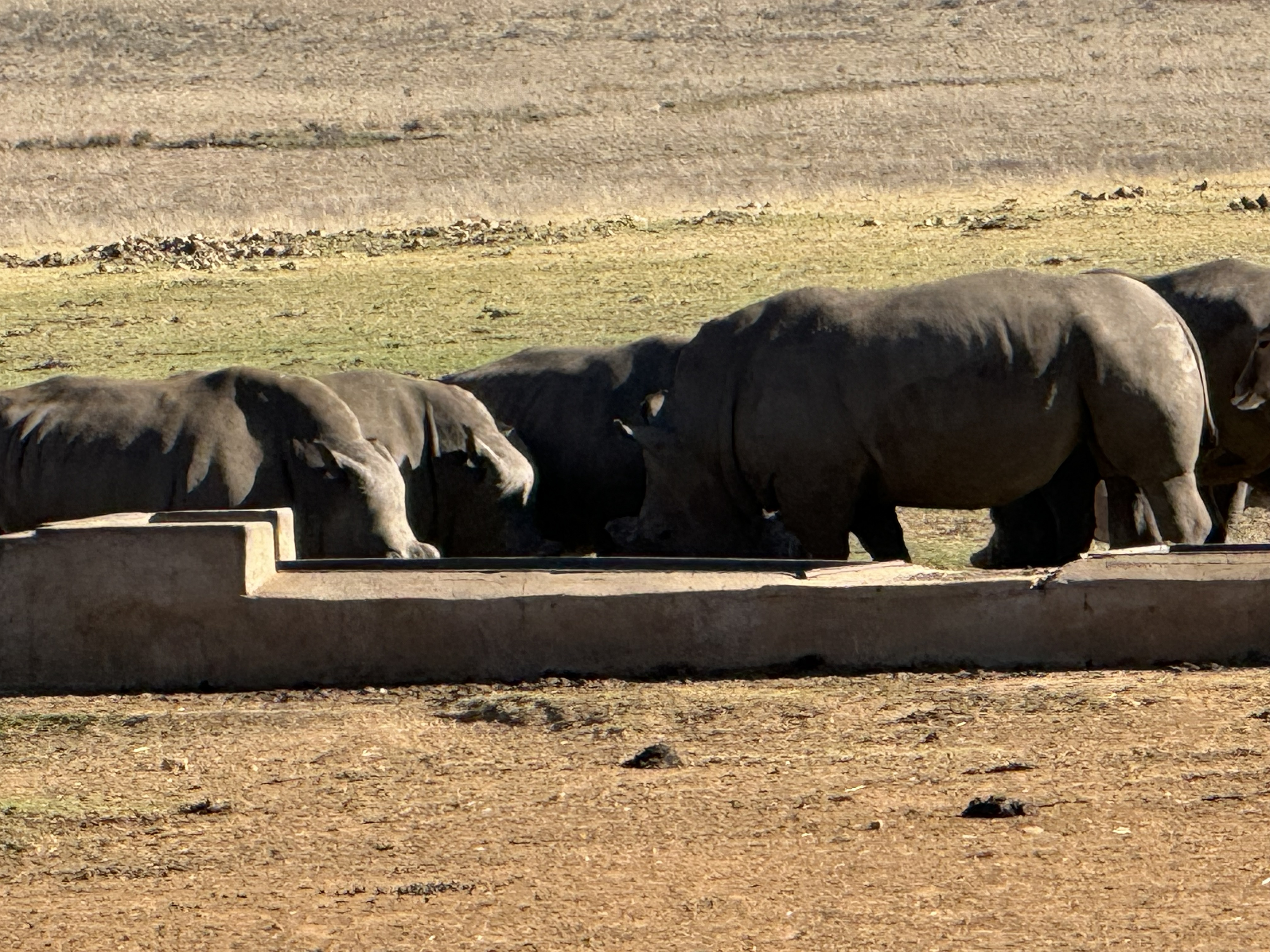
Look closely at them. They have no horns. The horns have been cut off — deliberately, by the people trying to protect them — because a rhinoceros with a horn is worth killing and a rhinoceros without one is mostly not.
Four of the Big Five in the wild — and the fifth in a pen, with its horn cut off, for its own protection.
The honest summary of a very good day
And then the driver bought us lunch, at that same stop, and would not let us pay — which was correct, because it turned out to be one of the two lunches the voucher had promised all along. The document that could not decide whether we were getting dinner was, on this point, entirely reliable.
Sandton
And then we drove to Johannesburg, and he dropped us at the Garden Court Sandton City — corner of West and Maude — which is where the tour began. That is the strange geometry of this day. It started at five in the morning in an open jeep with a man whose name was on no document we possessed, and it ended in a lobby in Sandton, checking into a hotel with a group of people we had not yet met, about to spend three weeks with them. Everything up to this point had been ours: the flights I booked, the guest house Bonnie found, the walk across Cape Town, the accidental private safari. From the moment we picked up that room key, we were on somebody else's itinerary.
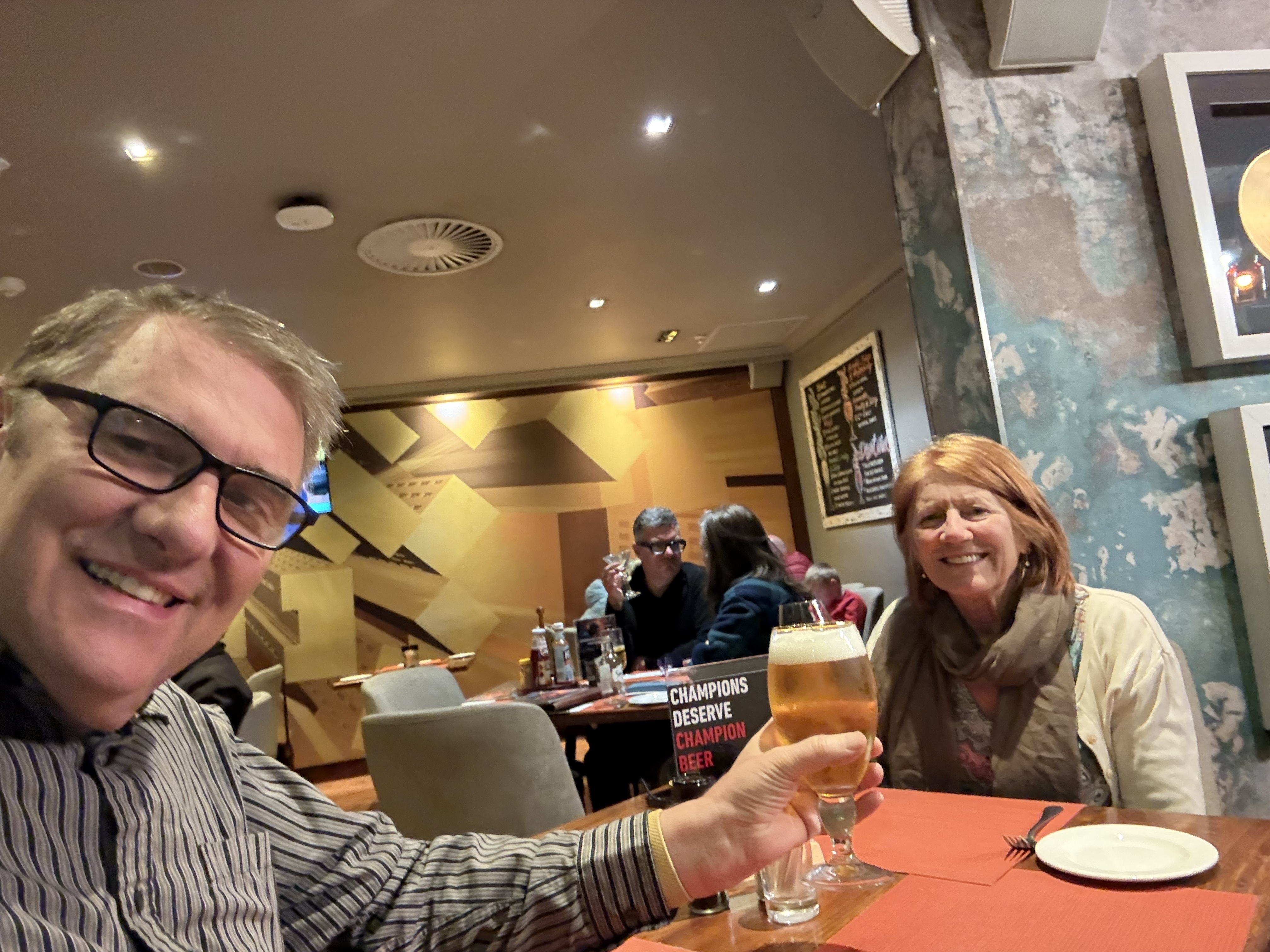
We had been in Africa for four days and had already seen four of the Big Five. The tour had not started yet.