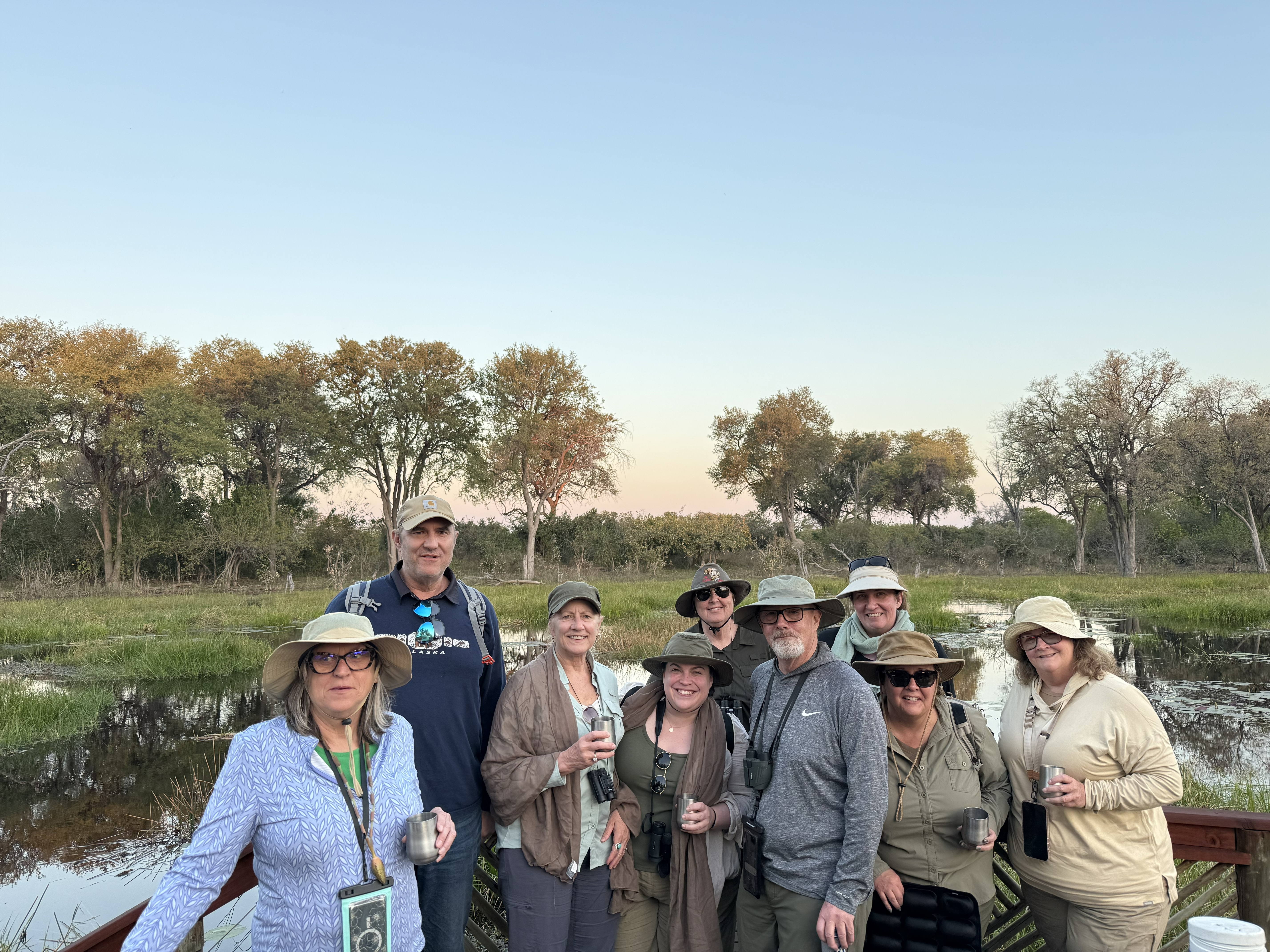
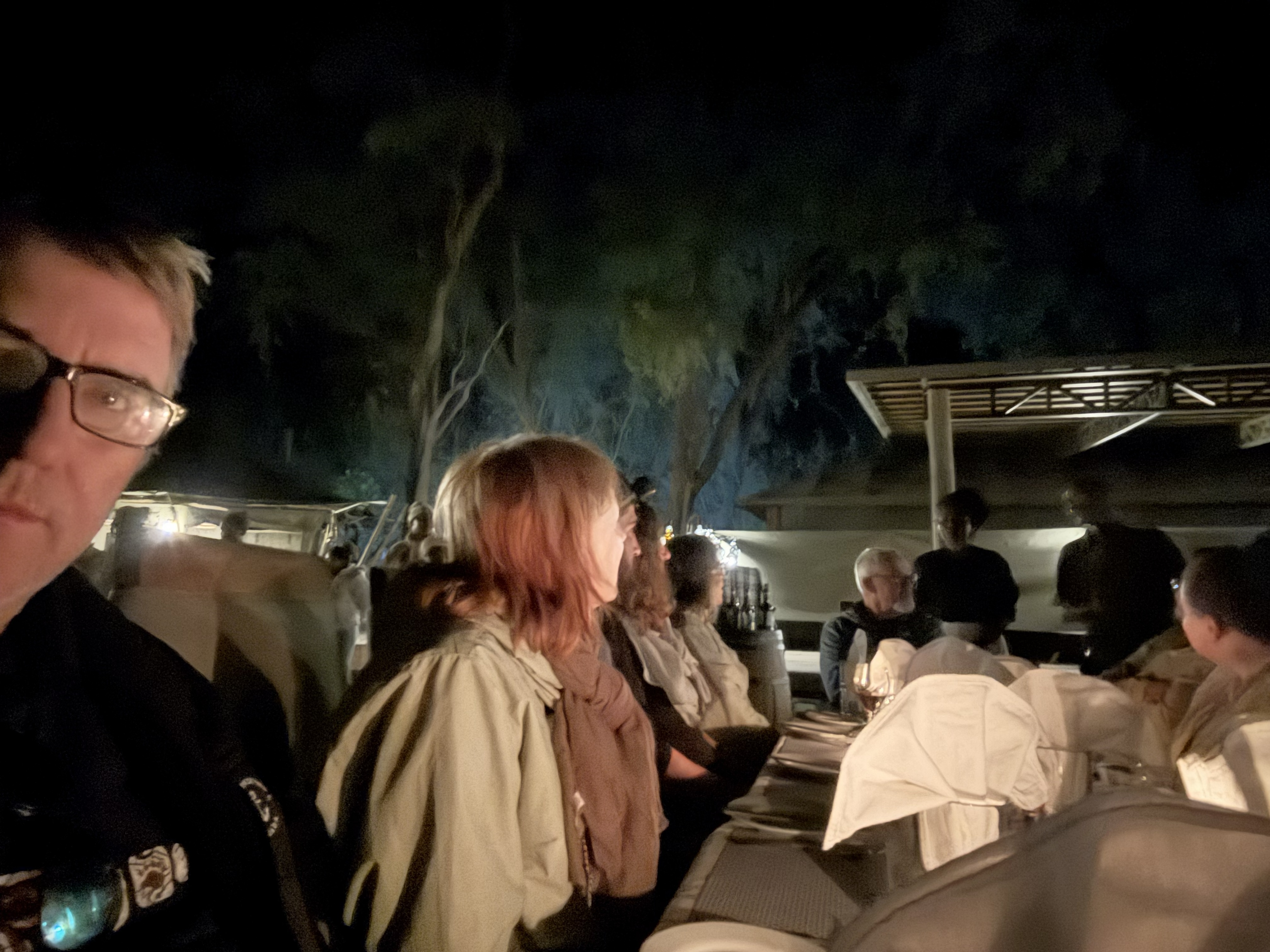
Day 14
Monday, July 6, 2026
An easy morning, a dugout afternoon, and hippos who'd had enough
▶ Watch the videos from this day
| Morning | The usual cast. Dylan wanted a plot; we got none. |
|---|---|
| A giraffe I spotted — Obert has a reputation. | |
| Afternoon | Mokoro through the reeds. |
| Hippos, thoroughly unamused. | |
| Evening | Gin and tonics, and home for dinner. |
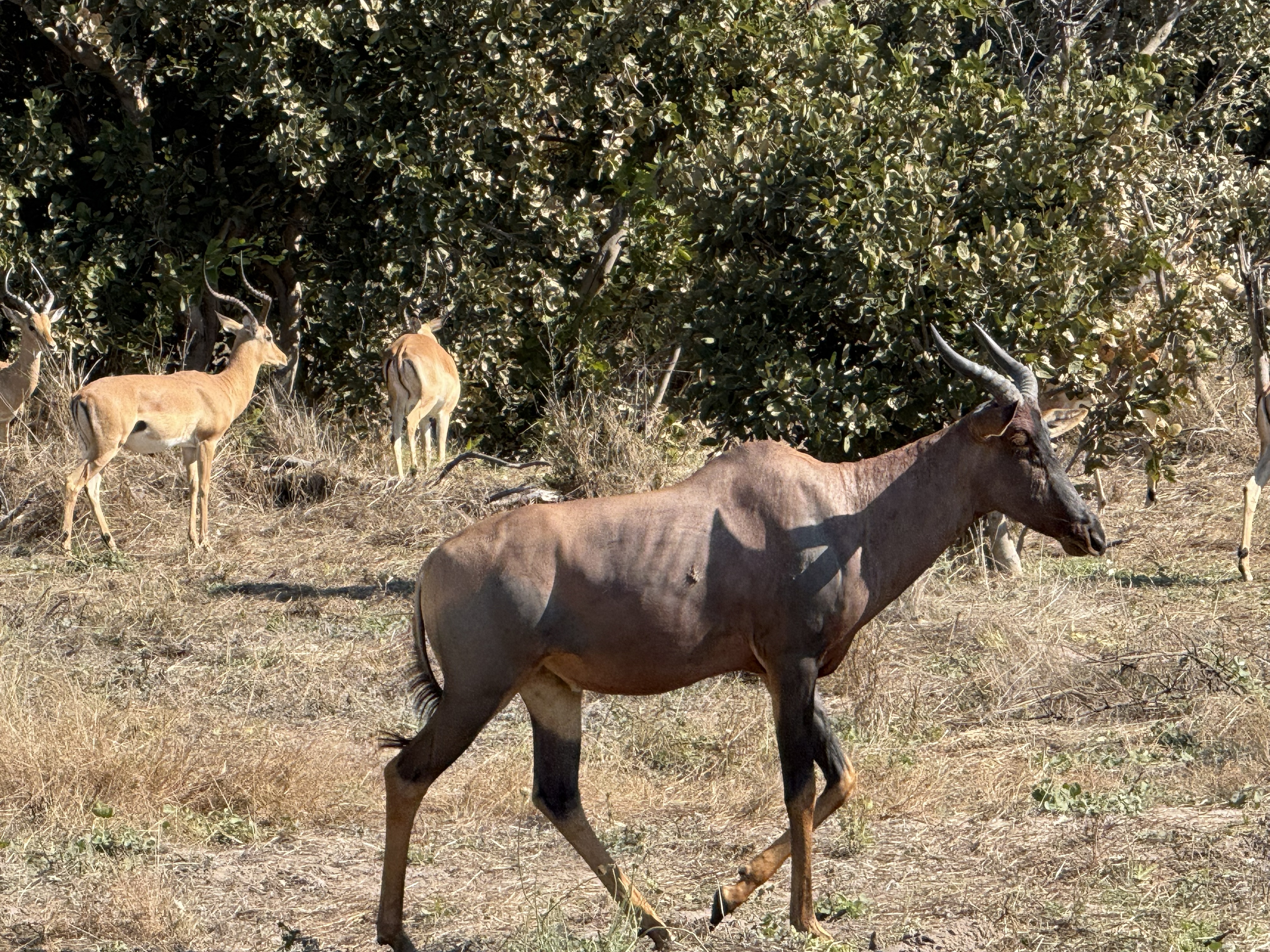
After the day before, almost anything would have felt quiet, and this one duly obliged. Not every day on safari is a crescendo — it would be an exhausting trip if it were — and July the sixth was the kind of easy, pleasant, largely uneventful day that a good safari needs in order to catch its breath. Dylan, over breakfast, set the day's ambition anyway. We had, he pointed out, essentially seen the whole cast by now — every animal on anyone's list, including the two I had spent eleven days begging for. What we wanted now was interactions: a hunt, a chase, some drama between the animals rather than just the animals standing around being photogenic. Paul had been campaigning for this for days — he wanted, specifically, to see a kill, and he was not shy about saying so — and I will admit I was curious too. Rhinos were off the table — there was simply no hope of them here — so we set out hoping, in effect, for a plot instead of a cast.
We did not get one. The animals turned up, posed beautifully, and did nothing whatsoever to each other. Paul raised the matter again more than once as the morning wore on, in steadily blunter terms; the animals ignored him too.
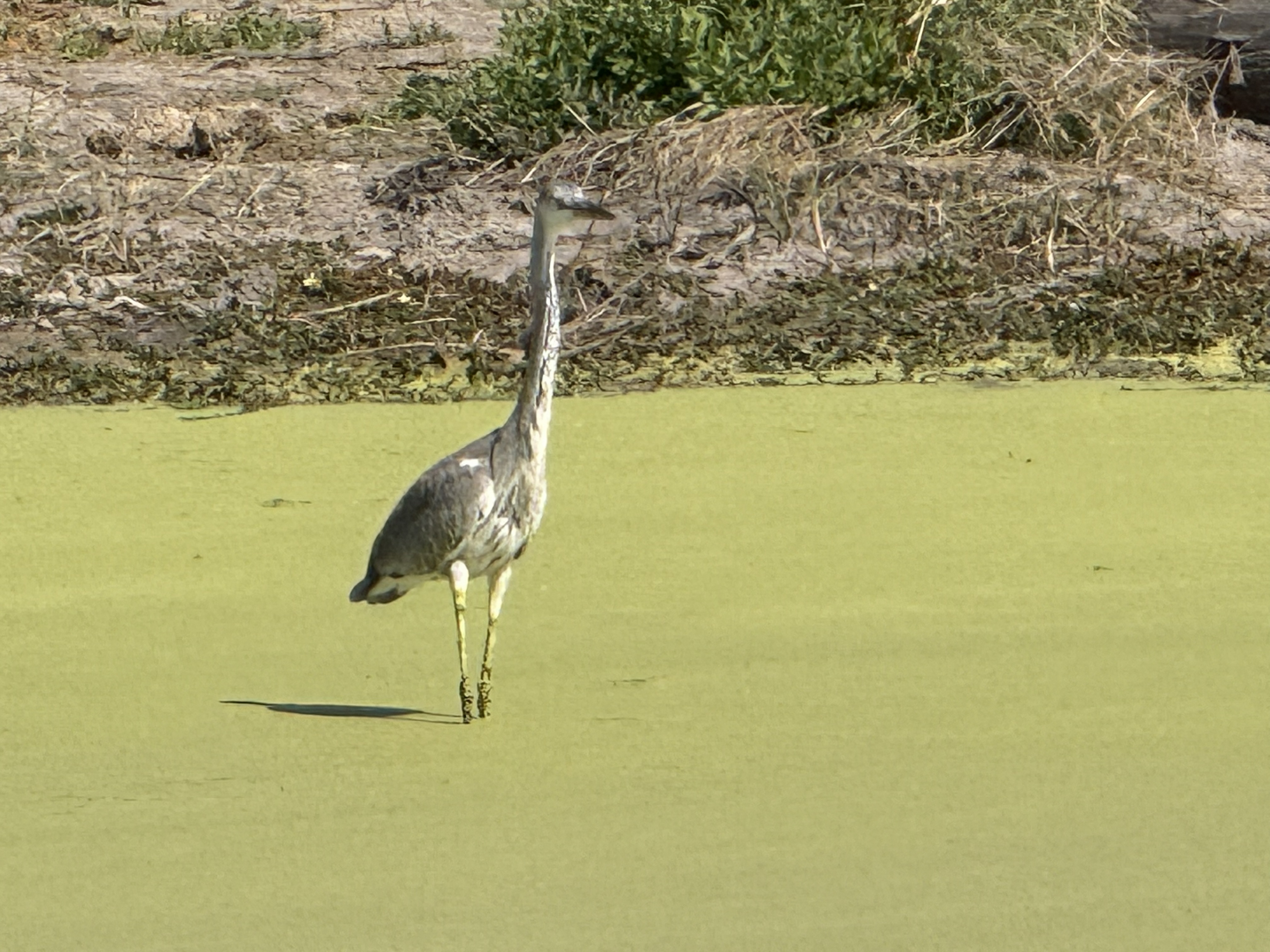
The Usual Cast
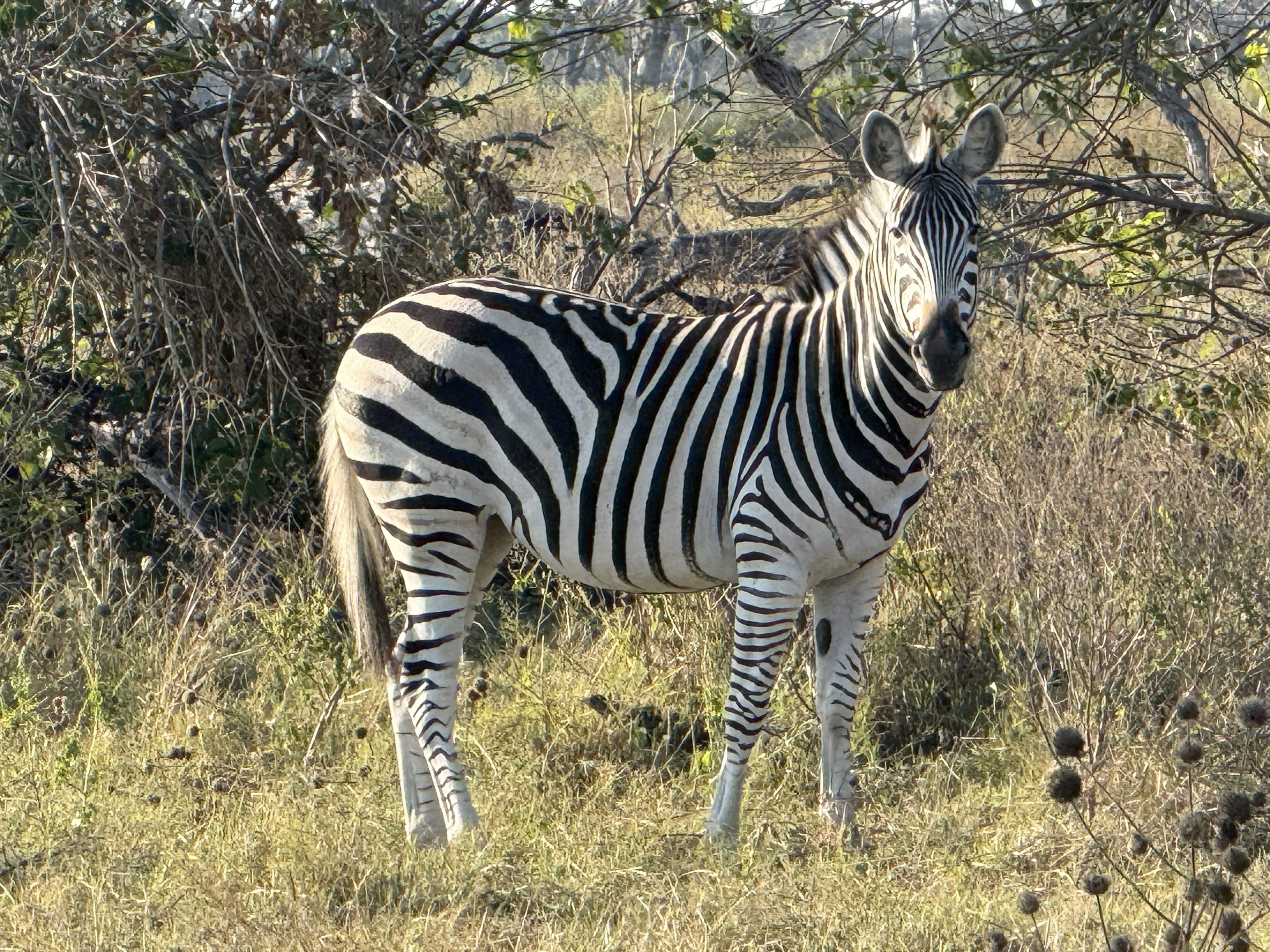
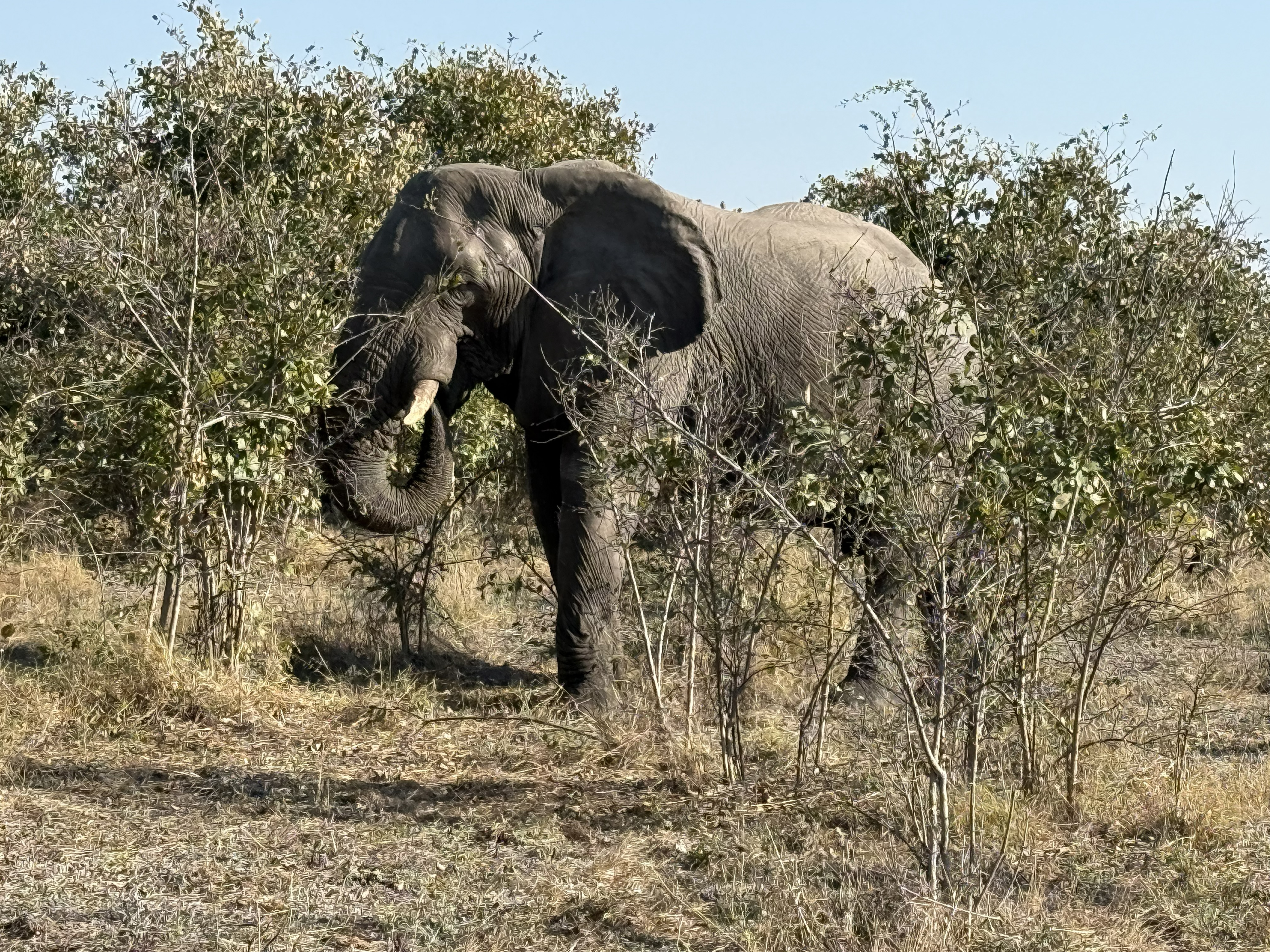
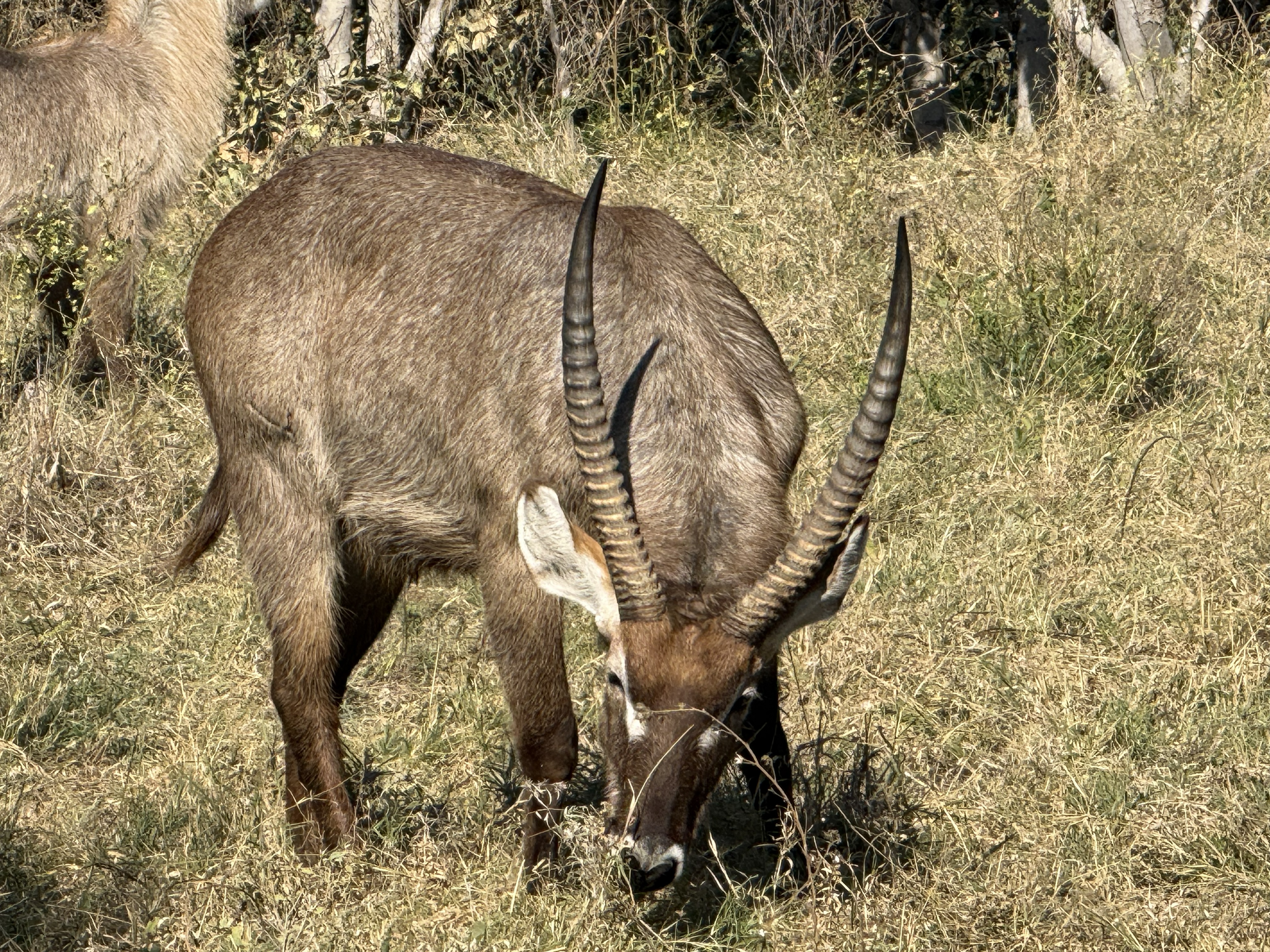
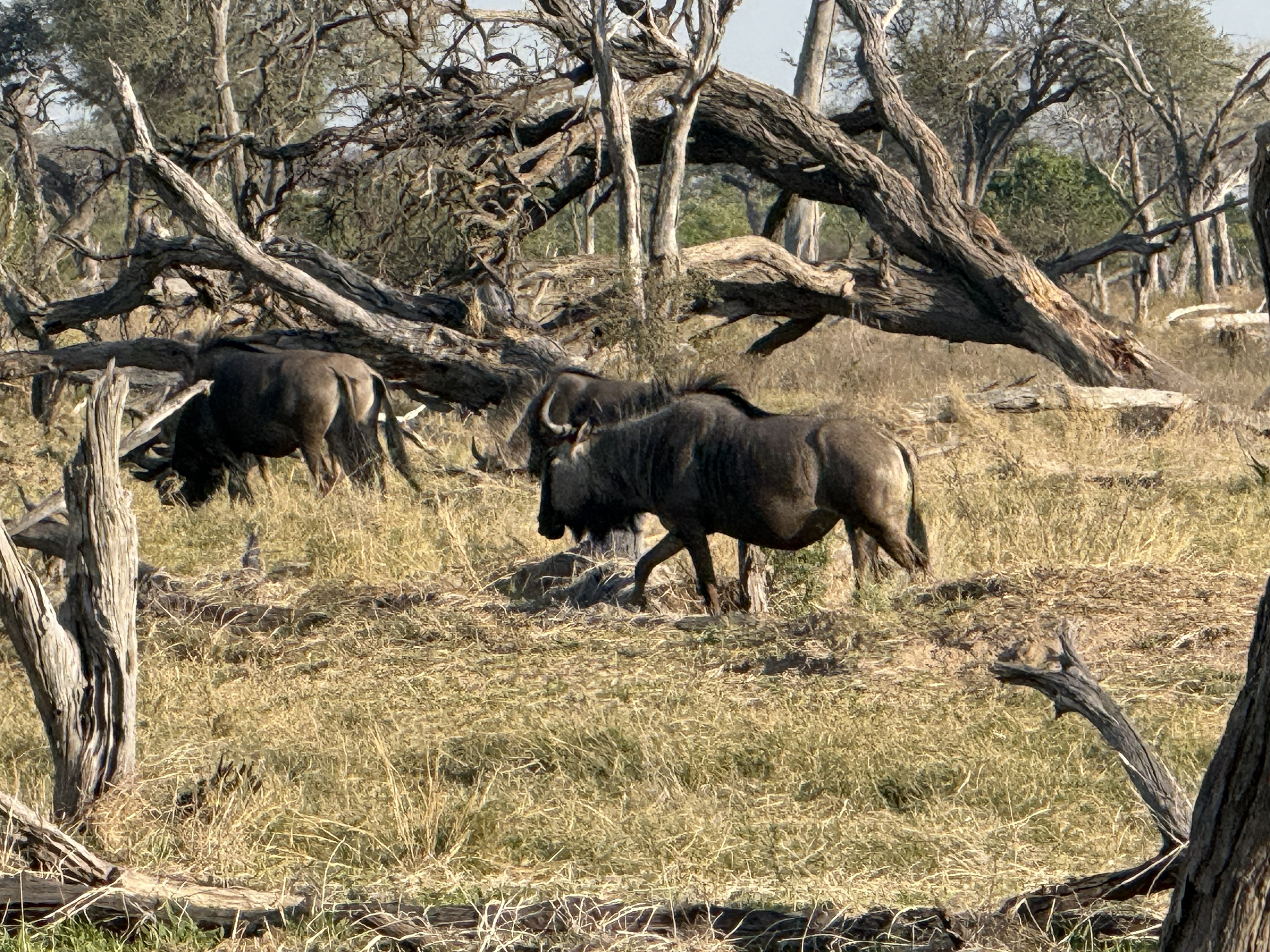
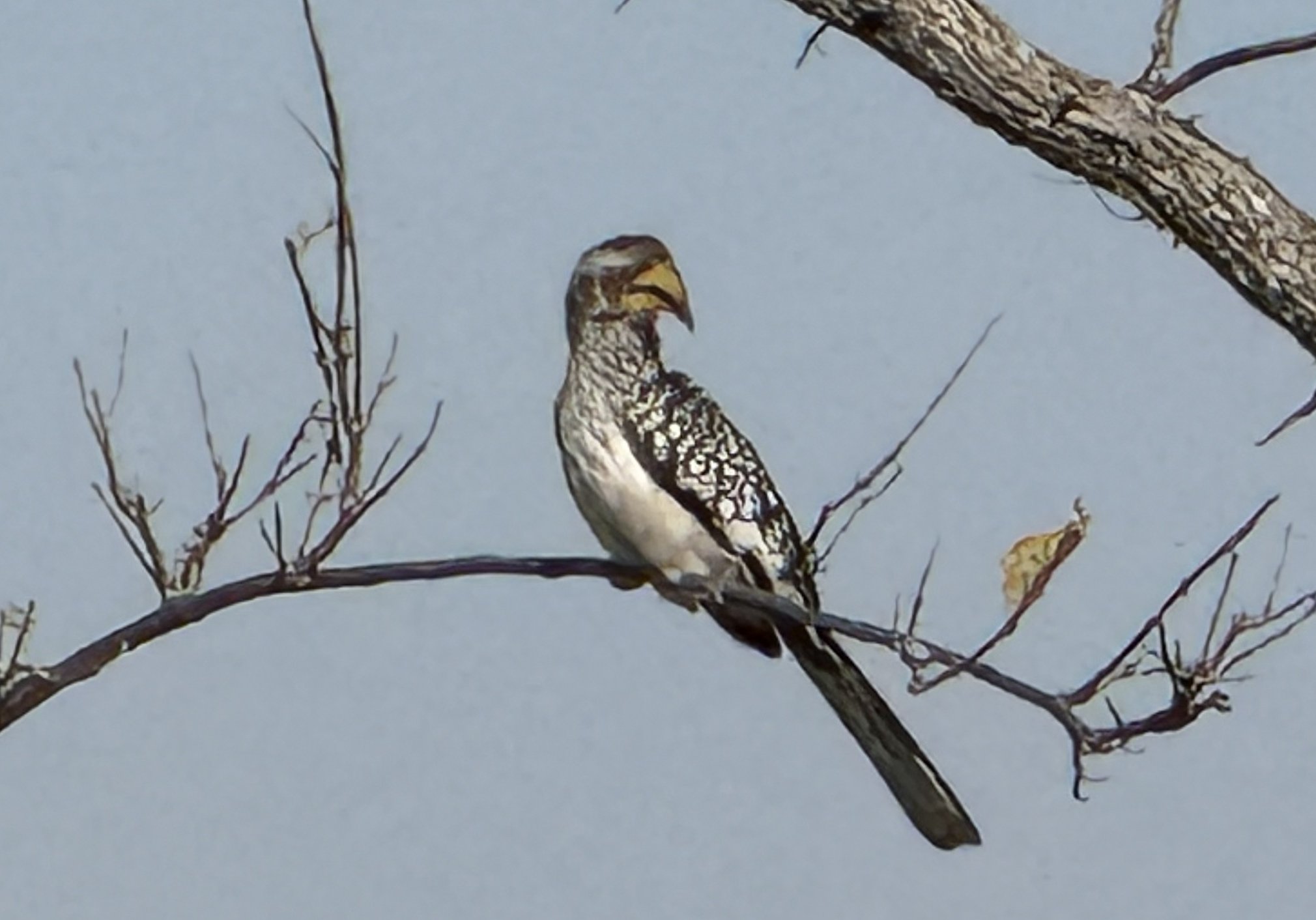
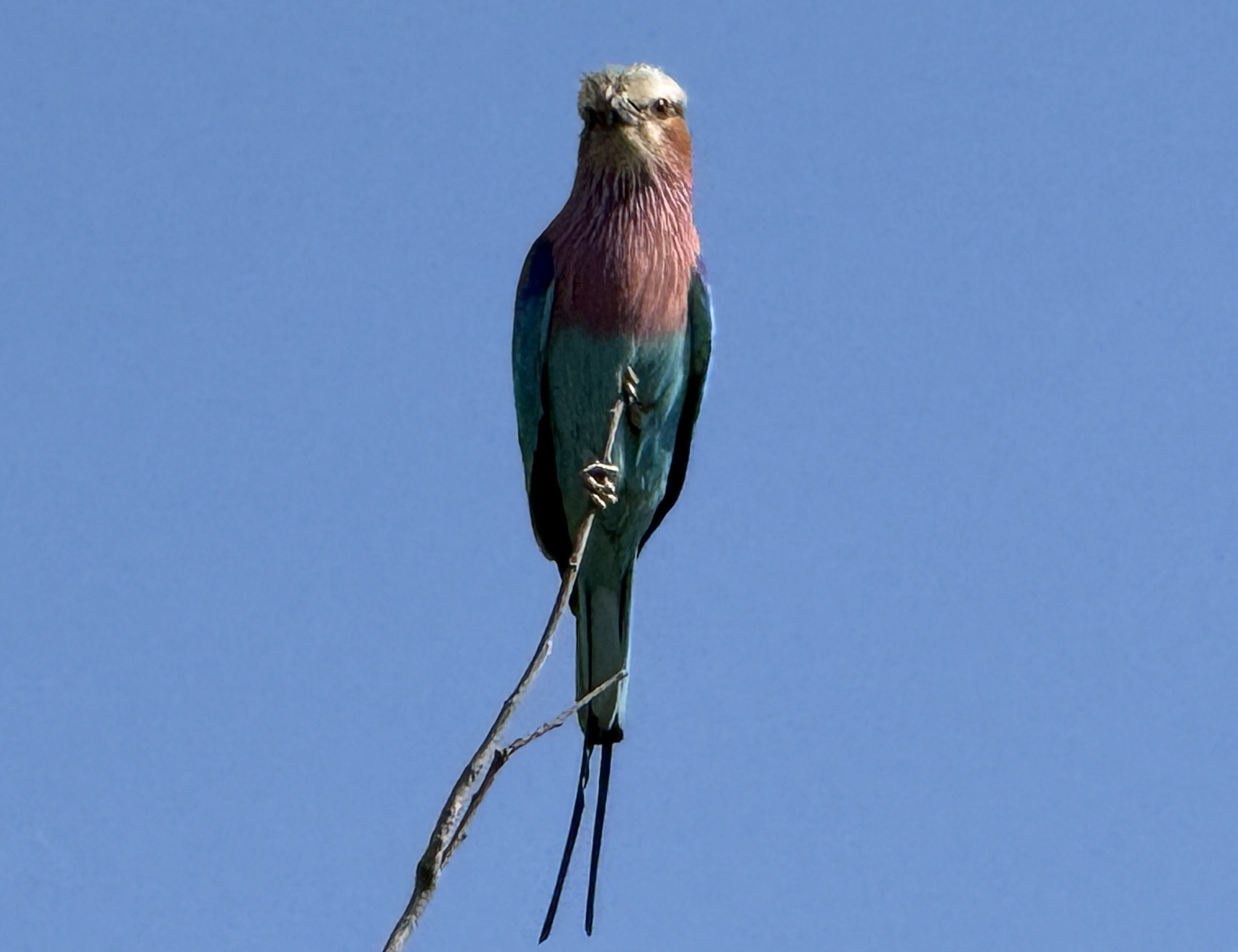
Then the birds, which on a quiet day become the main event.
Obert's Reputation
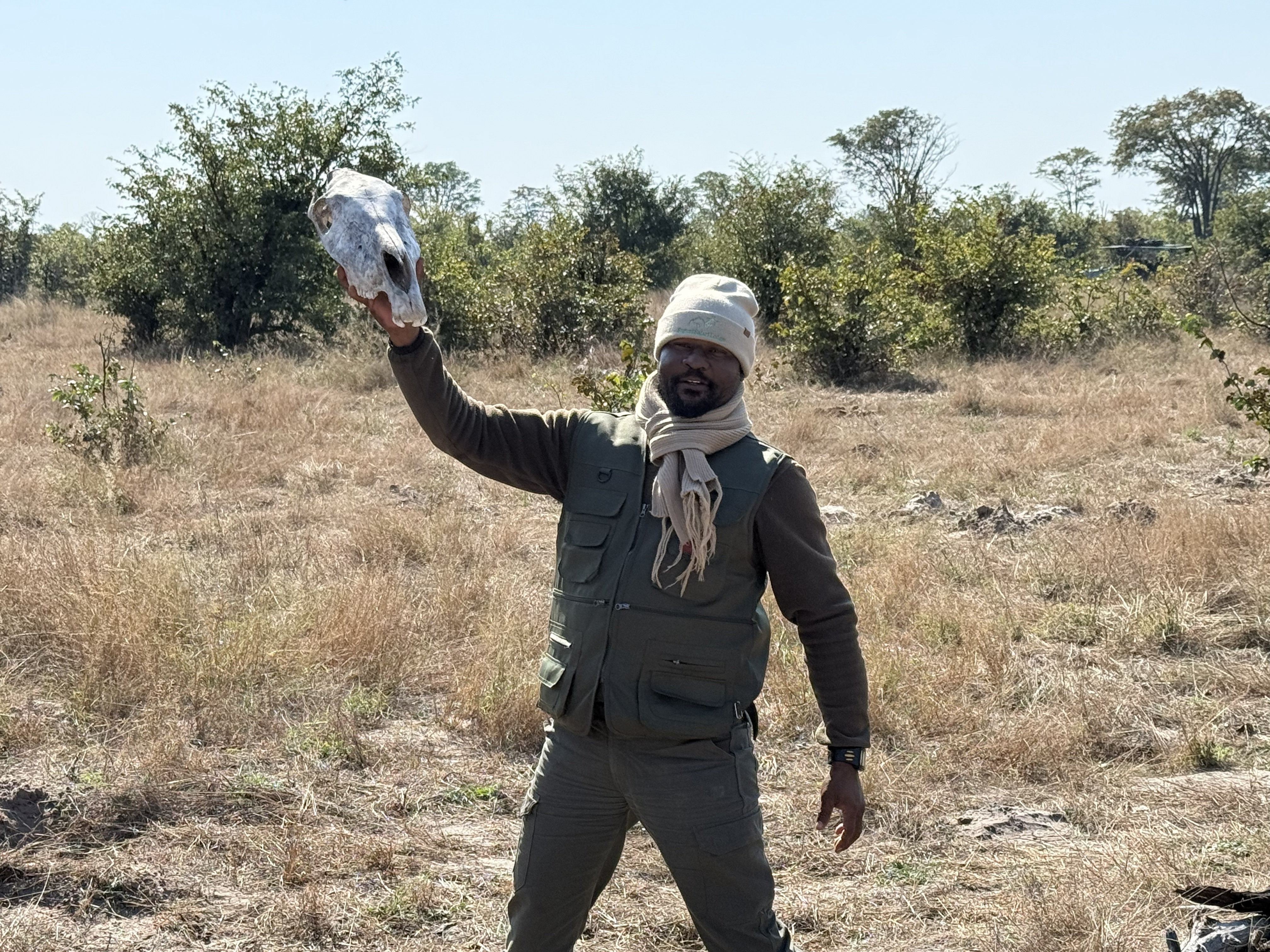
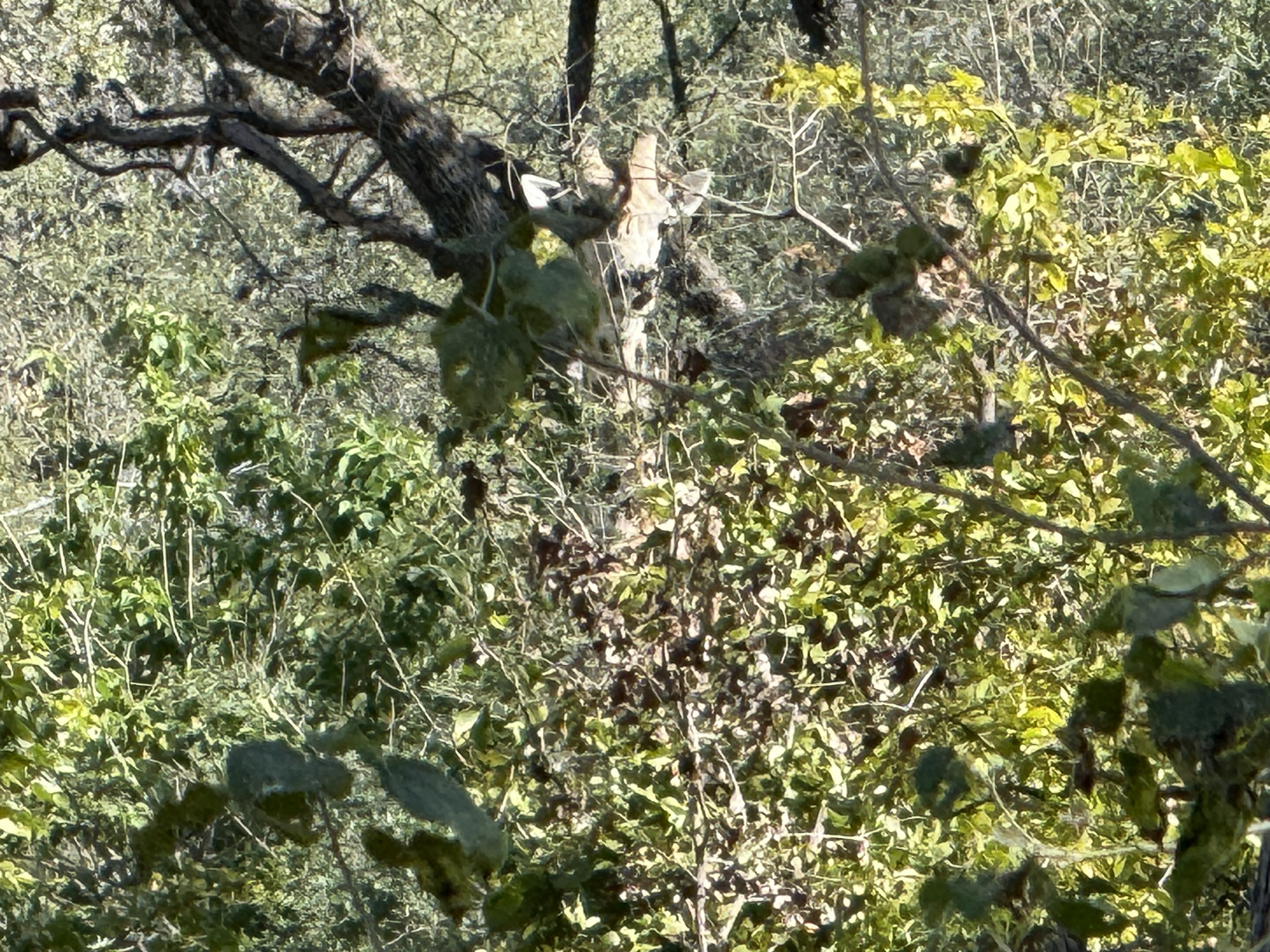
Two small human moments made the morning. First, Obert produced a zebra skull from somewhere and held it up for us — the kind of roadside relic the guides collect and the guests, Paul especially, covet. And then I spotted a giraffe. It was half-buried in the bush, barely more than a pattern of shadow and neck, and I called it before Obert did — or at least I said so first. He congratulated me, generously, on the good eyes. And then, entirely deadpan, he laid down the rule for the rest of the trip: I was welcome to find all the giraffes I liked, but I was not, under any circumstances, to spot the leopard before he did. He had a reputation to protect.
The Mokoro
The afternoon was given over to the mokoro: the shallow dugout canoe that is the Delta's oldest way of getting about, one passenger sitting low in the hull and one poler standing at the stern, pushing you through the reeds with a long pole. Obert stayed ashore — on the water you get a different man, one to a canoe — and for a while it is the most peaceful thing imaginable, silent and low and gliding, the papyrus sliding past at eye level. Right up until the hippos.
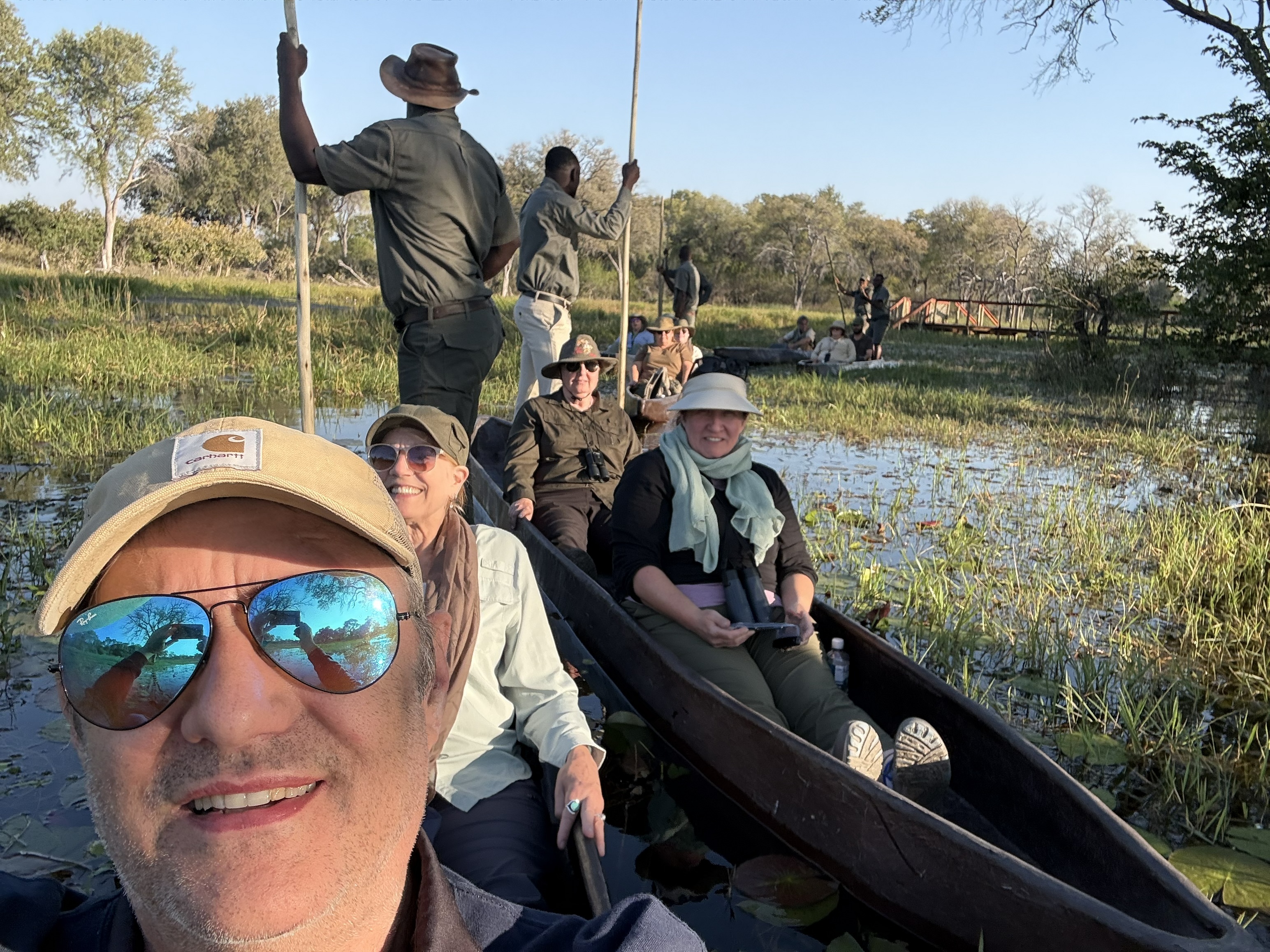
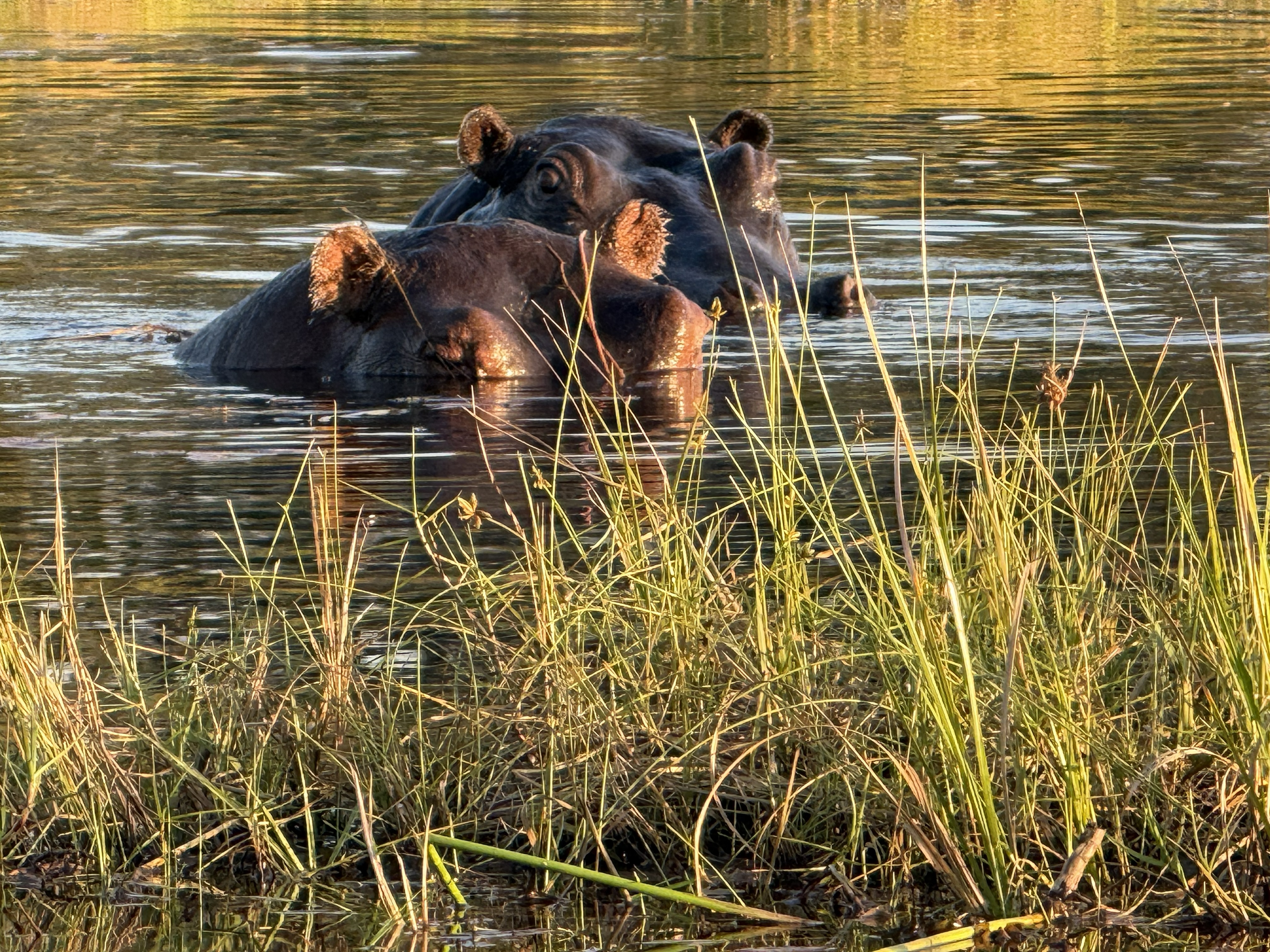
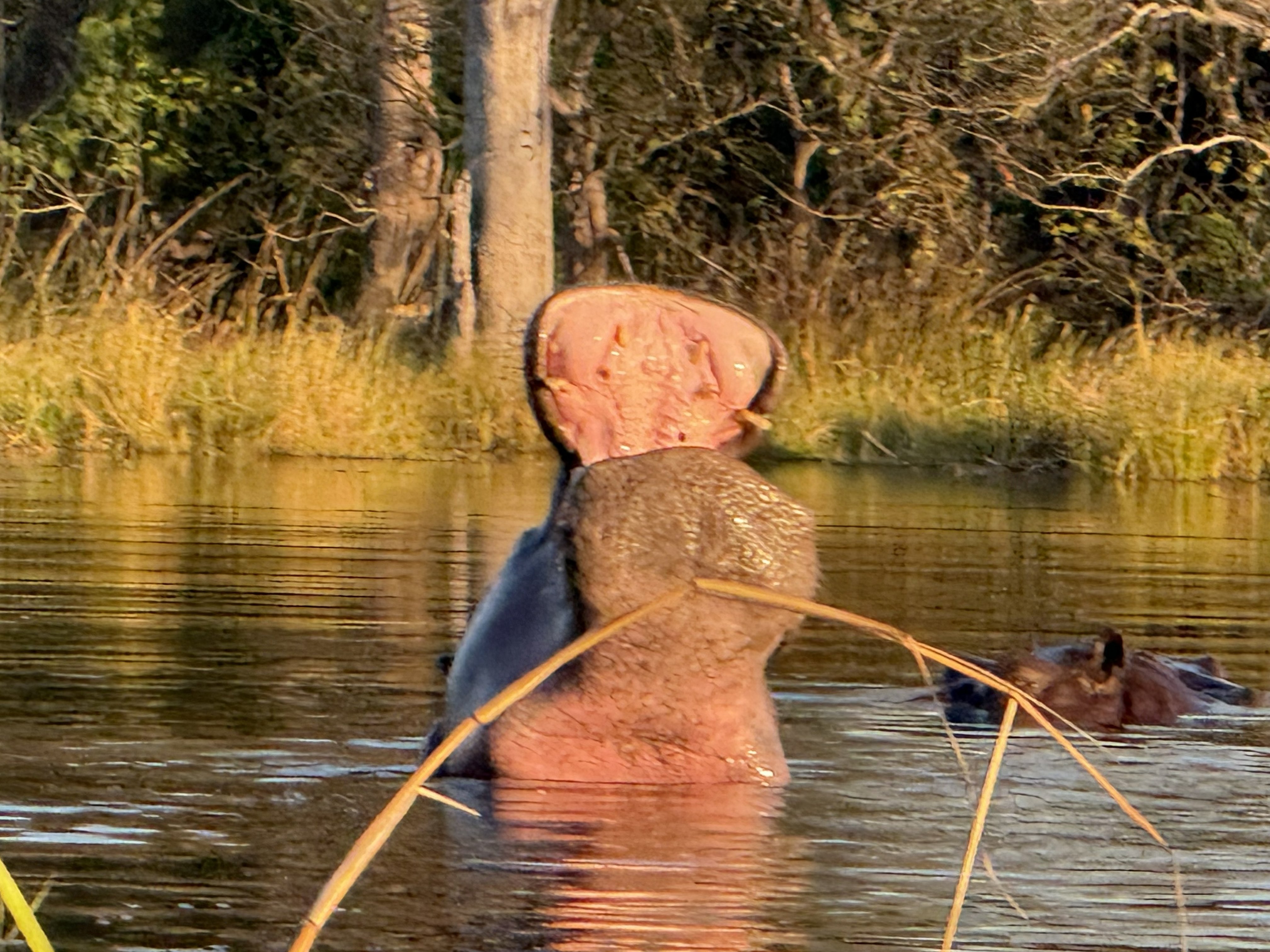
The polers assured us — not, I felt, entirely convincingly — that the hippos were only issuing warnings. Then they conferred quietly among themselves, evidently decided the warnings were worth heeding after all, and backed us away with the unhurried competence of men who intend to do this again tomorrow. Given that hippos kill more people in Africa than any animal we had come to see, nobody in my canoe argued.