Day 7
Monday, June 29, 2026
Johannesburg to Victoria Falls, Zimbabwe
▶ Watch the videos from this day
| 06:00 | Breakfast. On the bus by seven. |
|---|---|
| Morning | The airport, and a very long line. Then north. |
| Midday | Across the border into Zimbabwe. |
| Afternoon | Robert Schiffner Elementary. Then the lodge, on the river. |
| Evening | Zambezi Lager, mongooses, crocodiles, and dancers. |
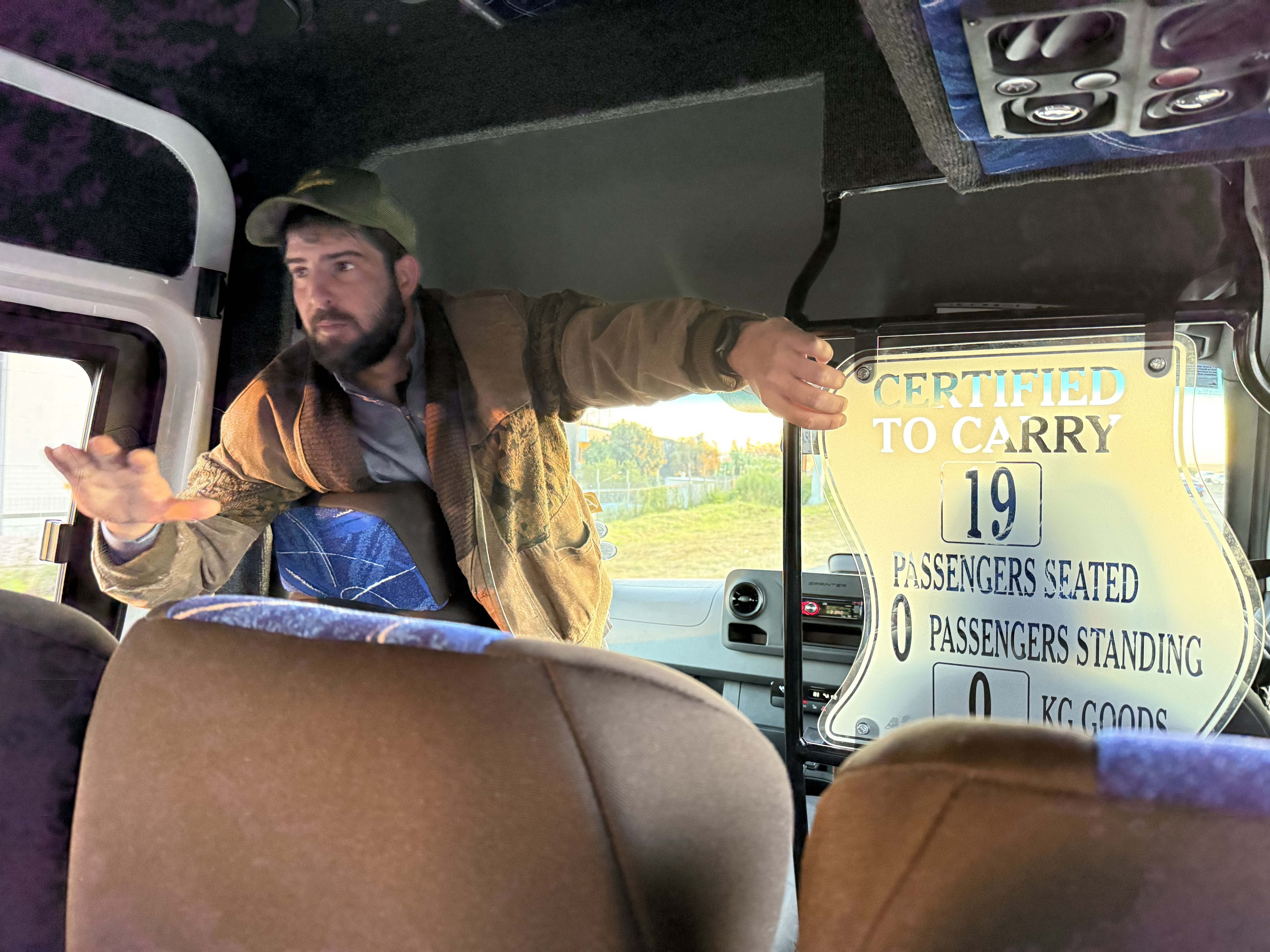
The tour proper began with breakfast around six and the whole group on a bus by seven — everybody's luggage in one pile, Dylan counting heads, the early start that would shortly turn out to matter more than any of us expected.
Gold
Dylan used the drive to talk about the city we were leaving, and Johannesburg turns out to have a very short and very specific reason for existing. Gold. In 1886 somebody found the Witwatersrand reef — the largest gold deposit ever discovered anywhere on earth — and a stretch of empty highveld grassland became, within a couple of decades, the largest city in South Africa. It was not built on a river or a harbor or a crossroads. It was built on the rock underneath it, because of what was in the rock, and everything else about Johannesburg — the banks, the corporate towers, the money — followed the gold up out of the ground.
Across the Border
Then we flew north, and somewhere over the bush we crossed out of South Africa and into Zimbabwe, and landed at Victoria Falls.
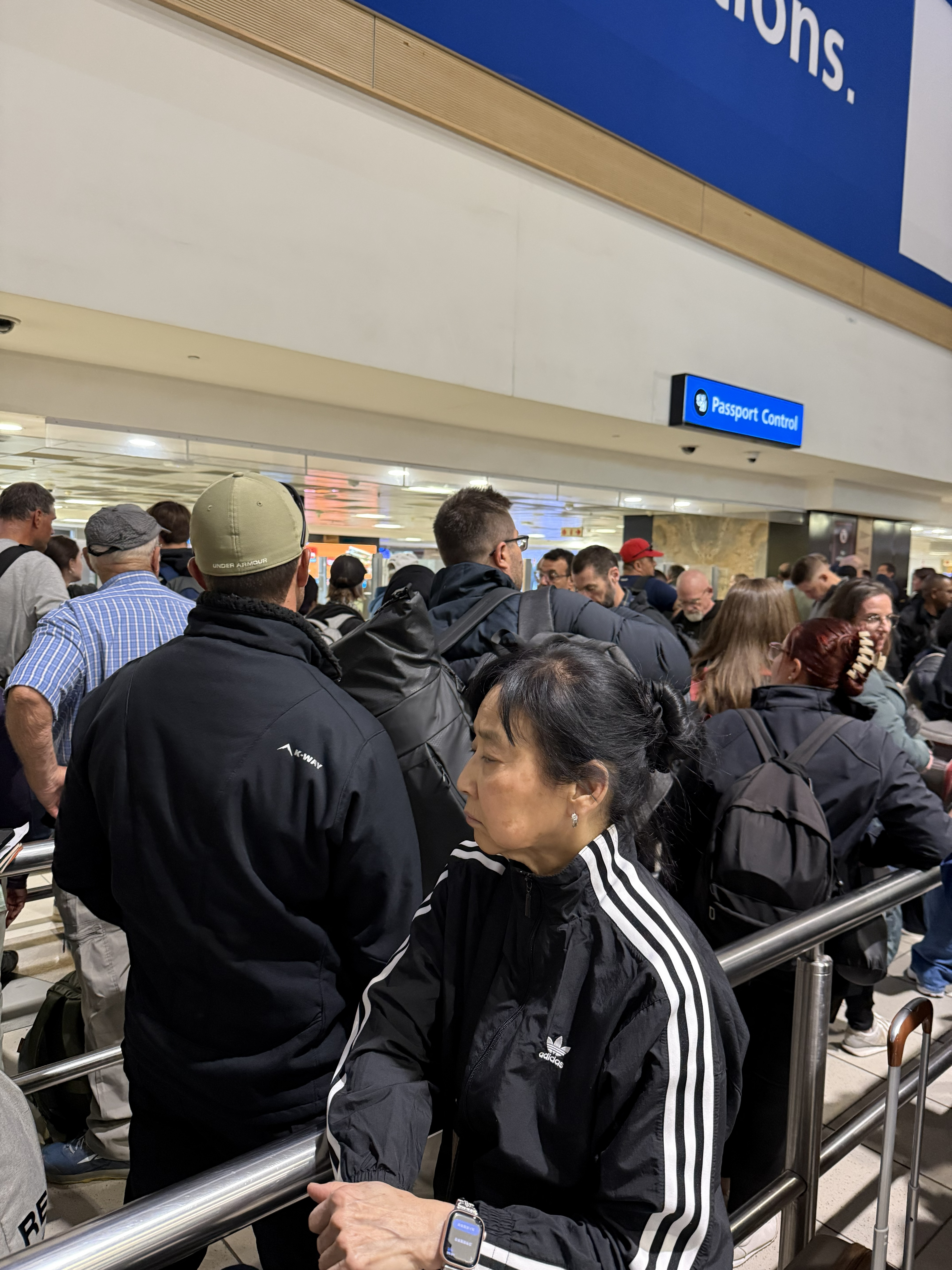
The airport is where the early start paid off. Passport control had five booths and exactly two people working them, and the line for those two people was enormous — the whole flight, funneled into one slow queue. We were still in it fifteen minutes before boarding was supposed to close. Everybody made it, but only just, and Dylan spent the morning quietly pleased with himself for getting us there early, which he had every right to be. Bill nearly didn't make it. Security found a small pair of scissors in his bag and held him up over it, and by the time that was sorted the rest of us were long gone — so he and Debbie ended up being walked to the front and skipped past the line to catch the flight. There is a version of this trip in which the scissors cost him Zimbabwe.
Everything Is Victoria Falls
From the airport, before anything else, we got a driving tour of the area, and our driver — Lungi, I believe, though I am hedging slightly on the spelling — turned out to be the kind of local guide who makes a place make sense. There were baboons everywhere. Not a baboon, occasionally, as a special event — baboons as a fact of the roadside, sitting on walls, crossing the road, conducting their business with the total unconcern of an animal that has decided the town is also theirs. And Lungi had a running joke about the name of the place, which is that everything in Victoria Falls is called Victoria Falls. The Victoria Falls library. The Victoria Falls bank. The Victoria Falls this and the Victoria Falls that. “And when you marry,” he said, “she is in Victoria” — which took us a second, and then got everybody.
The School
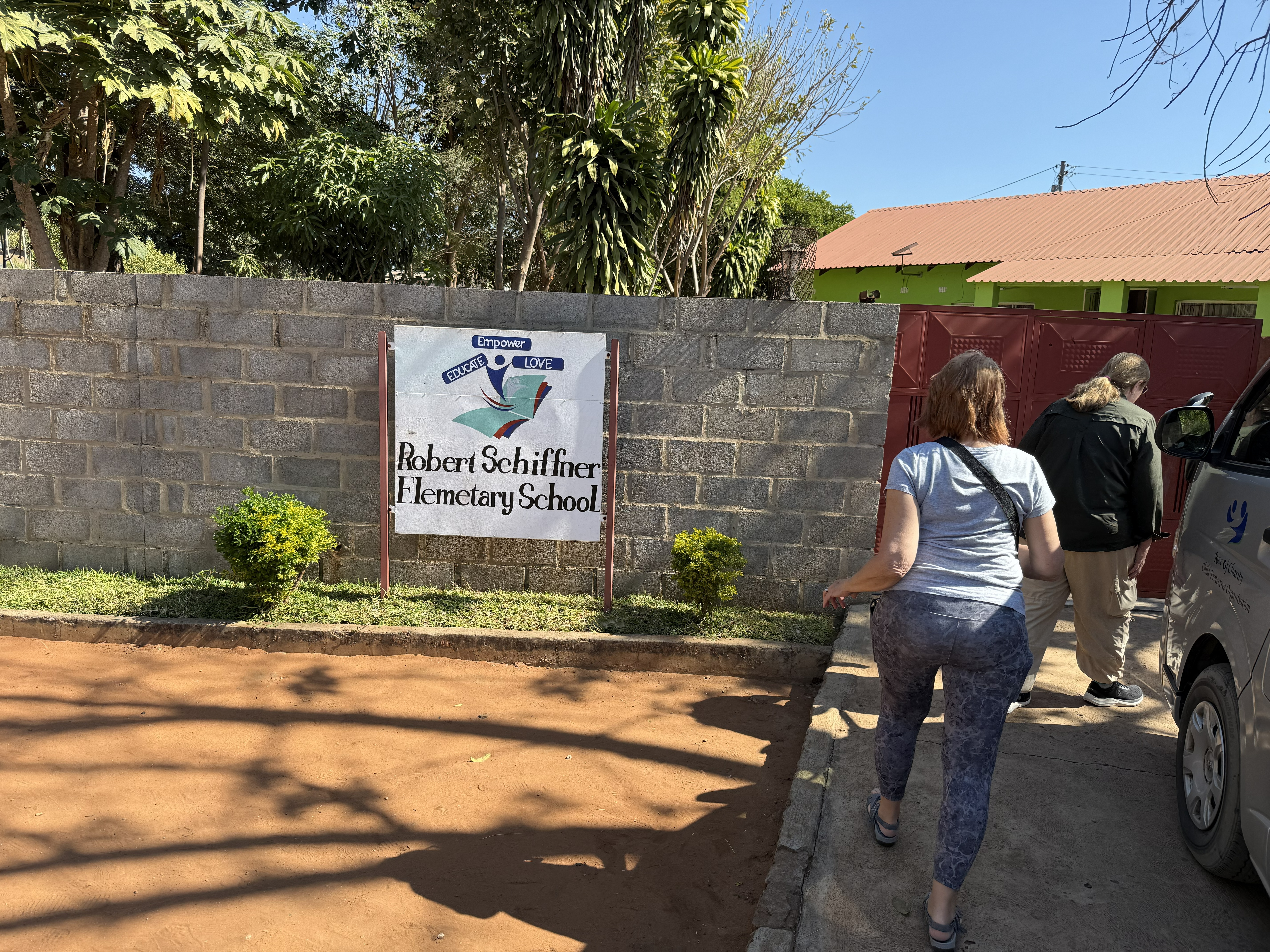
Then the tour did something I did not expect, and it was the best thing it did all day. We stopped at a community school and orphanage.
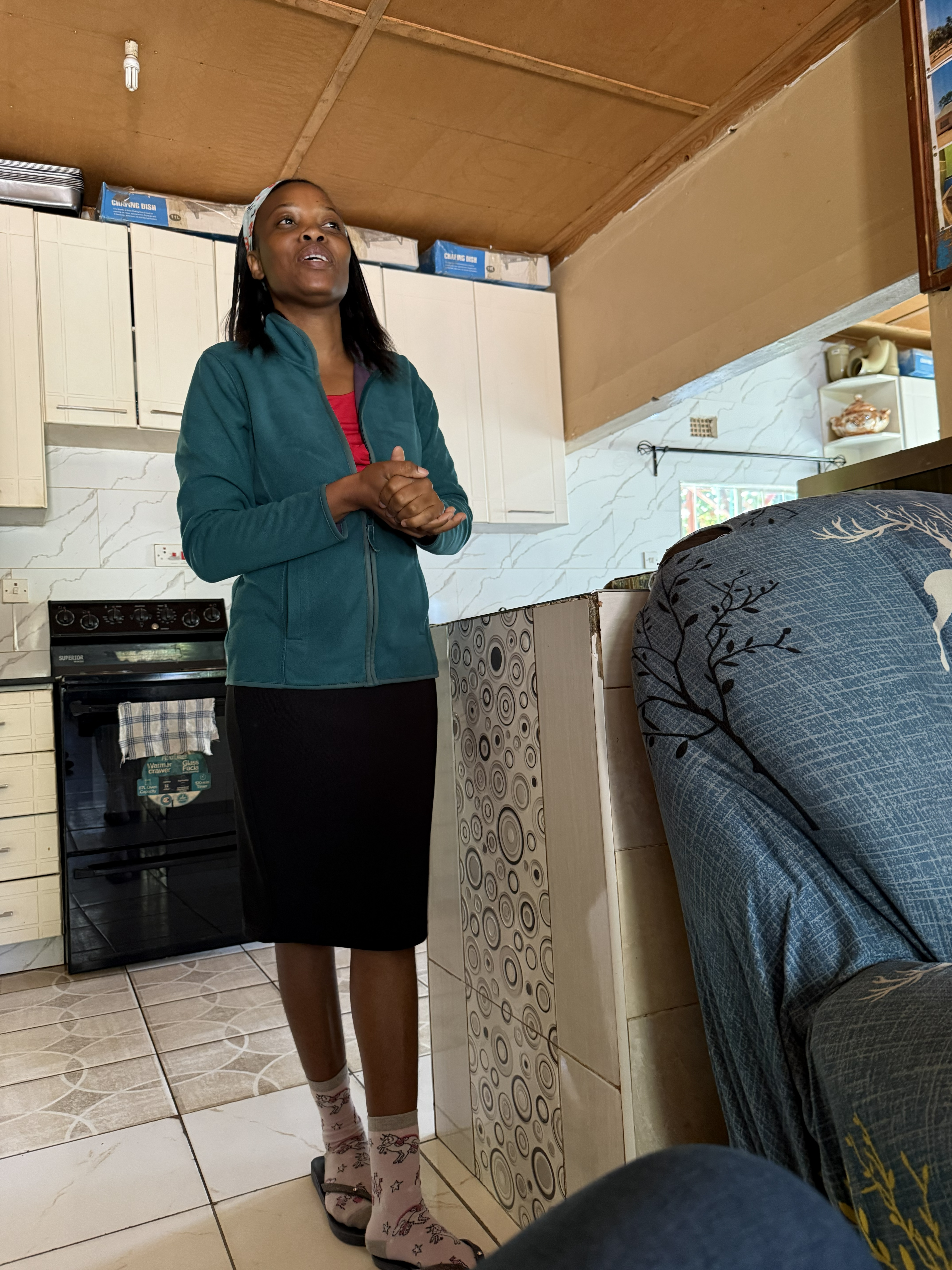
There was a bulletin board inside built around four elements — shelter, education, empowerment, farming — with community outreach tying them together, each one laid out in photographs. One of the staff, a woman who clearly ran a good deal of it, walked us through all four. And there were children; one of them was asleep through the entire presentation, entirely unbothered by a room full of foreign visitors.
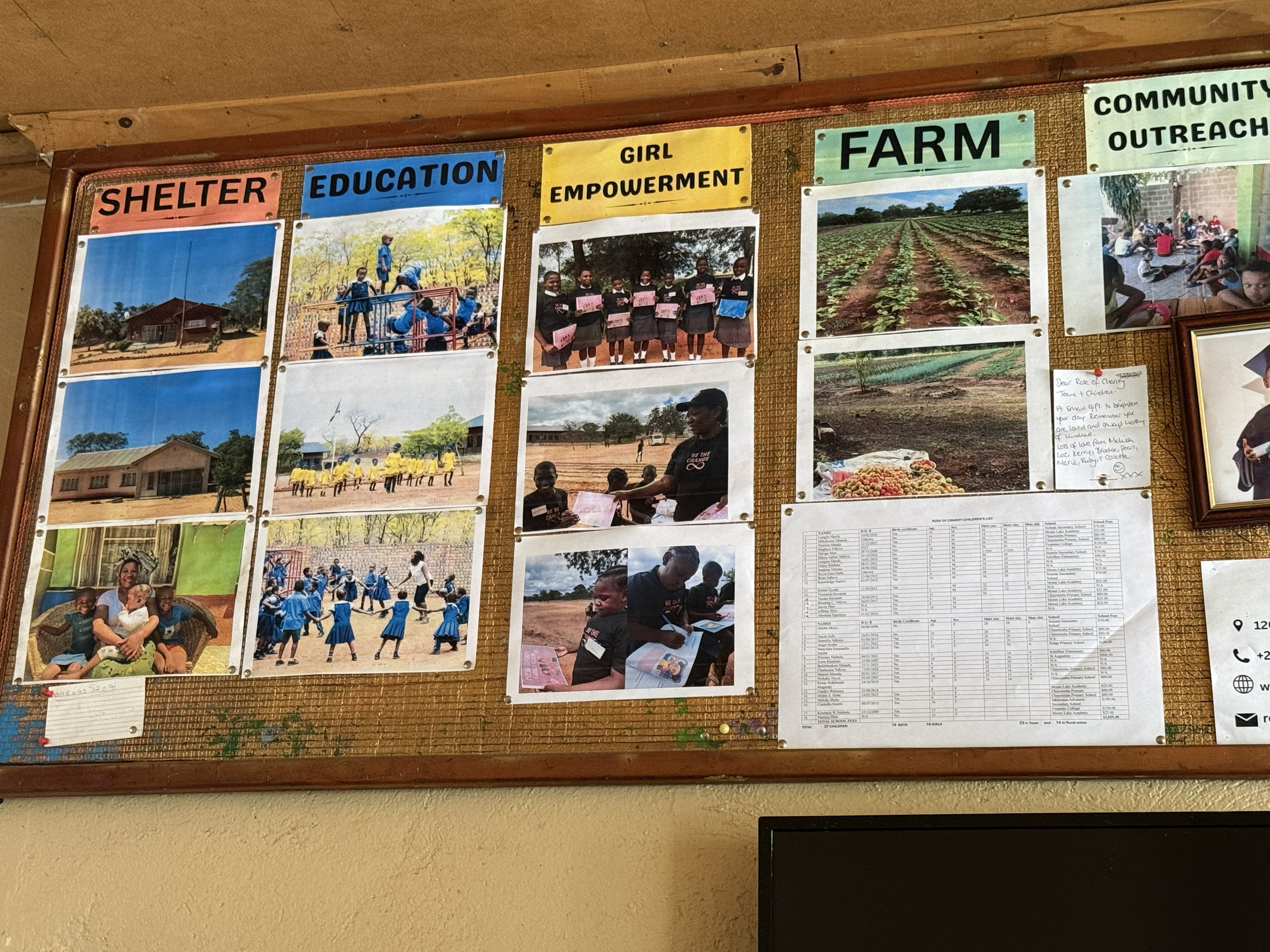
We gave a donation, and I bought one of the wire animals they make and sell — a rhino, bent from wire by hand, which given how the rhino thread of this trip had been going felt like the correct one to come home with.
Robert Schiffner Elementary and the Rose of Charity is a real place, doing difficult and unglamorous work, that let a busload of strangers see it for twenty minutes on the way to a river lodge. It was humbling in the specific sense that it made our itinerary — the game drives, the sunset cruises, the lager by the river — feel like exactly what it is, which is an enormous privilege, purchased, and briefly set next to the thing it is a privilege beside. A man from Washington State built a school here with his own convictions and his own money, and it will still be doing its work long after our bus has gone. That is a different order of thing from a sunset cruise, and the visit knew it, and so did we.
A'Zambezi River Lodge
And then the river. We stayed at the A'Zambezi River Lodge, on Parkway Drive, a few kilometers outside town and directly on the bank of the Zambezi. It is the kind of place where the wildlife does not respect the boundary between the grounds and the bush.
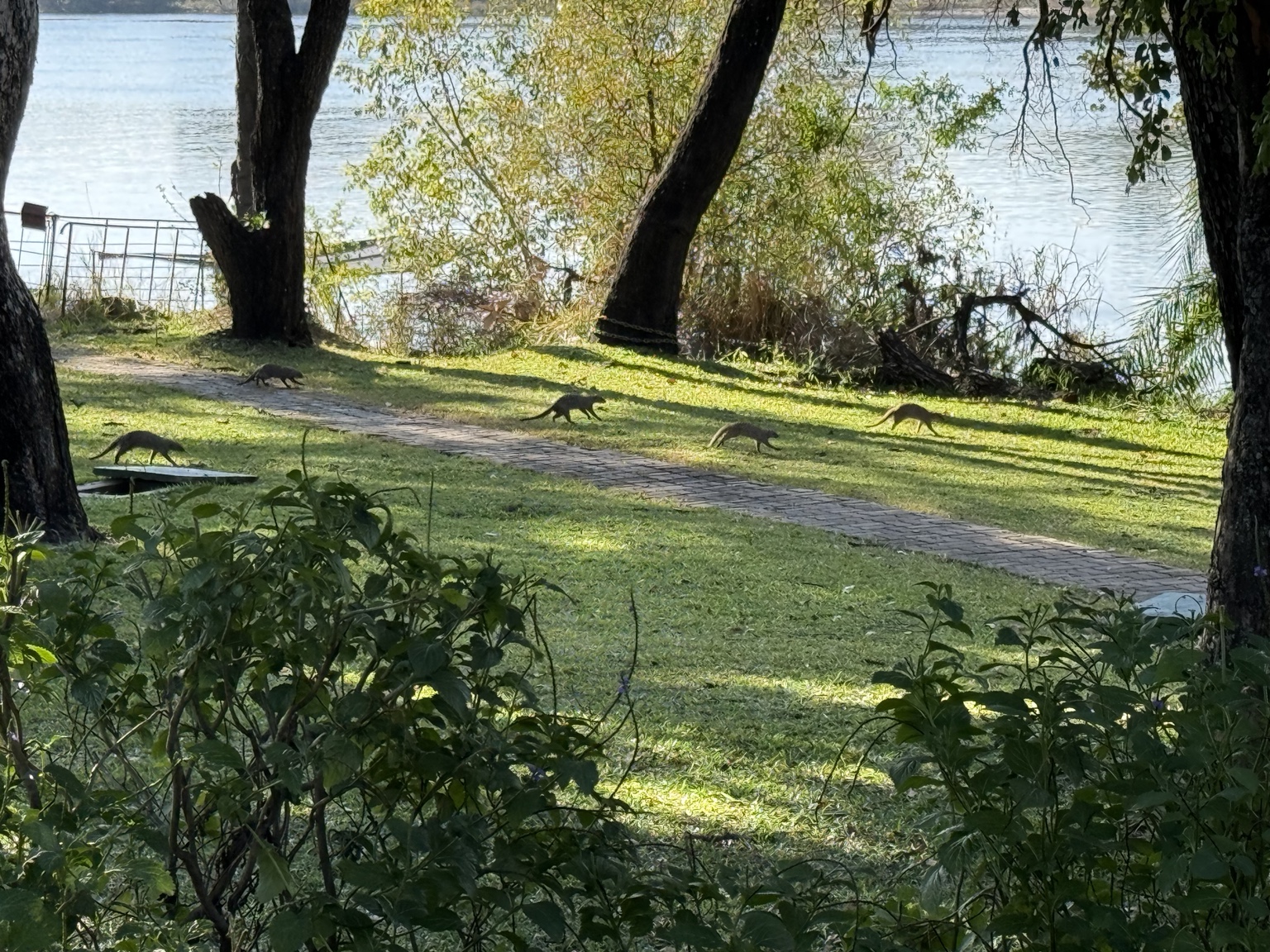
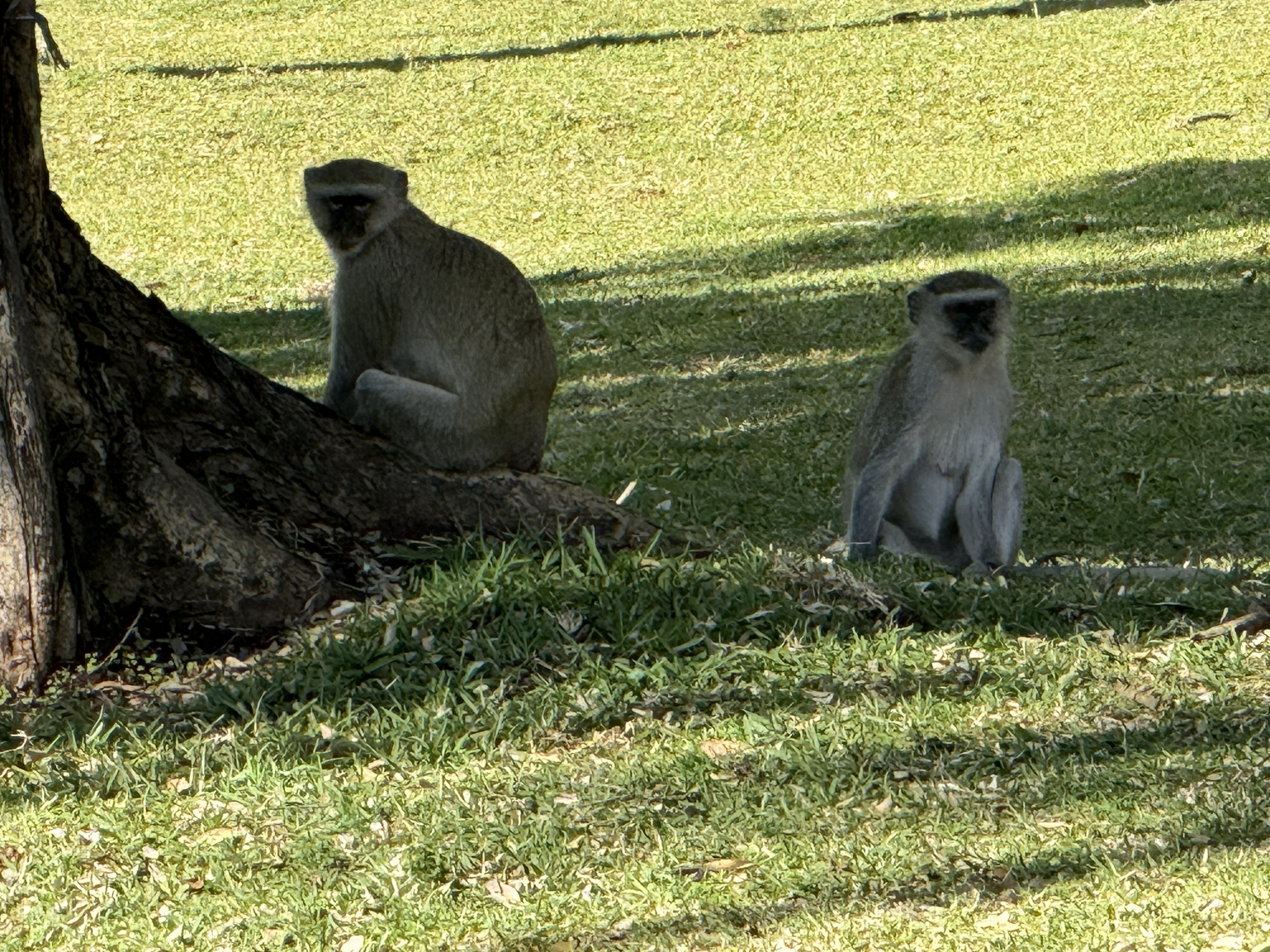
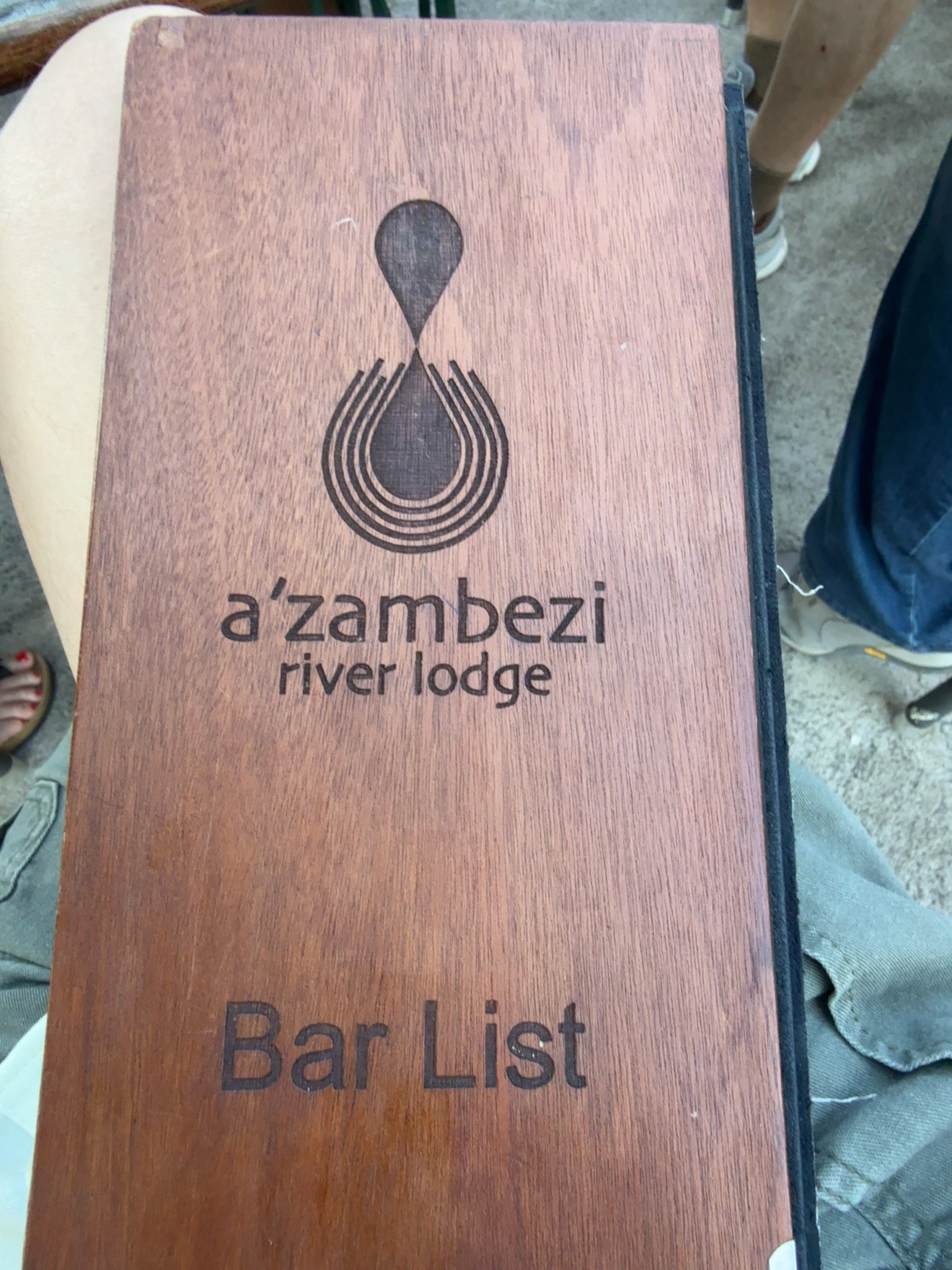
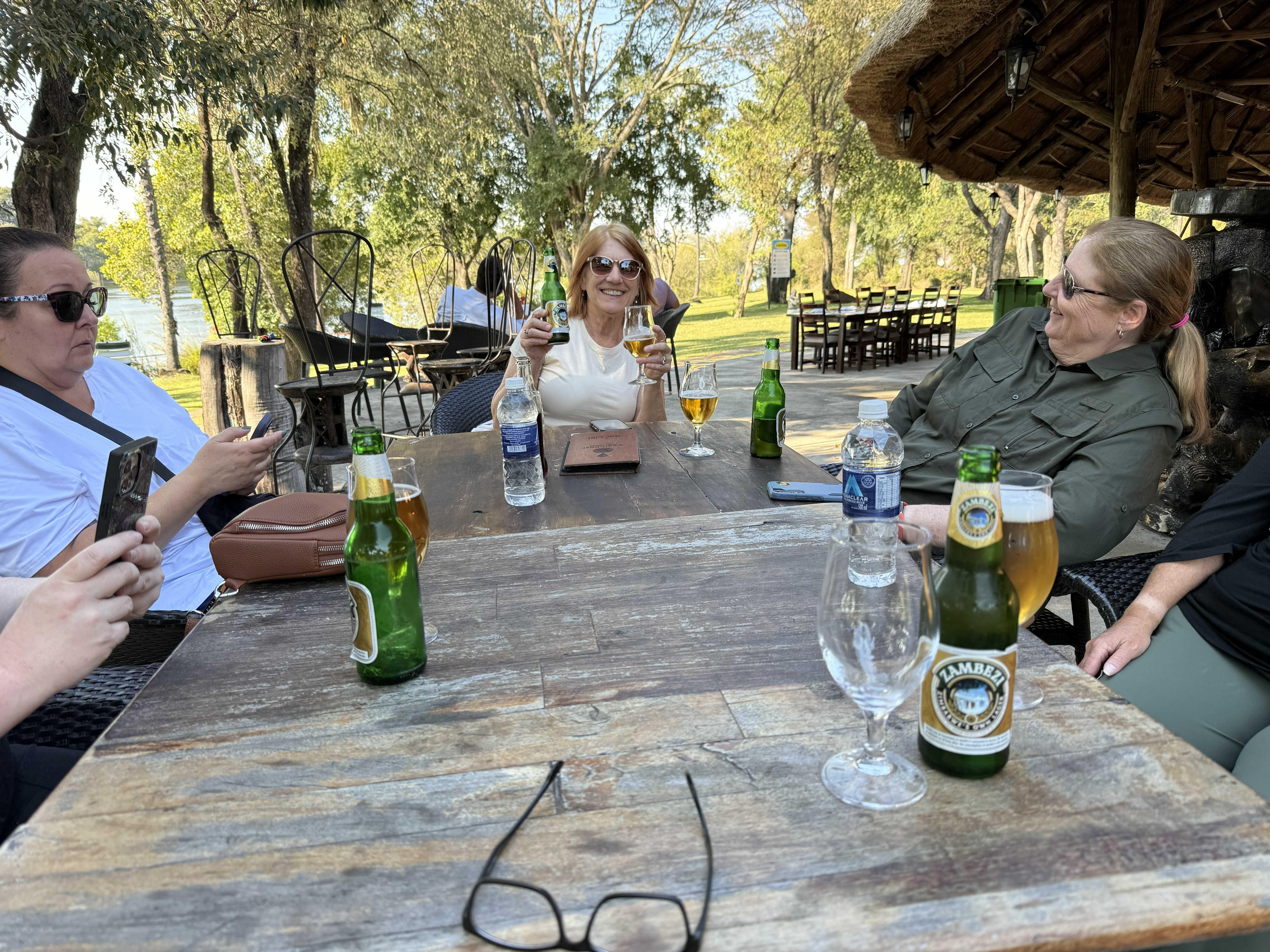
We got a Zambezi Lager and sat by the river, which is the correct thing to do at the A'Zambezi River Lodge, and were almost immediately joined by a vervet monkey, who took up a position among the tables with the calm entitlement of an animal that has done very well out of tourists before.
What Lives in the River
Then somebody official told us to stay fifteen feet back from the water, and explained why, and the peaceful river got a great deal more interesting.
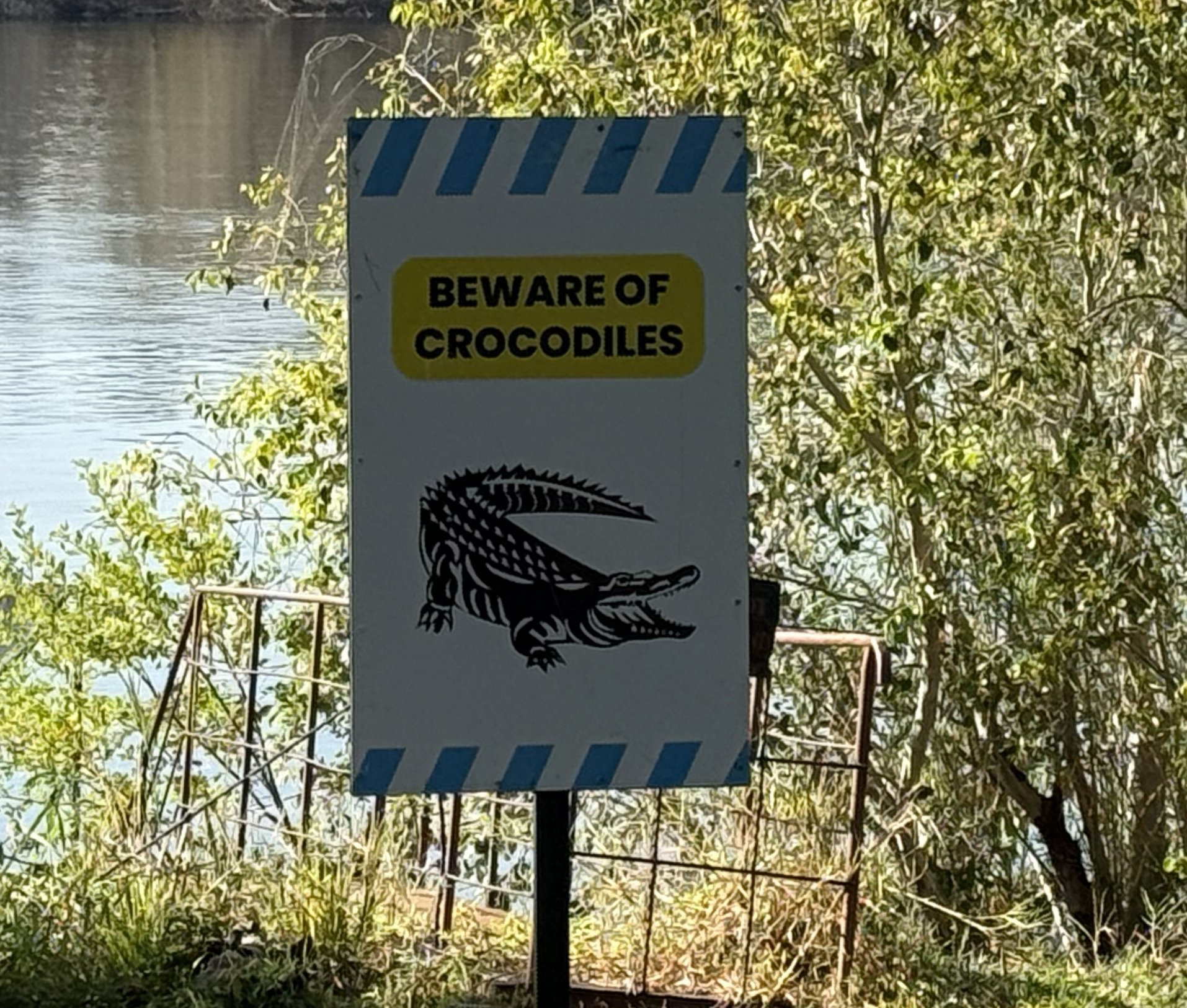
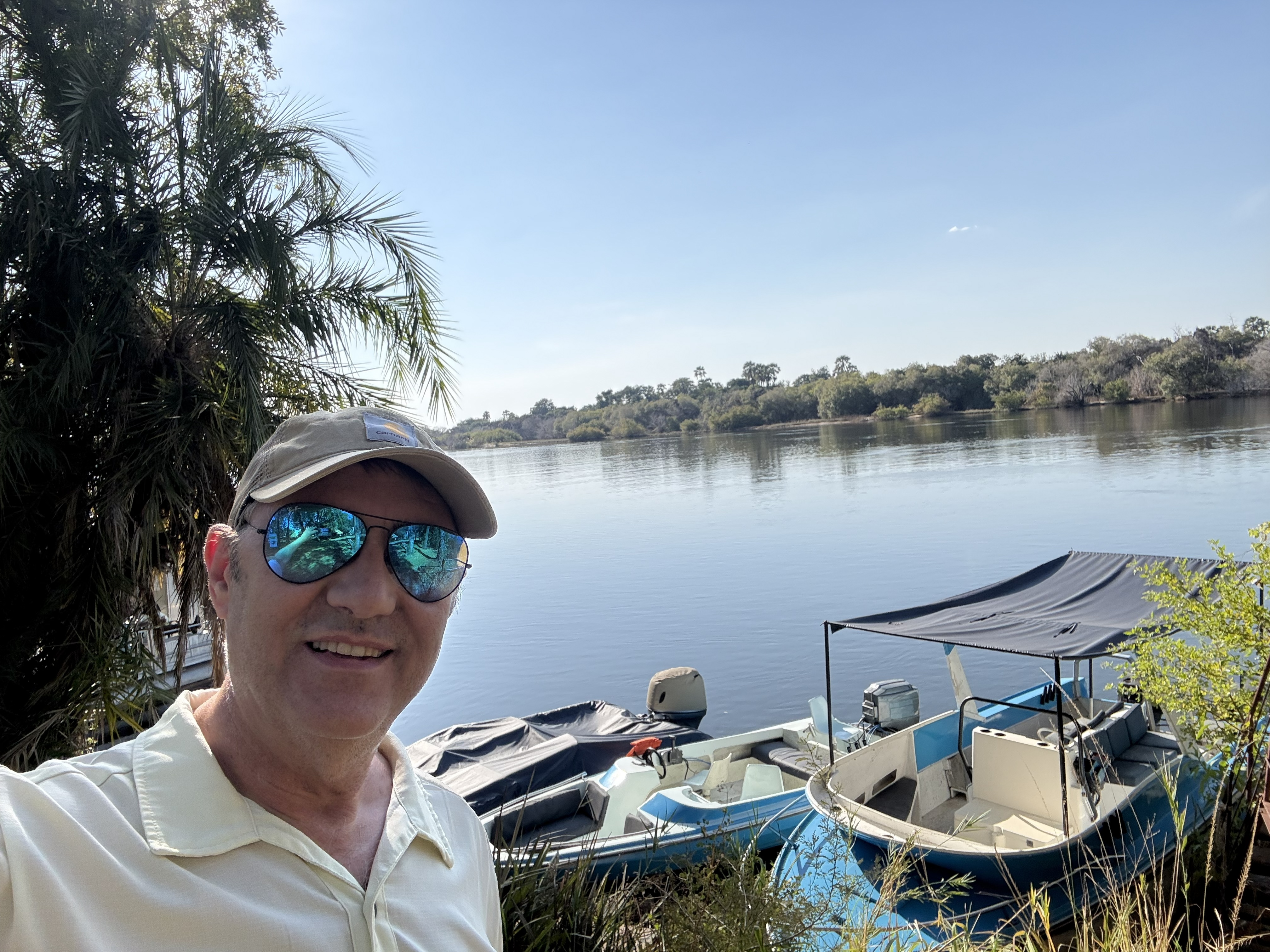
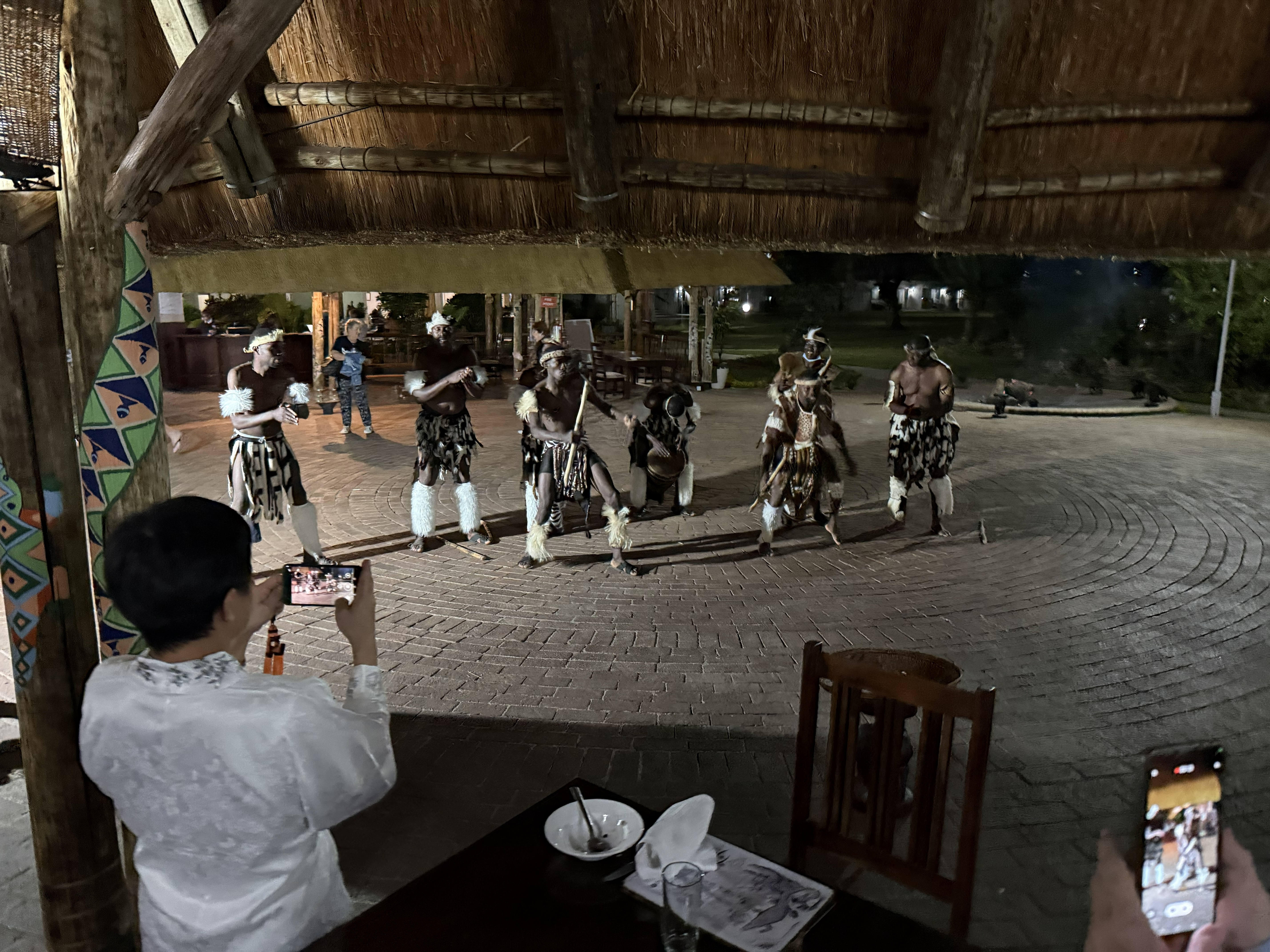
It was, by any measure, a full first day in Zimbabwe: a mining lecture, a border, a school that stayed with us, mongooses, a monkey, a crocodile warning, and a beer on the most dangerous peaceful river in the world.