Day 20
Sunday, July 12, 2026
Amsterdam, New York, Washington — and home
| Morning | Amsterdam, somewhere in the middle of the day. |
|---|---|
| Evening | New York. |
| Late | Washington, and our own front door. |
The journey home was entirely uneventful, which on a trip of that length is the best review a journey can get. It consisted very largely of waiting — in Cape Town, in Amsterdam, in New York — in that particular fluorescent limbo of an international terminal at an hour when nothing is open and everyone is slightly gray.
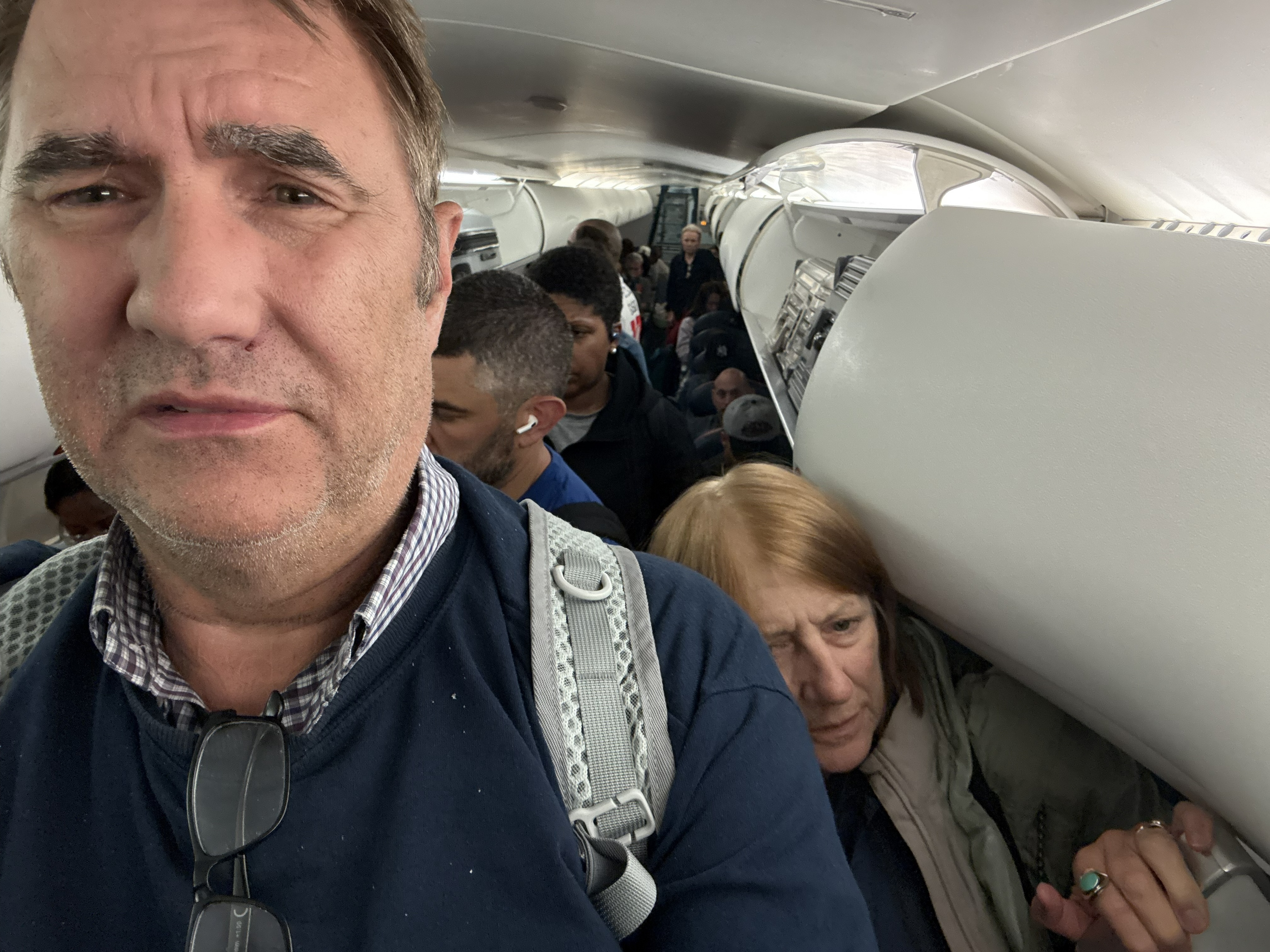
Then the last short hop down to Washington, and a taxi, and our own front door — late, but just before midnight. The driver could see how done in we were, and when we told him we had been traveling about thirty hours he picked up our bags himself and carried them up the walk and the porch steps and set them down right at the door. He did not have to do that. It was the last kindness of a trip that had been full of them, and it came from a man whose name I never got. We did not unpack. We did not do anything at all. We went straight to bed, and I lay there in the dark running the whole thing back through my head. It takes the better part of two days to get home from the bottom of Africa, and I have come to think that is about right. It ought to take a while. You cannot go from a leopard at the water's edge to your own front door in an afternoon and expect any of it to make sense.
Closing Remarks
So: three weeks, three countries, and rather more than four thousand photographs.
I asked about the painted dogs on every single day of this trip. On the thirteenth day the Okavango produced a whole pack of them, an hour after we landed, and then — as though it had decided to settle the account in full — a leopard and her cub, playing at the edge of the water in the last gold light. That is not a bad ratio. It is also not really what I came away with. What I came away with is smaller and odder than that. It is the elephant that stopped being remarkable somewhere around day six, and the impala we eventually drove straight past without turning our heads. It is Bonnie spotting a honey badger before four professional guides did. It is the boat crew on the Chobe who baked a cake for the Americans on board because they knew what the date meant to us, and Dylan cutting slices three times more generous than instructed. It is Obert introducing himself as “Robert, without the R,” and a man on Robben Island who had been a schoolboy when they locked him up, standing in the corridor where it happened and calling it exactly what it was. I have written all of this down — the guides' names, the birds, the dead trees nobody could explain, the hippos who were only issuing warnings — because memory is a liar and photographs on a hard drive are not the same as a story. In ten years I will not remember which morning the vultures took the elephant, or what Dylan said about the buffalo being too organized for those young lions. But it will be here. And if I have learned anything worth passing on, it is this: go while you can still climb into the truck. Ask for the thing you actually want, every day, even when the answer keeps being no. And take the front seat when a kind man offers it, because he means it. Robert Werner Jansen
July 2026