Two drives today, and the one animal I had asked for still did not come. But I am getting ahead of myself, because what did come was a great deal — and, near the middle of it, a cheetah so good it nearly made me forget what I was missing.
Sunrise over Zebra
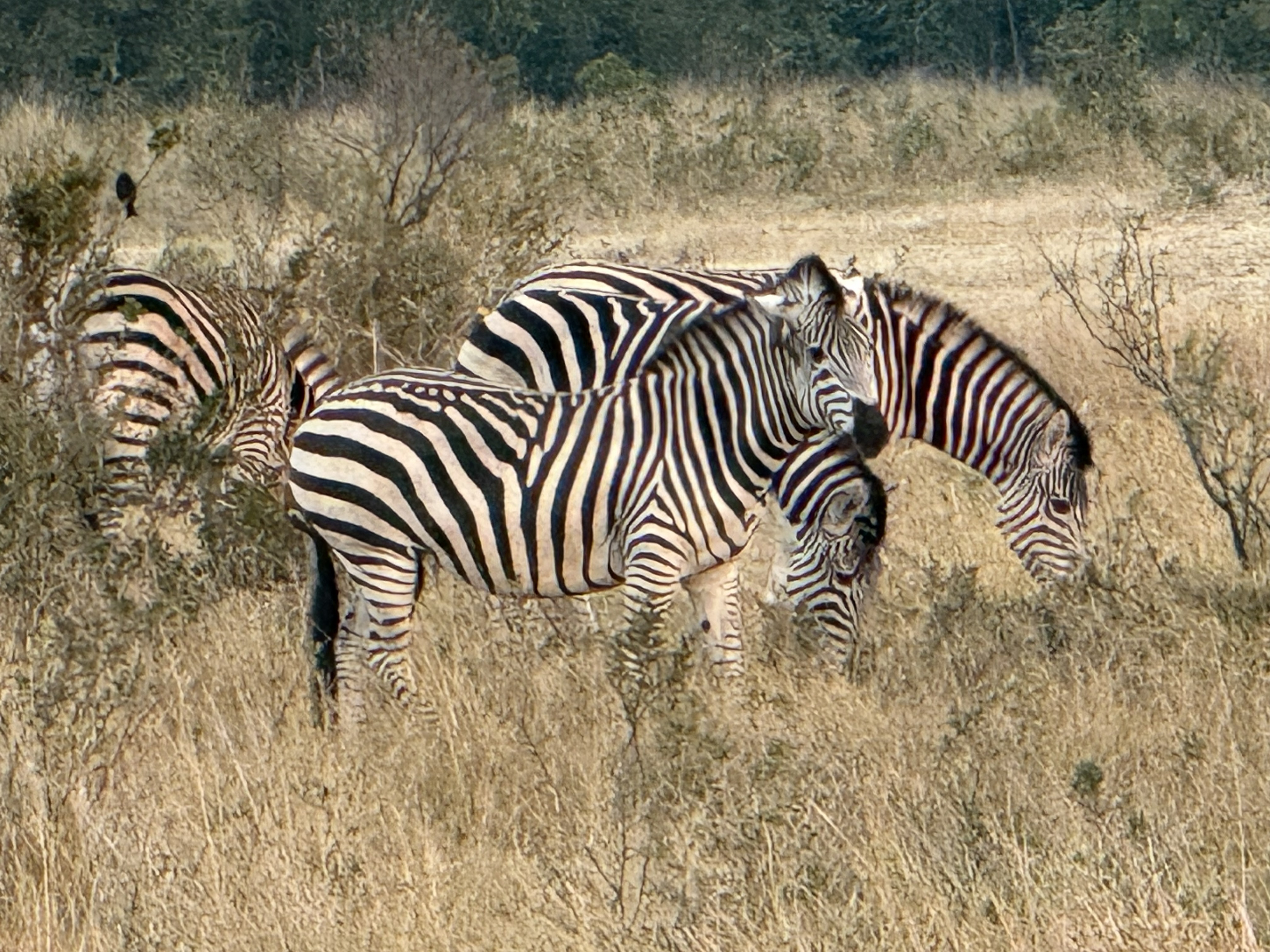
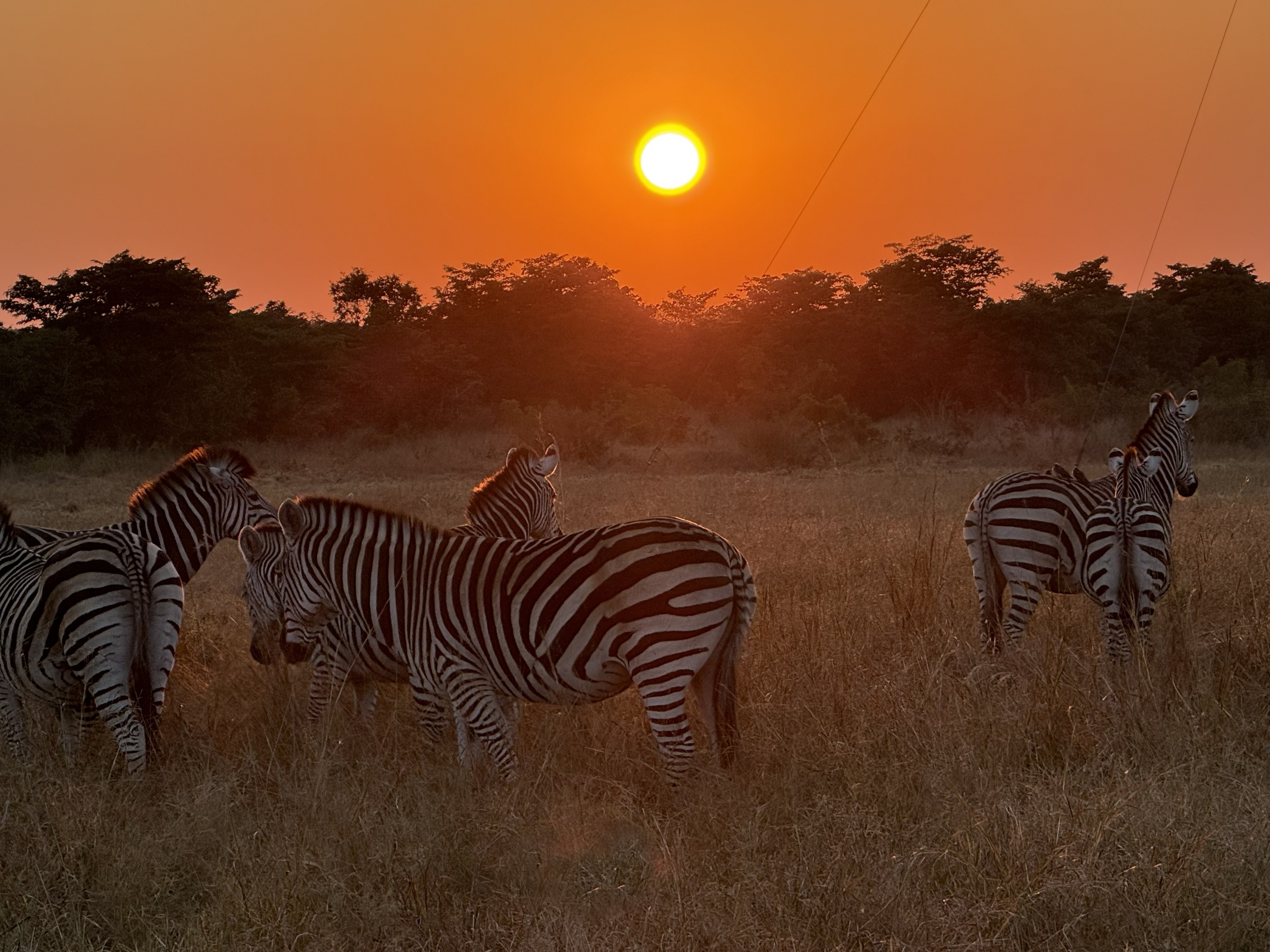
We were up before light and out into the cold, and the first thing the morning gave us was zebra — a small group of them in the gray dawn, and behind them the sun just starting to come up. Lazarus understood the assignment. He drove around to the far side of the herd, putting the zebra between us and the sunrise, so that we could shoot them in silhouette against the coming light. That is the difference between a driver and a guide: a driver takes you to the animal, a guide takes you to the photograph.
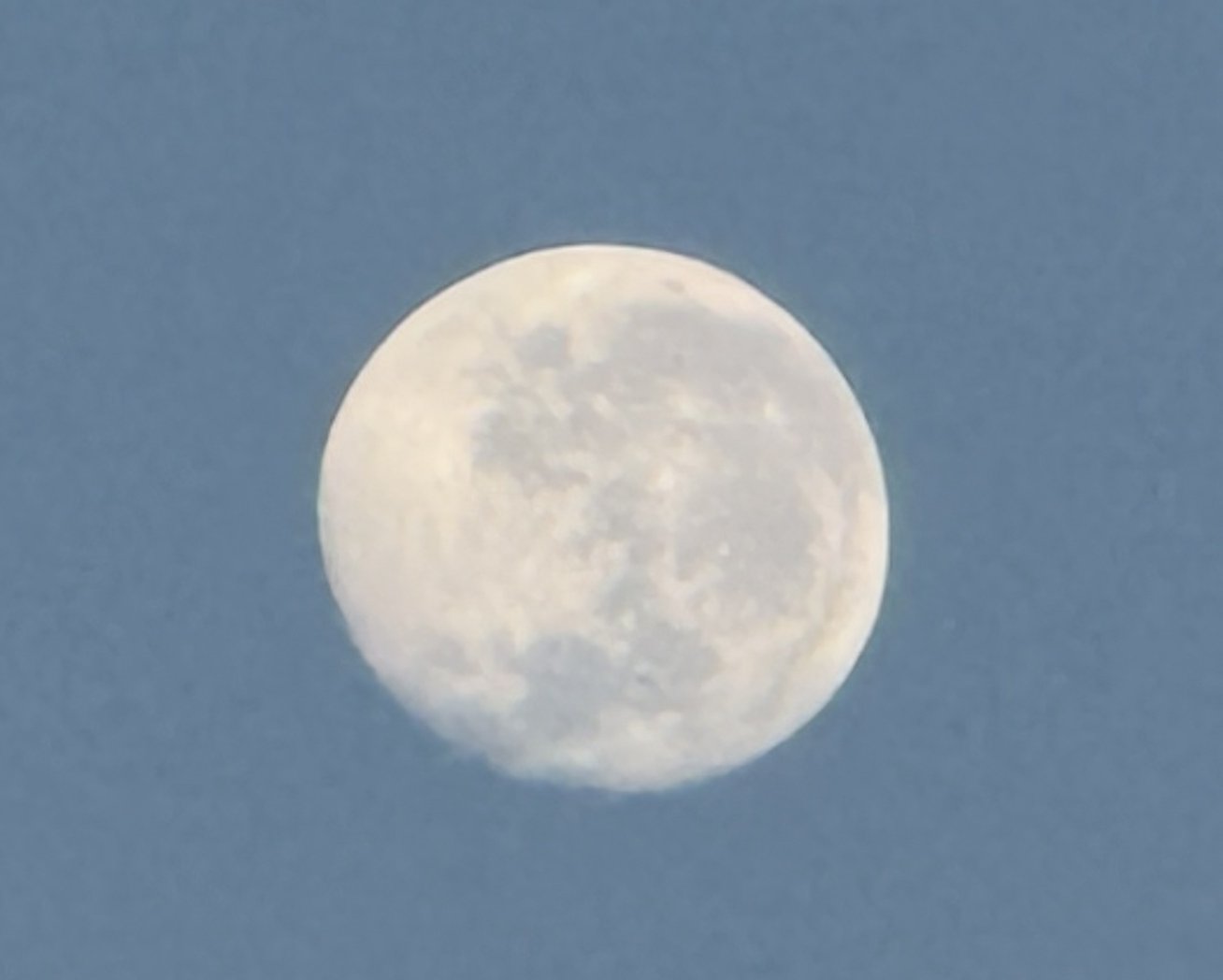
Zebra in the early gray, before the sun was properly up.And then, from the other side, the same herd against the sunrise — which is where the guide had quietly positioned us.The moon was still up, too, full and pale, setting as the sun rose. Both of them in the sky at once, over Hwange.
The Morning Parade
After that the park simply produced animals, one after another, for hours.
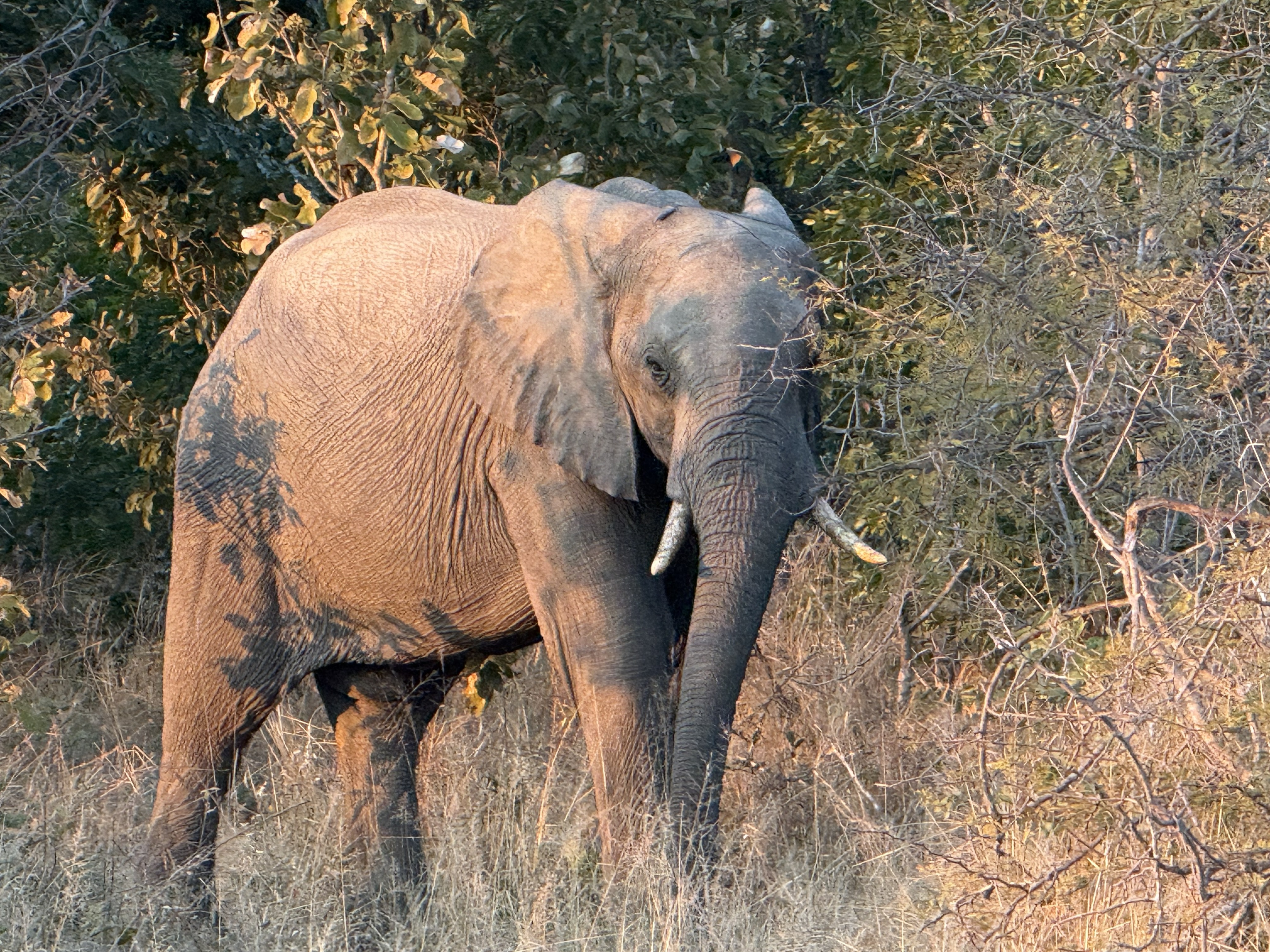
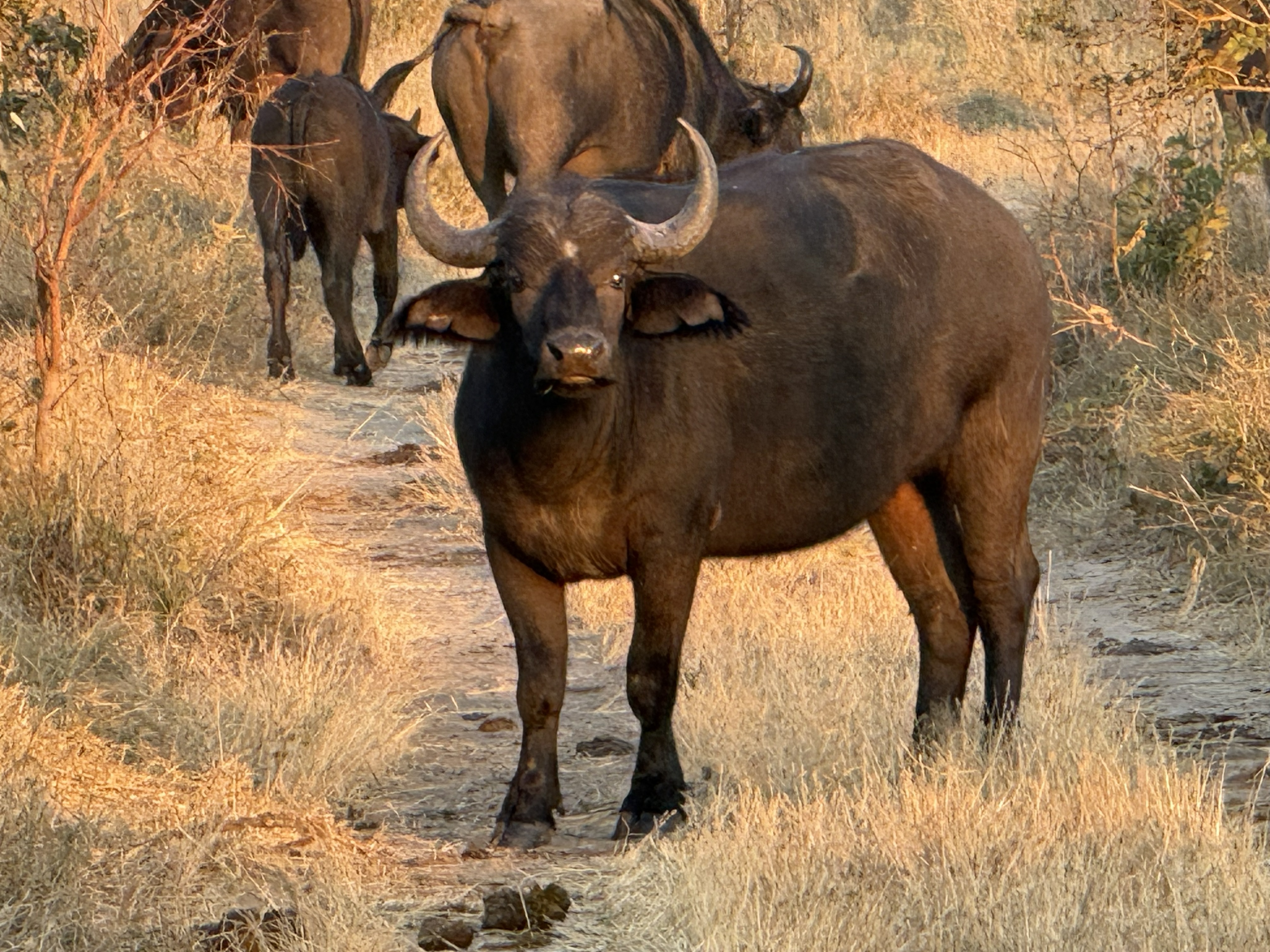
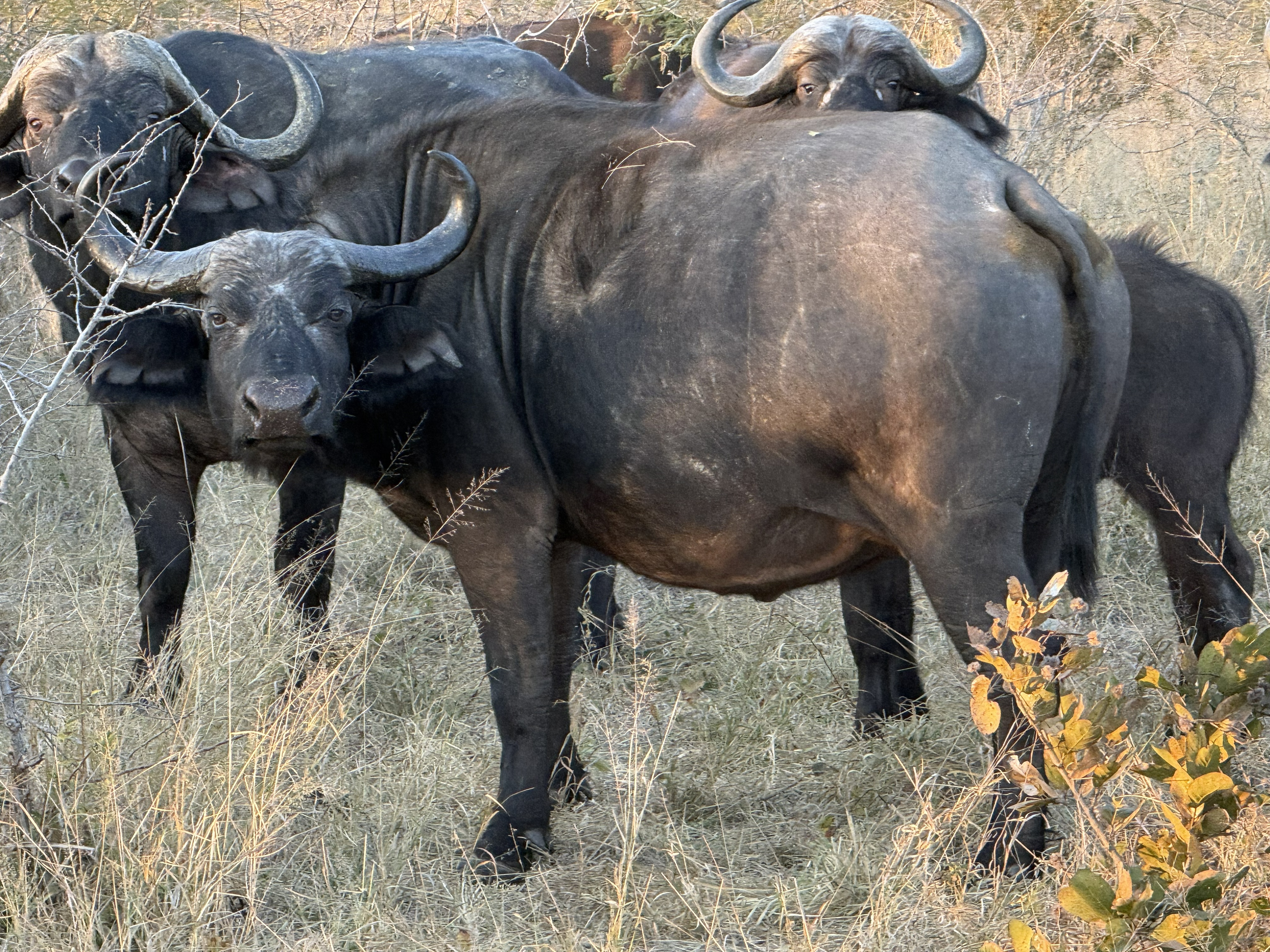
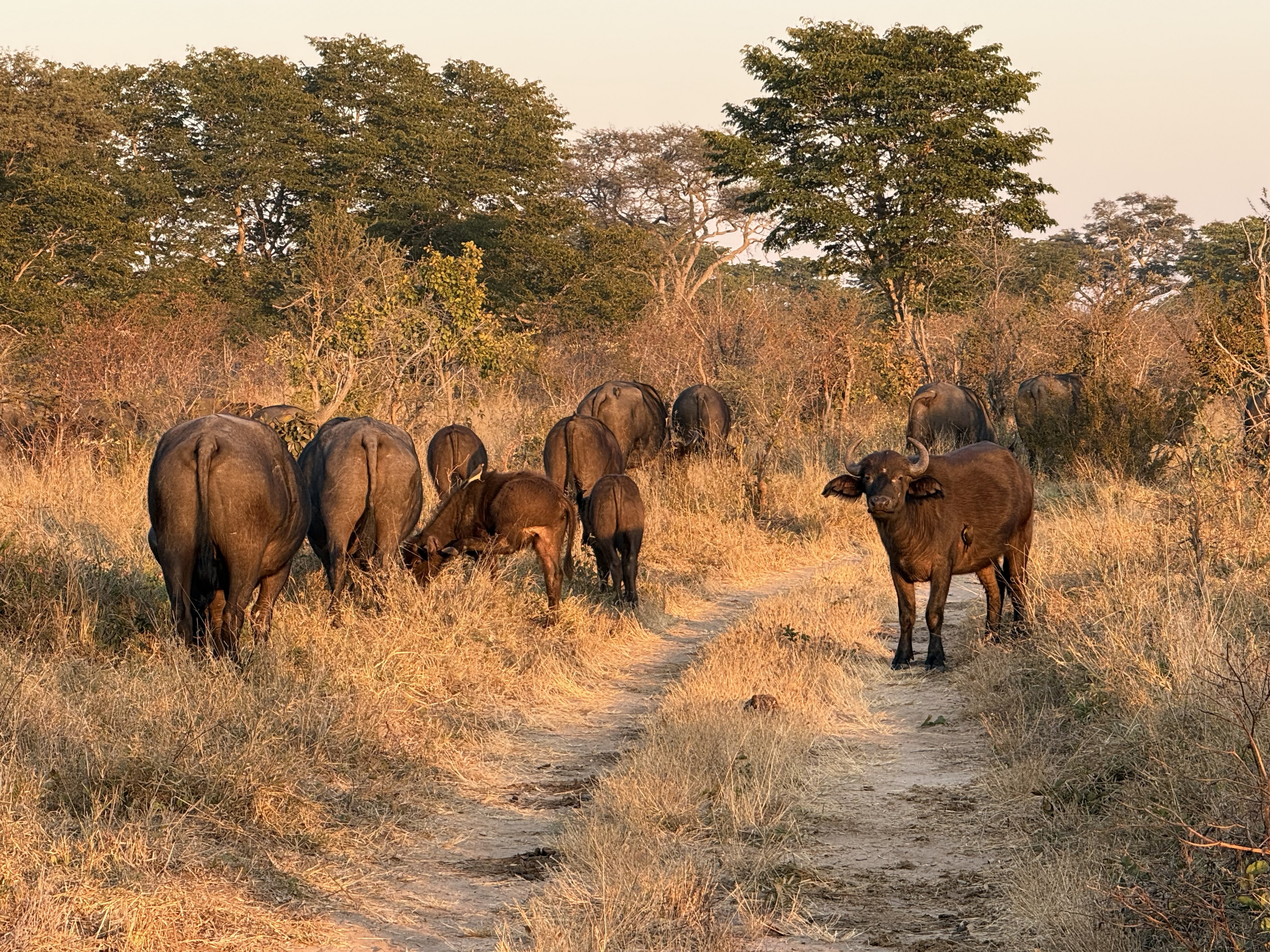
An elephant, close, in the low gold light.A Cape buffalo on the road — and then, behind it, the rest of the herd.
The herd. There is a particular menace to a lot of buffalo at once that a single buffalo only hints at.The whole herd moving down the track ahead of us, in the dust, in no hurry to let us past.
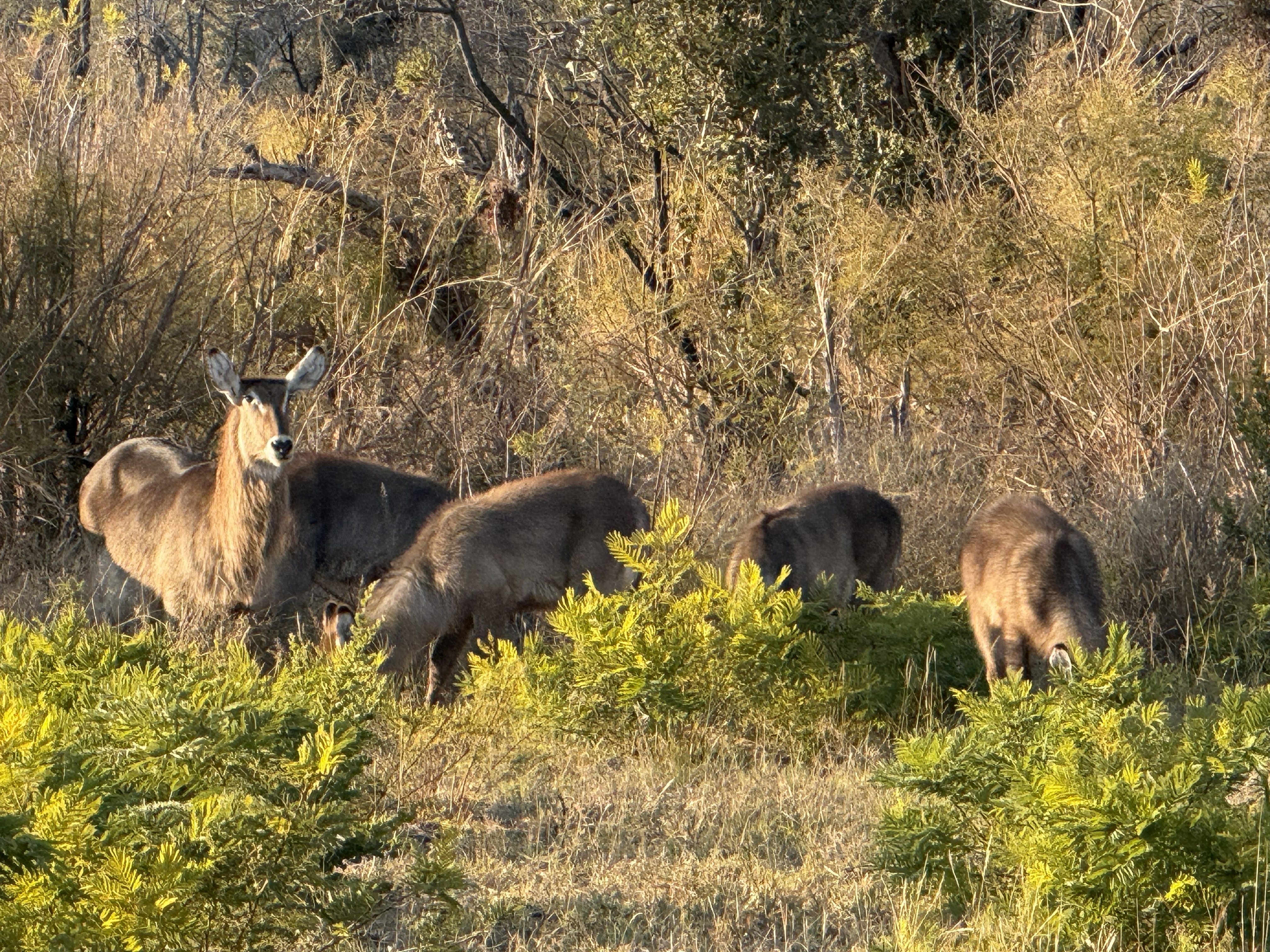
Then the antelope, in the order you learn them.
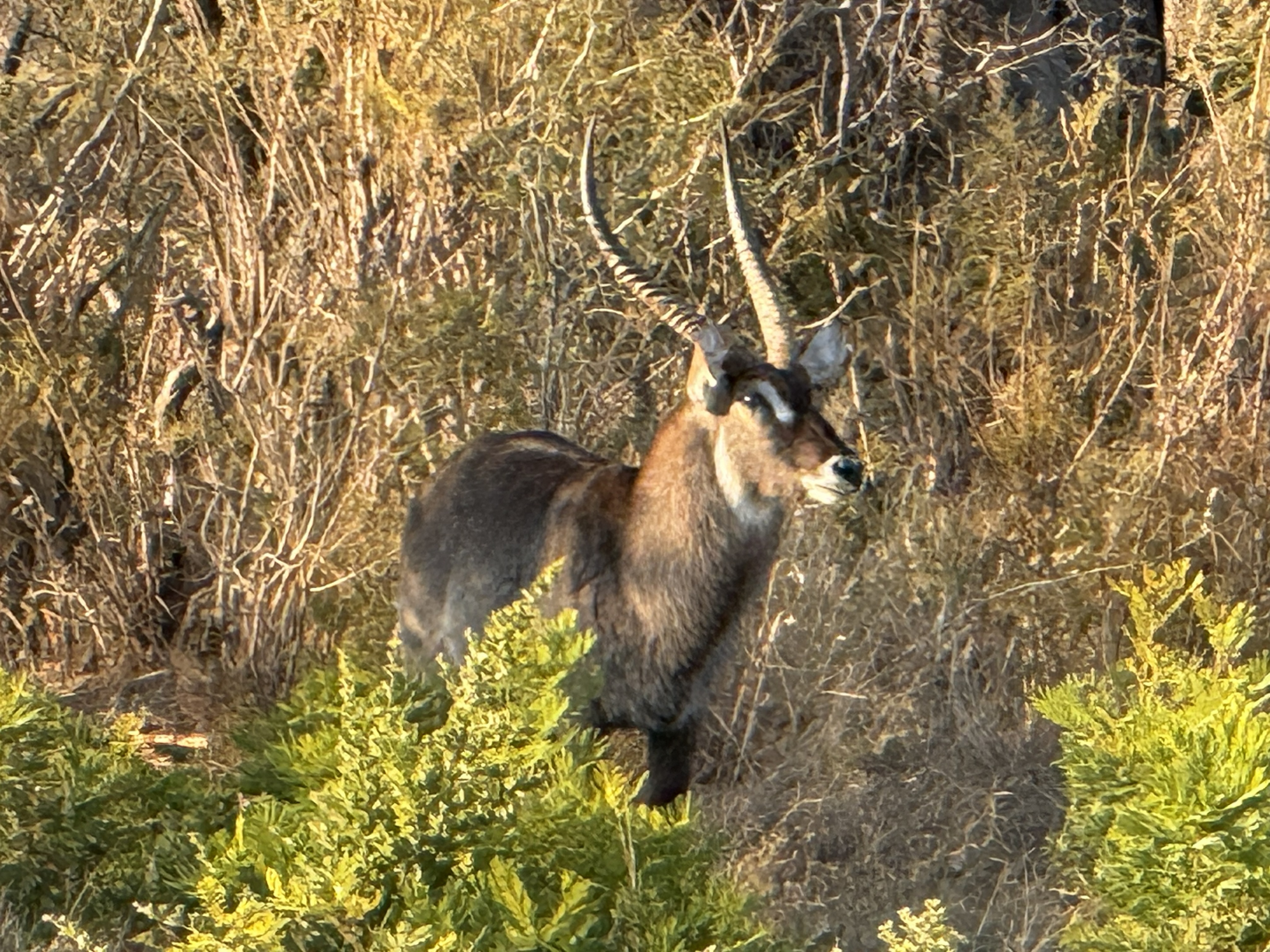
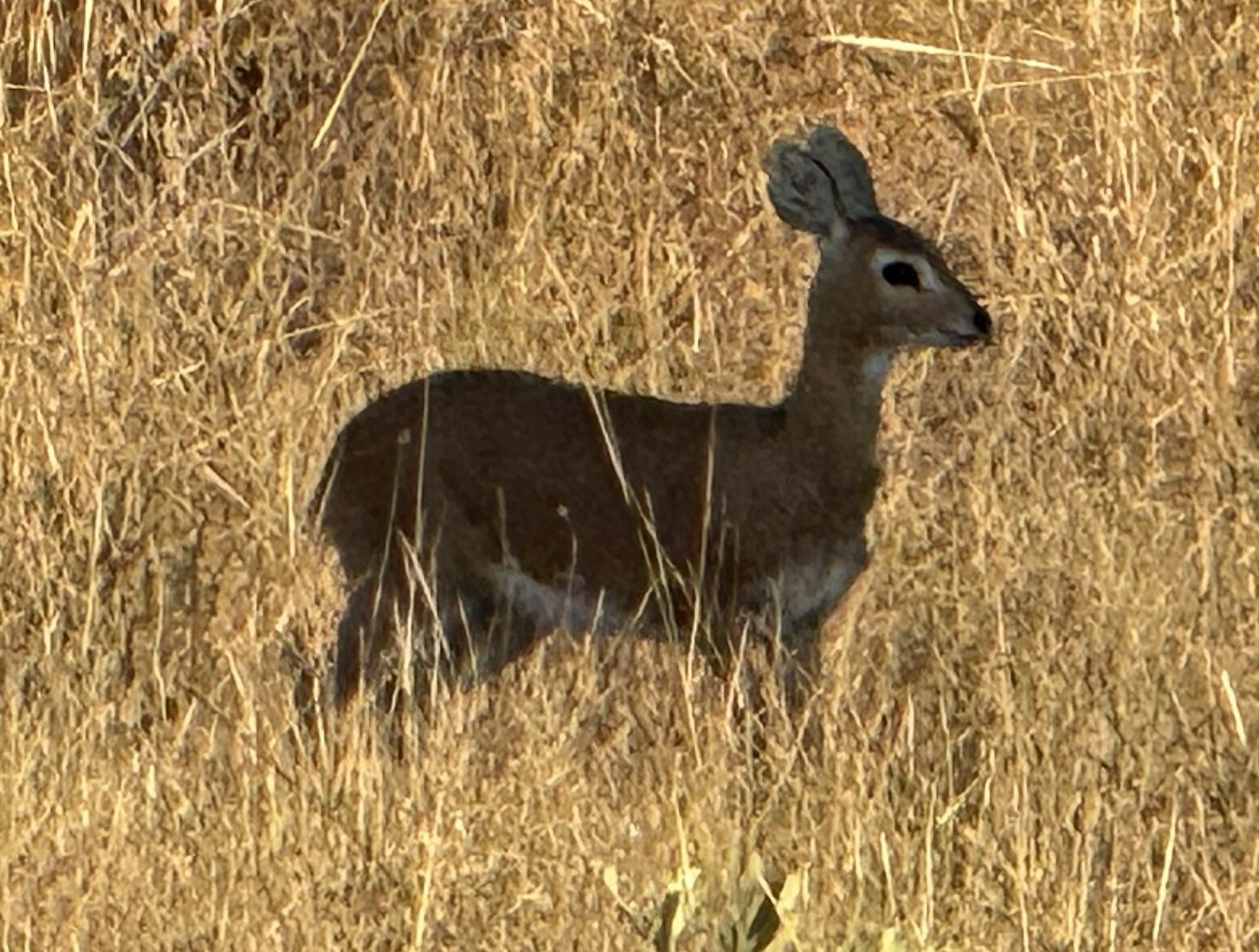
Waterbuck — the females, grazing in a loose group.And a male, with the long ringed horns the females do not have.The little one again — a steenbok, alone, as it always is. Alone again, naturally.
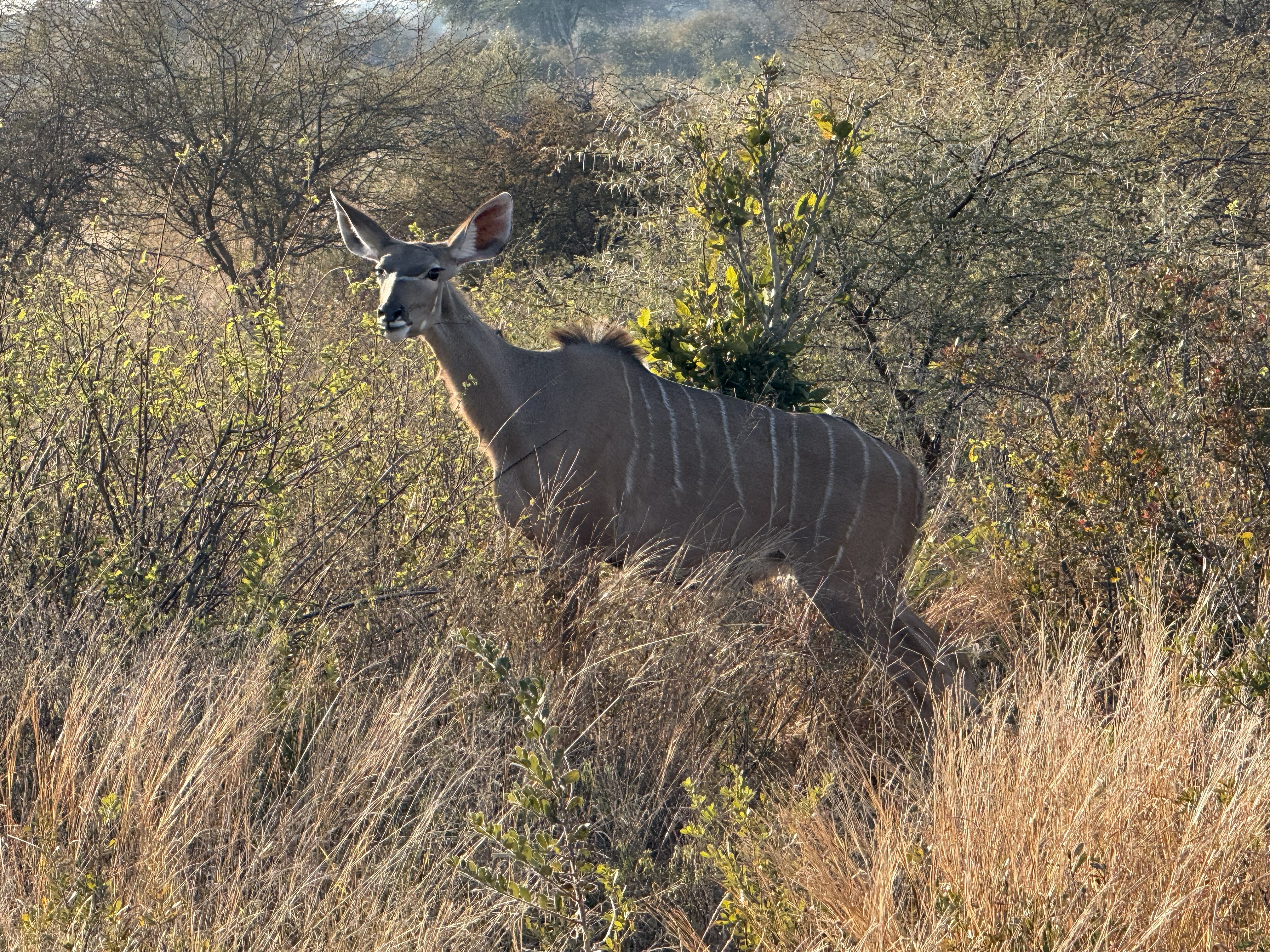
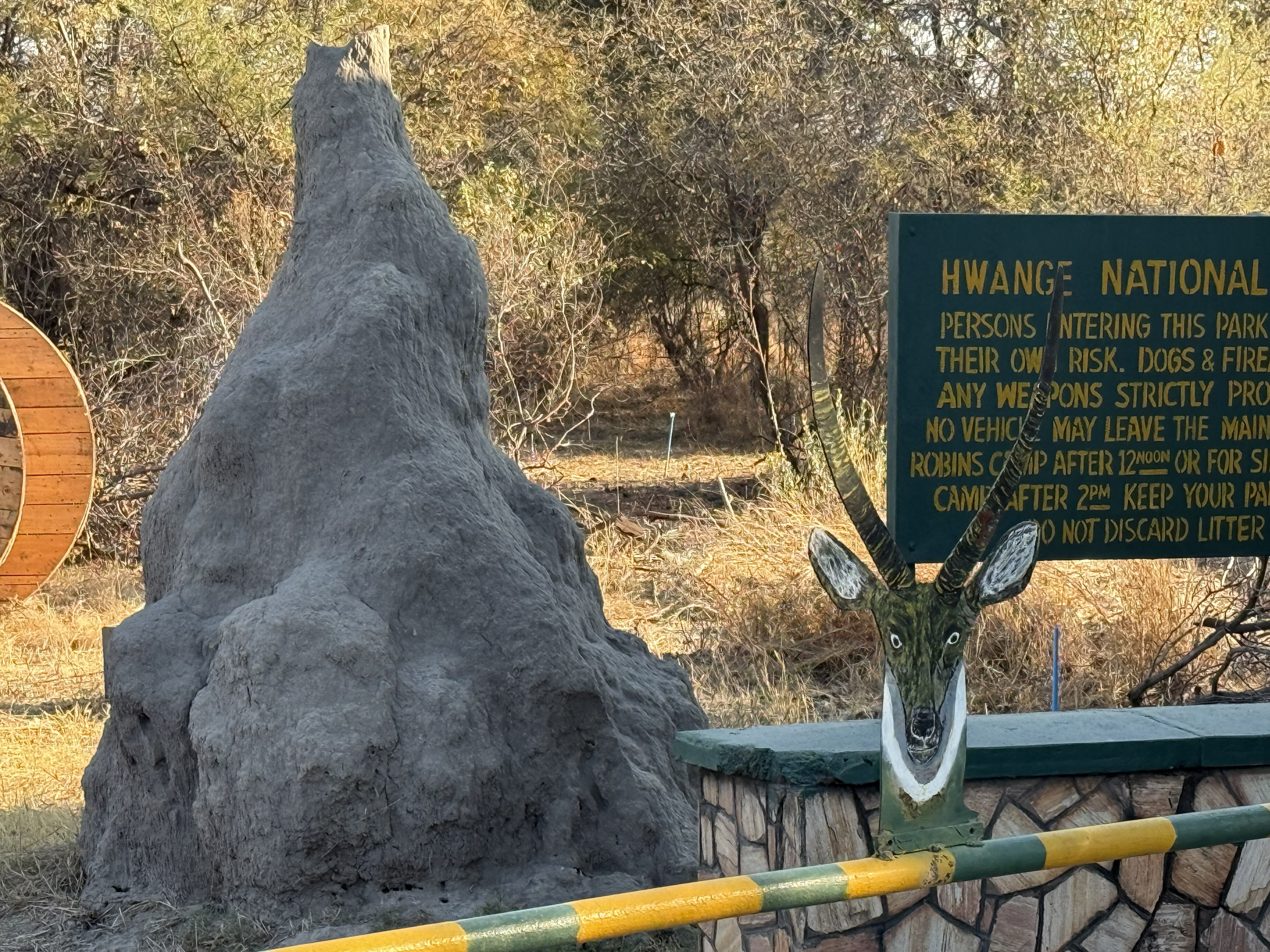
A kudu, ears up, watching us from the grass.A termite mound — and once you notice one, you notice that they are everywhere, whole cities of them, built grain by grain.
The Living and the Dead
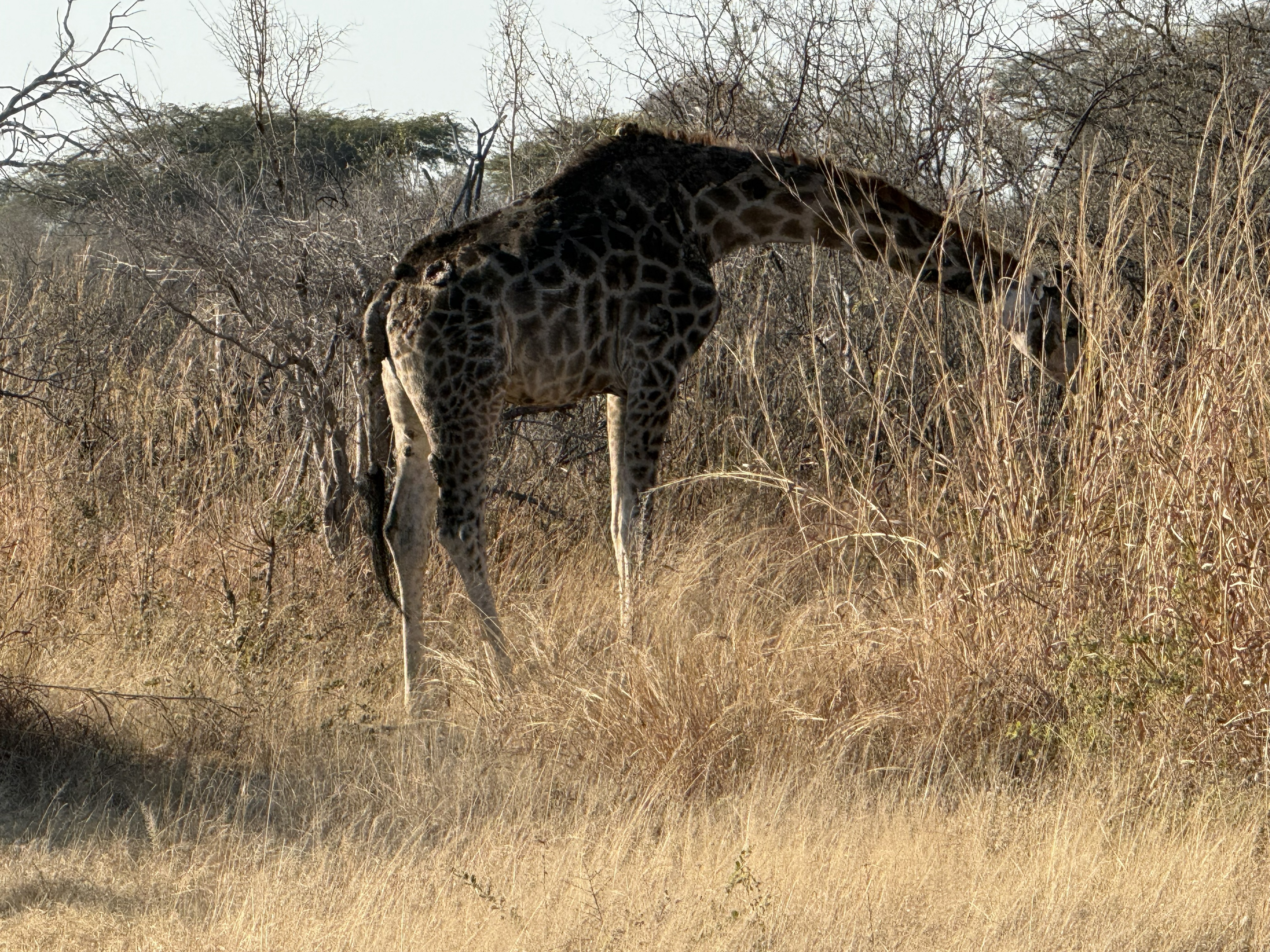
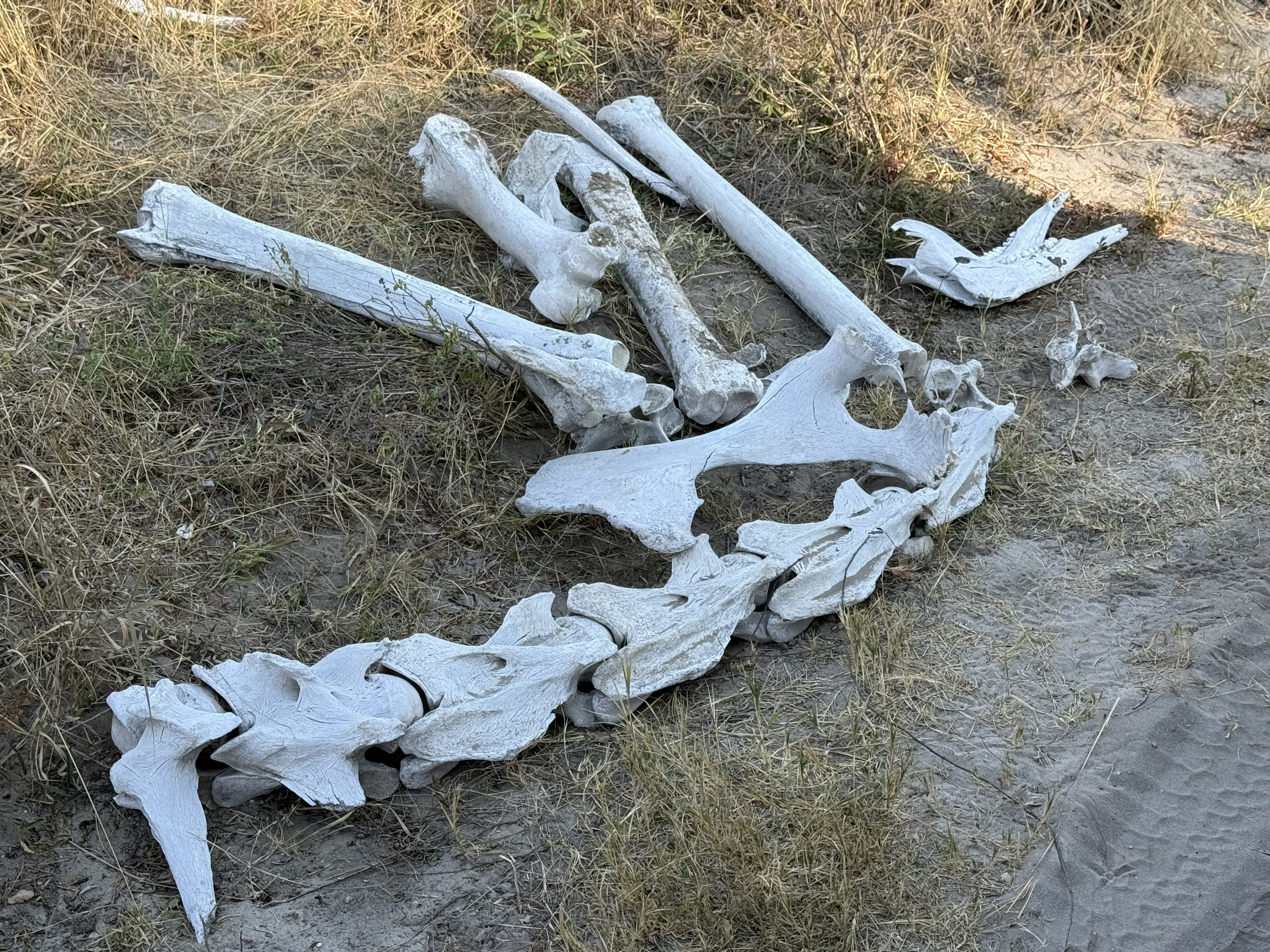
A giraffe, browsing the tree line, entirely alive.And a giraffe's bones, bleached in the grass. The guide said this one had been killed about five years ago.
Two giraffes, close together in the timeline and about as far apart in every other way.
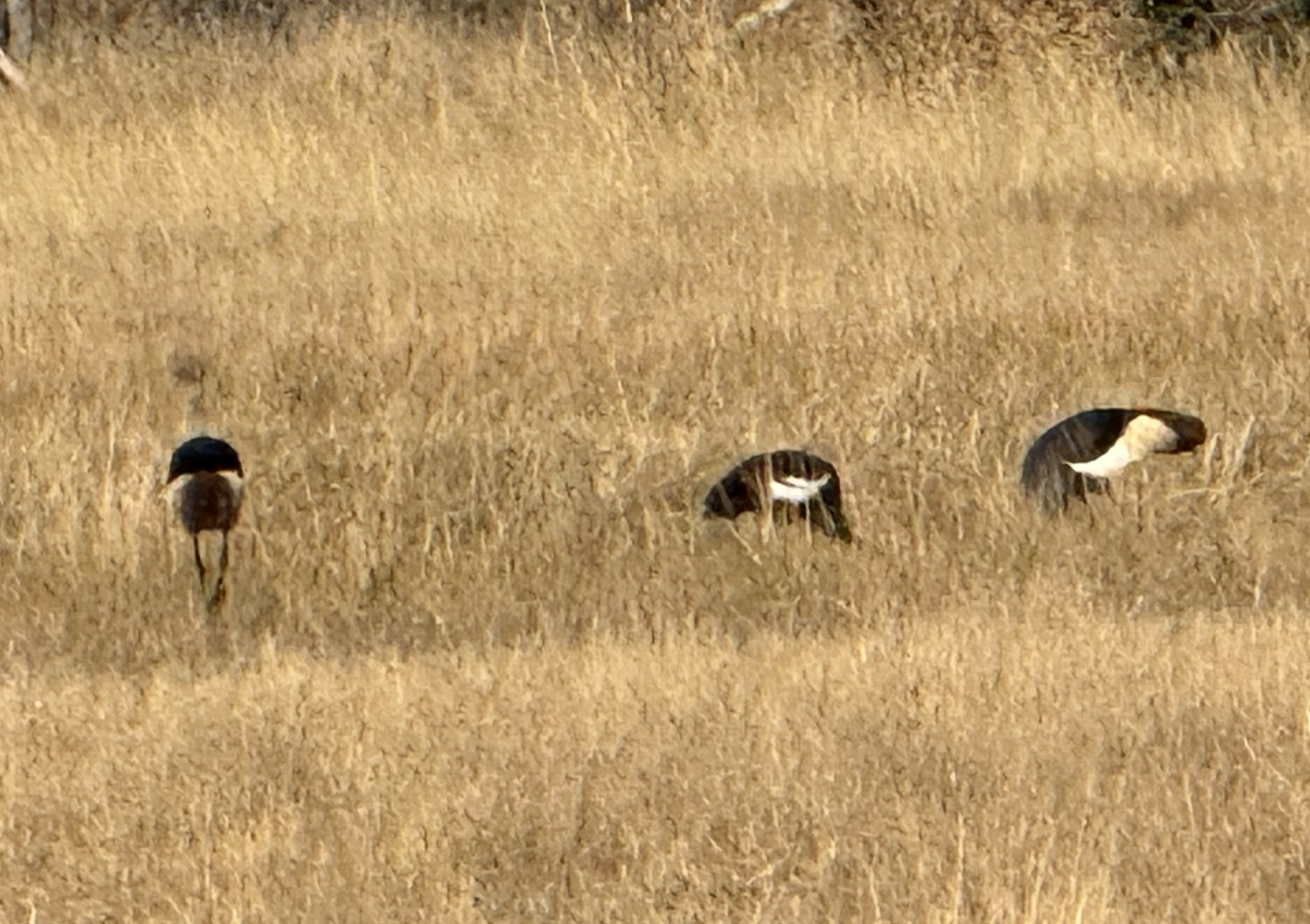
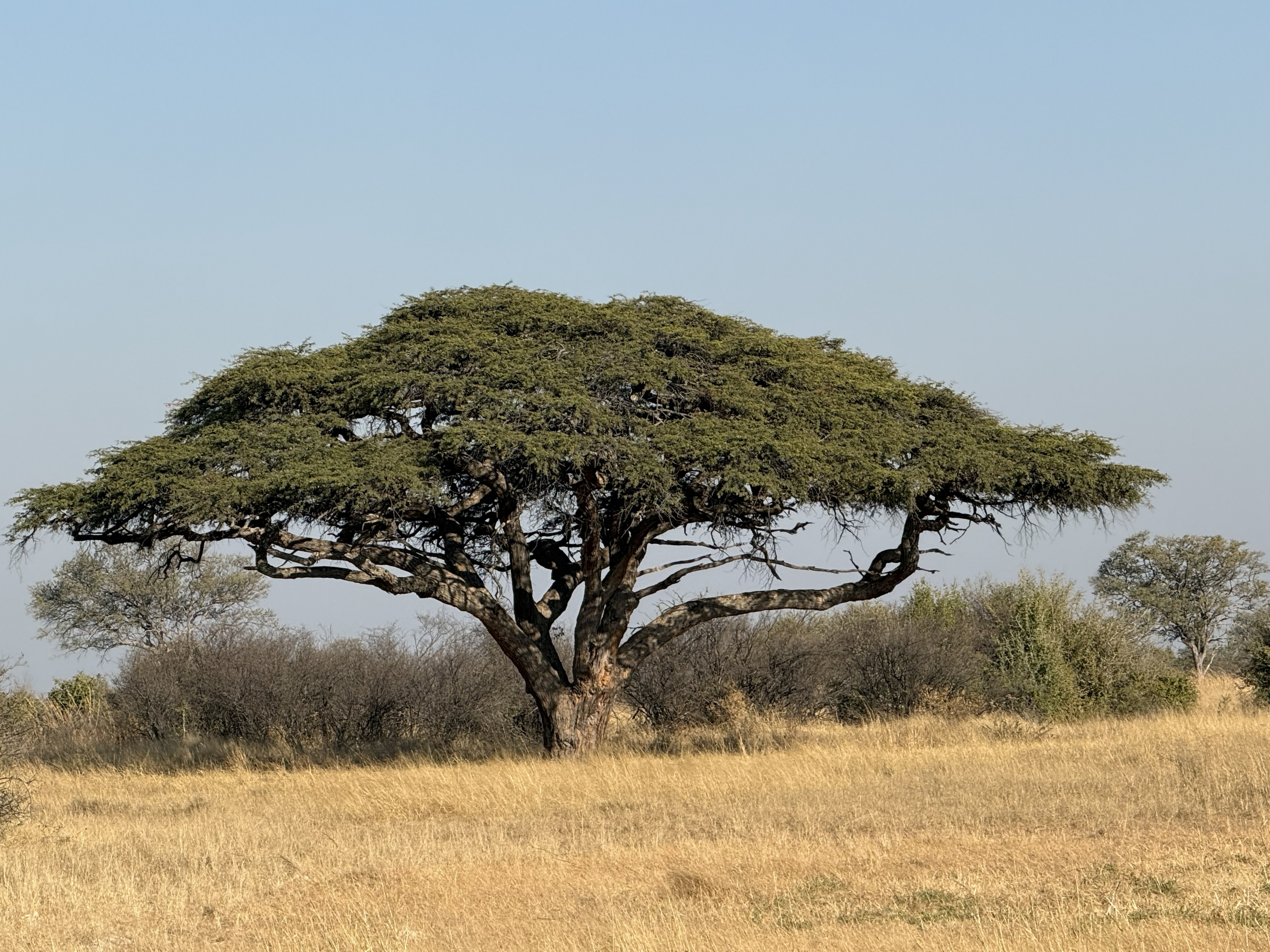
Ostriches, striding through the grass on the far side of the track.And a classic acacia, flat-topped and alone against the sky. The guide said leopards are sometimes found up in this one.
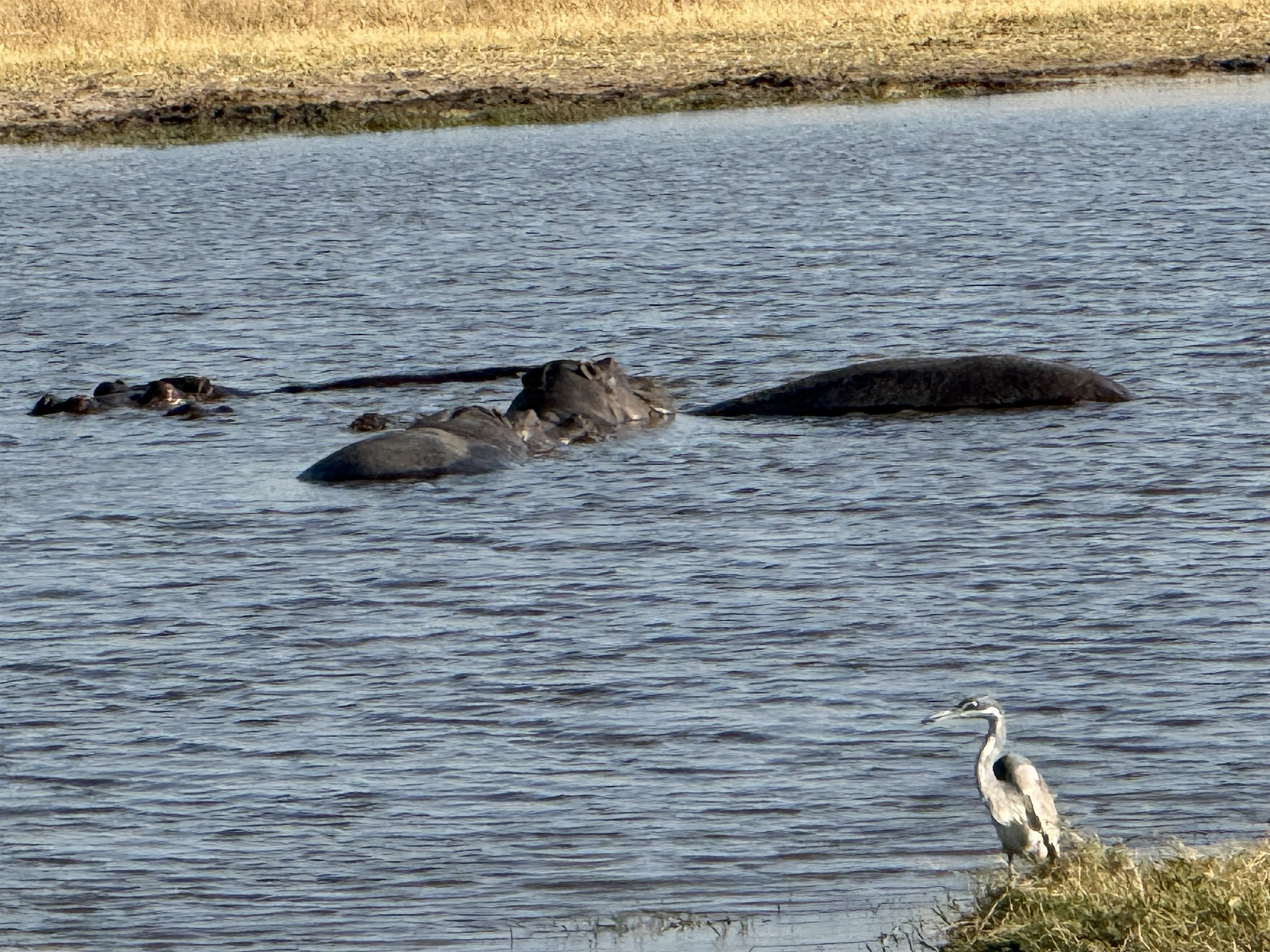
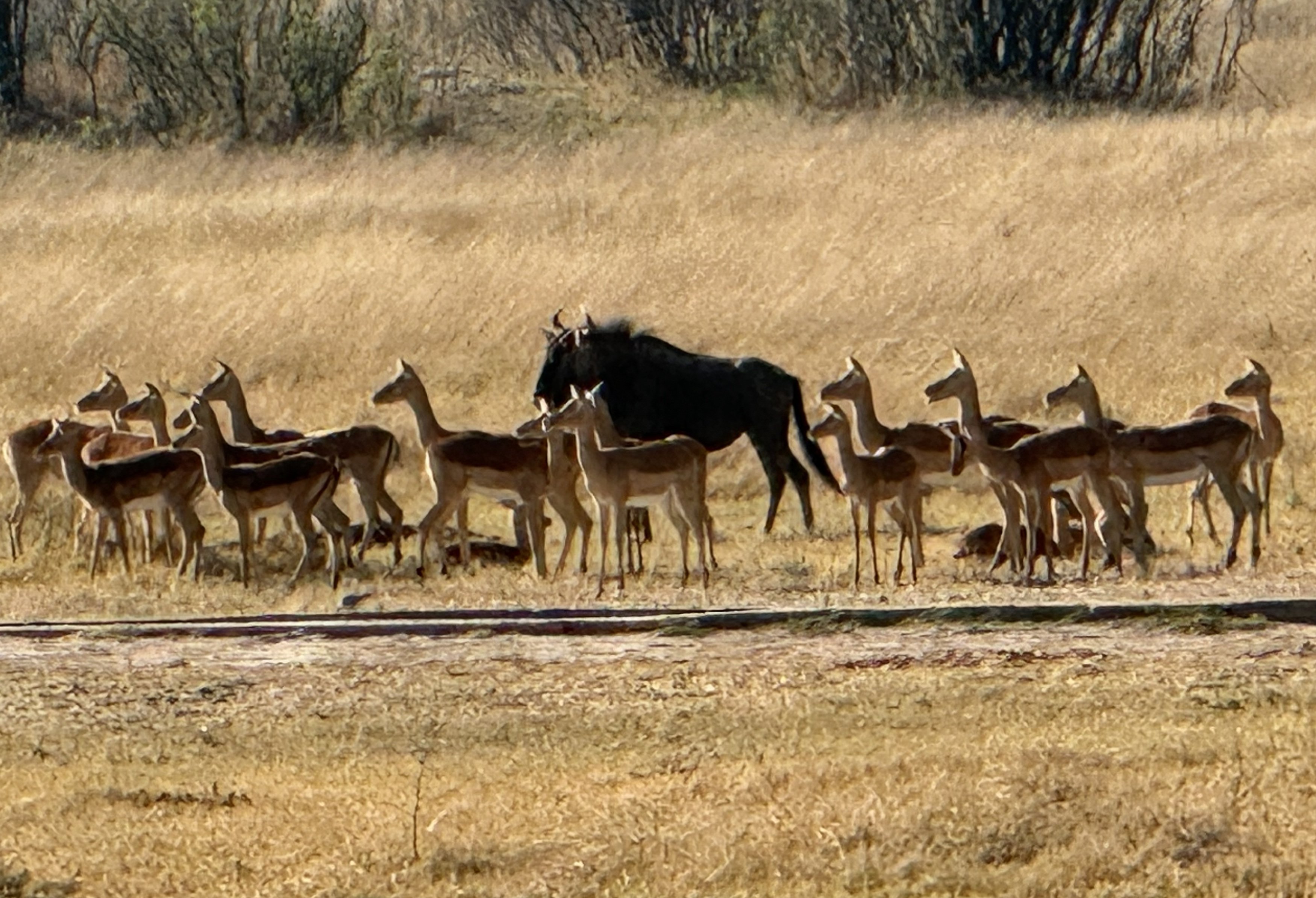
Hippos in the water, a dark raft of them, with a heron standing sentry at the edge.Alert herd of Impala with a lone Wildebeest.
The Cheetah
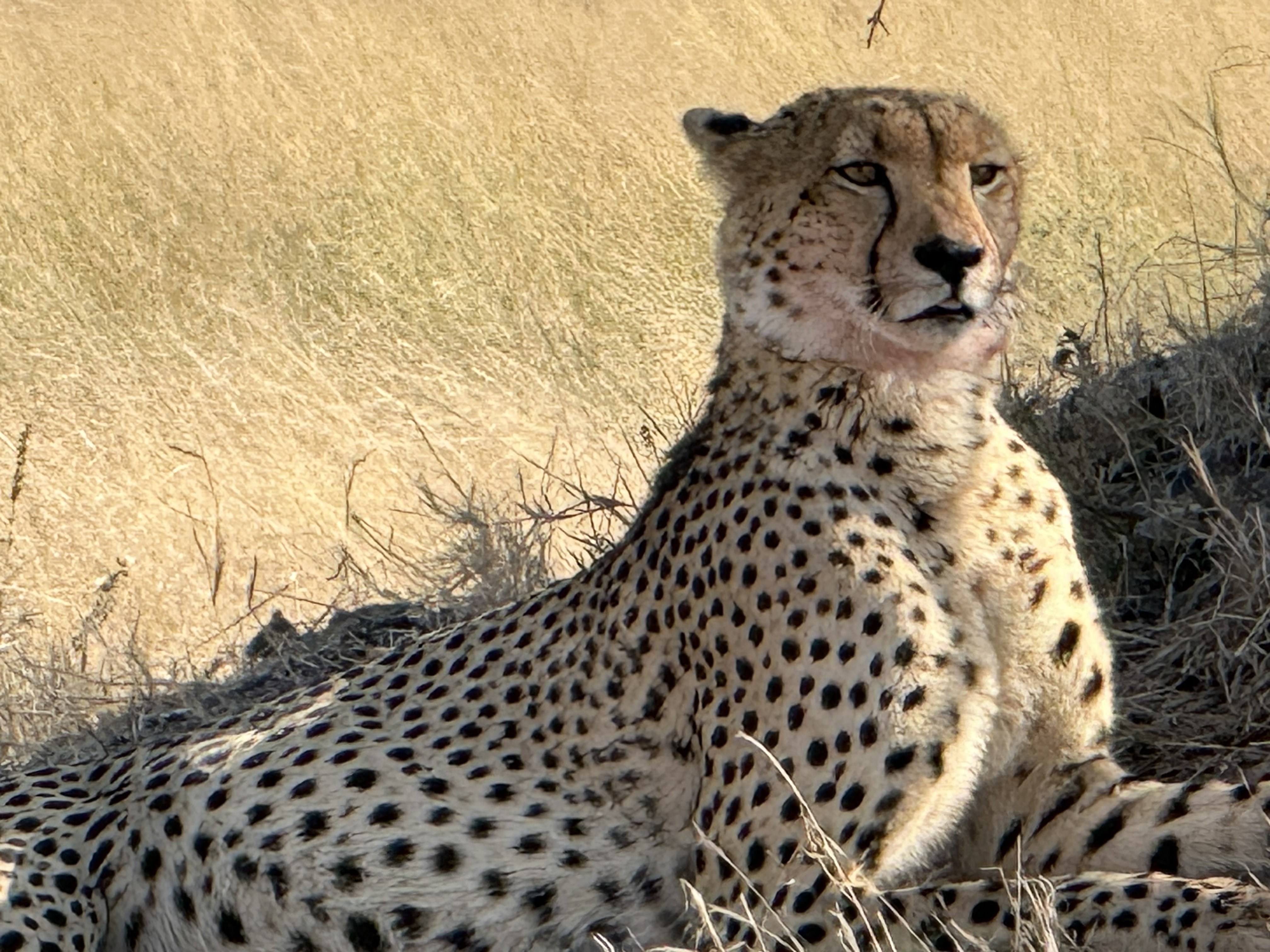
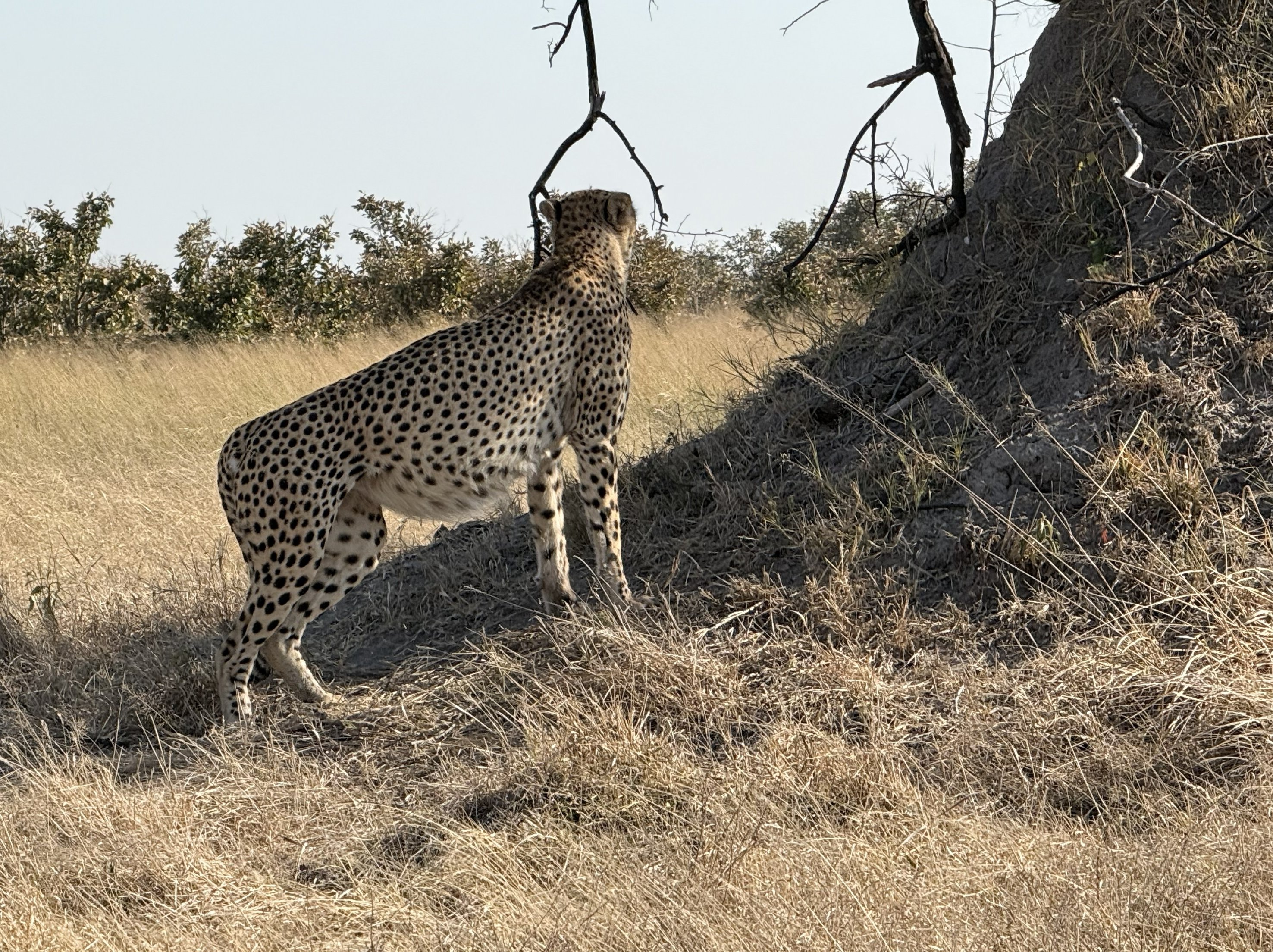
And then, sitting right off the road, in the open, in good light: a cheetah.
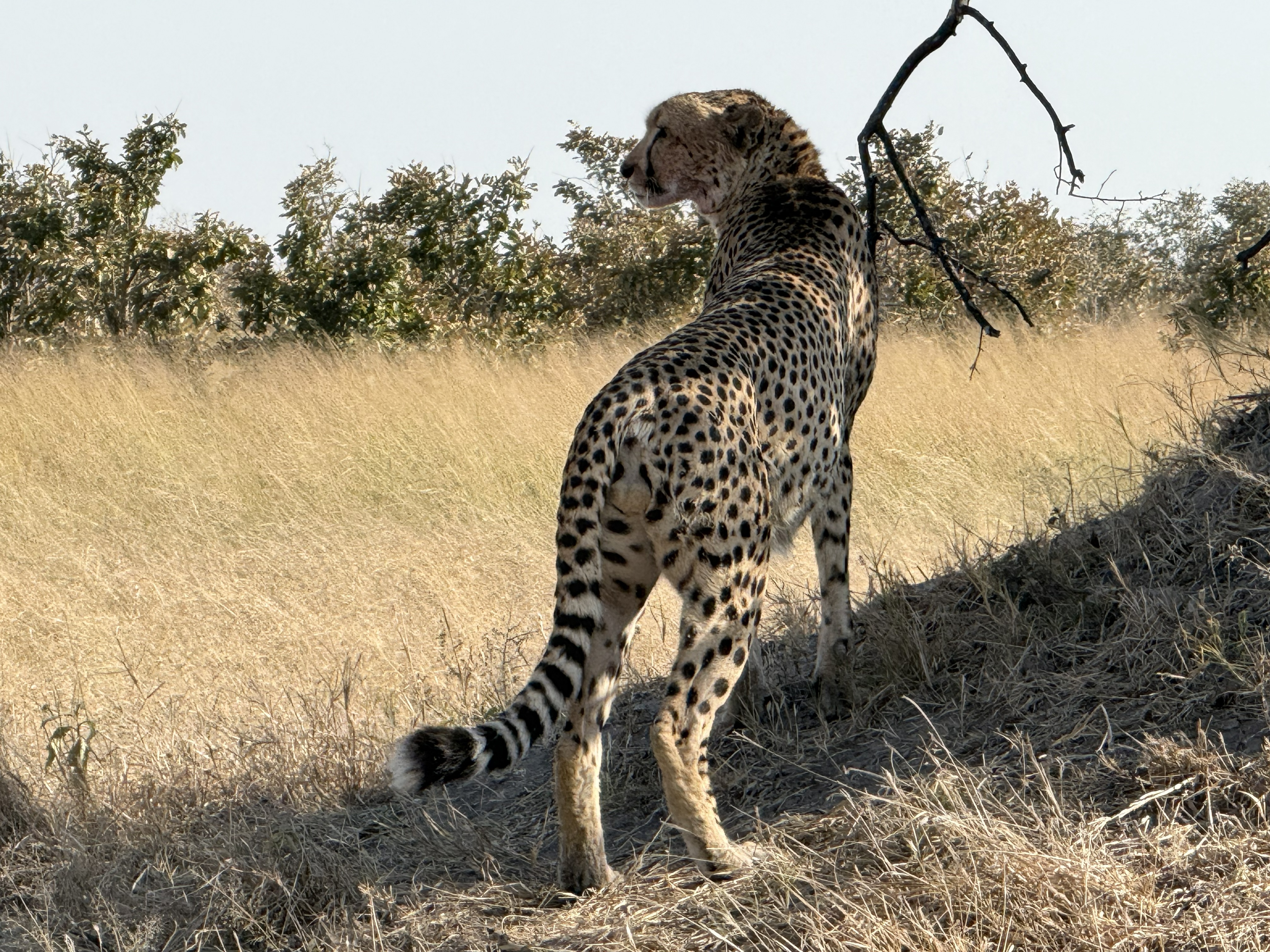
A cheetah is not a leopard and it is not a lion. It is lighter, faster, more delicate — built like a greyhound that has been told it is a cat — and it hunts in daylight, in the open, by running things down, which is why you can actually see one out in the grass in the middle of the morning. But seeing one this close, this calm, this unbothered, is still the kind of luck you do not expect twice.
Sitting up, alert, scanning the grass. Every line of it built for one thing, which is speed.The face. The black “tear lines” down from the eyes are the field mark — and, some say, a glare-cut for hunting in bright sun.
We drove off the road and around into the bush to get a better angle, which the open vehicle and the empty park allowed, and watched it for a long time — until, in its own time, it got up and wandered off into the grass.
Standing. Longer in the leg than you expect, smaller in the body than a leopard, all of it engineered for the sprint.And moving off — but our guide watched exactly where it went, and filed it away.
A Break, and a Second Look
We stopped at a rest area, where the wildlife did not stop for the break.
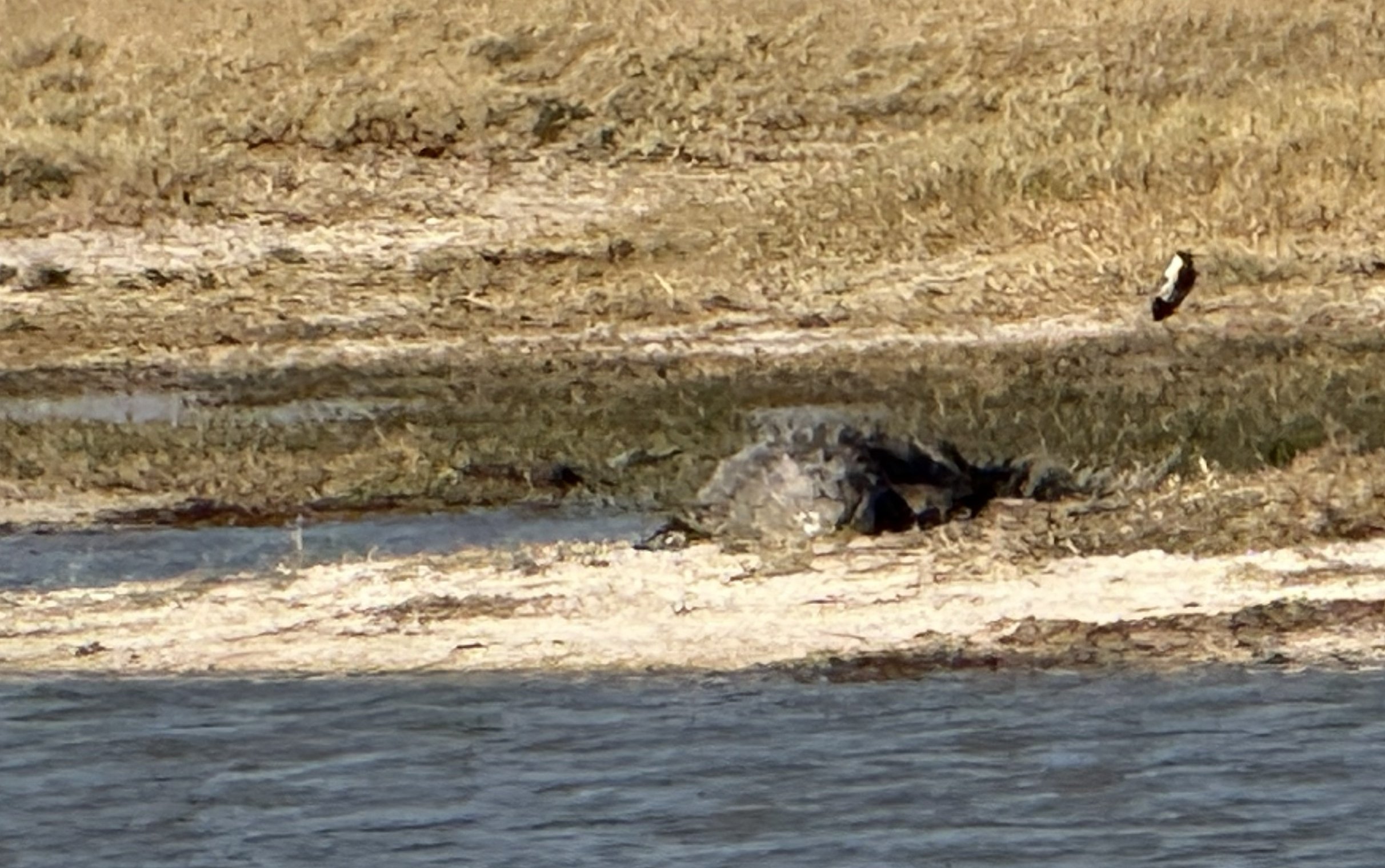
Crocodiles at the water's edge by the rest stop — because of course there were. You do not, at any point in this country, get to relax entirely about the water.
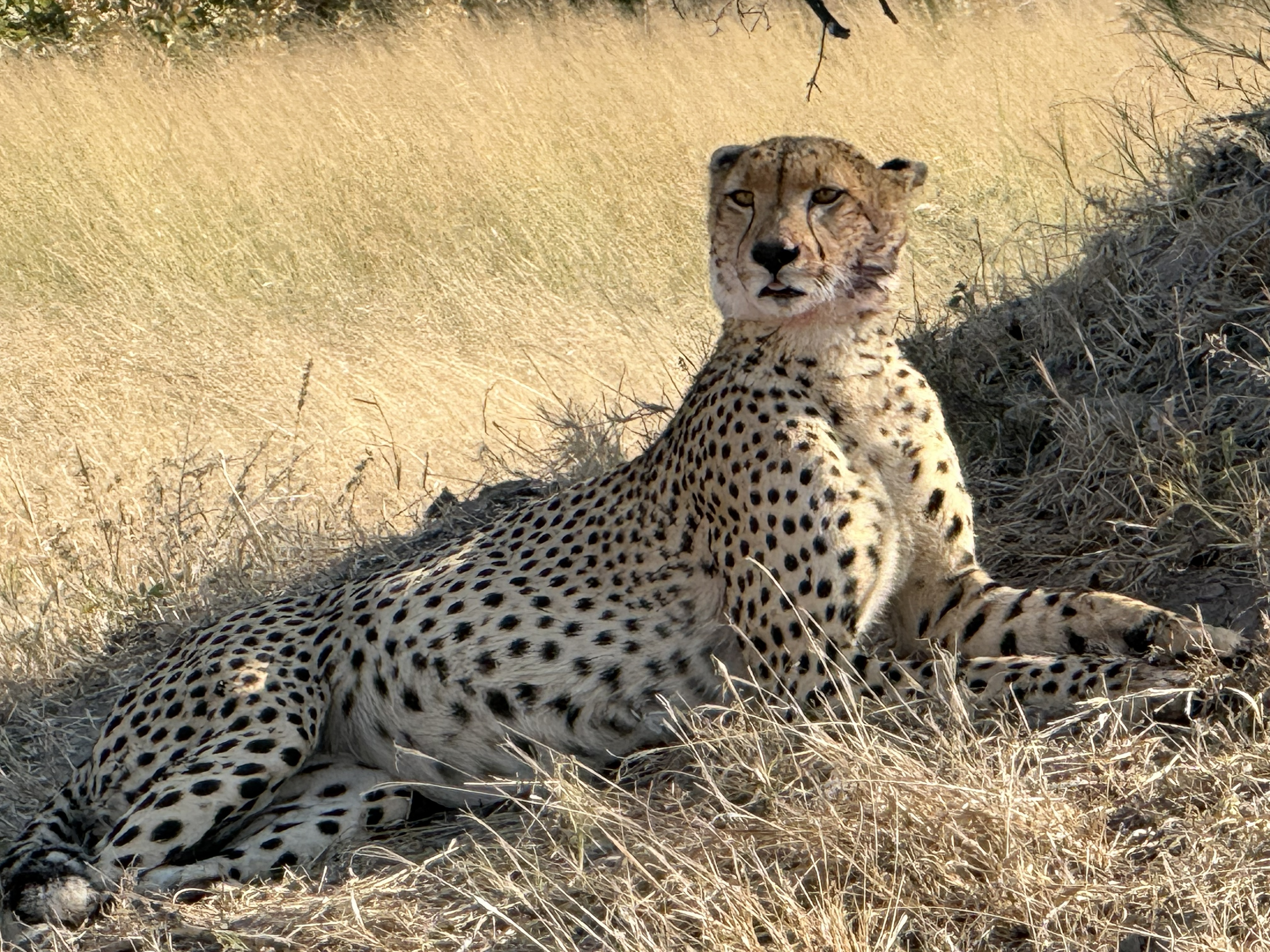
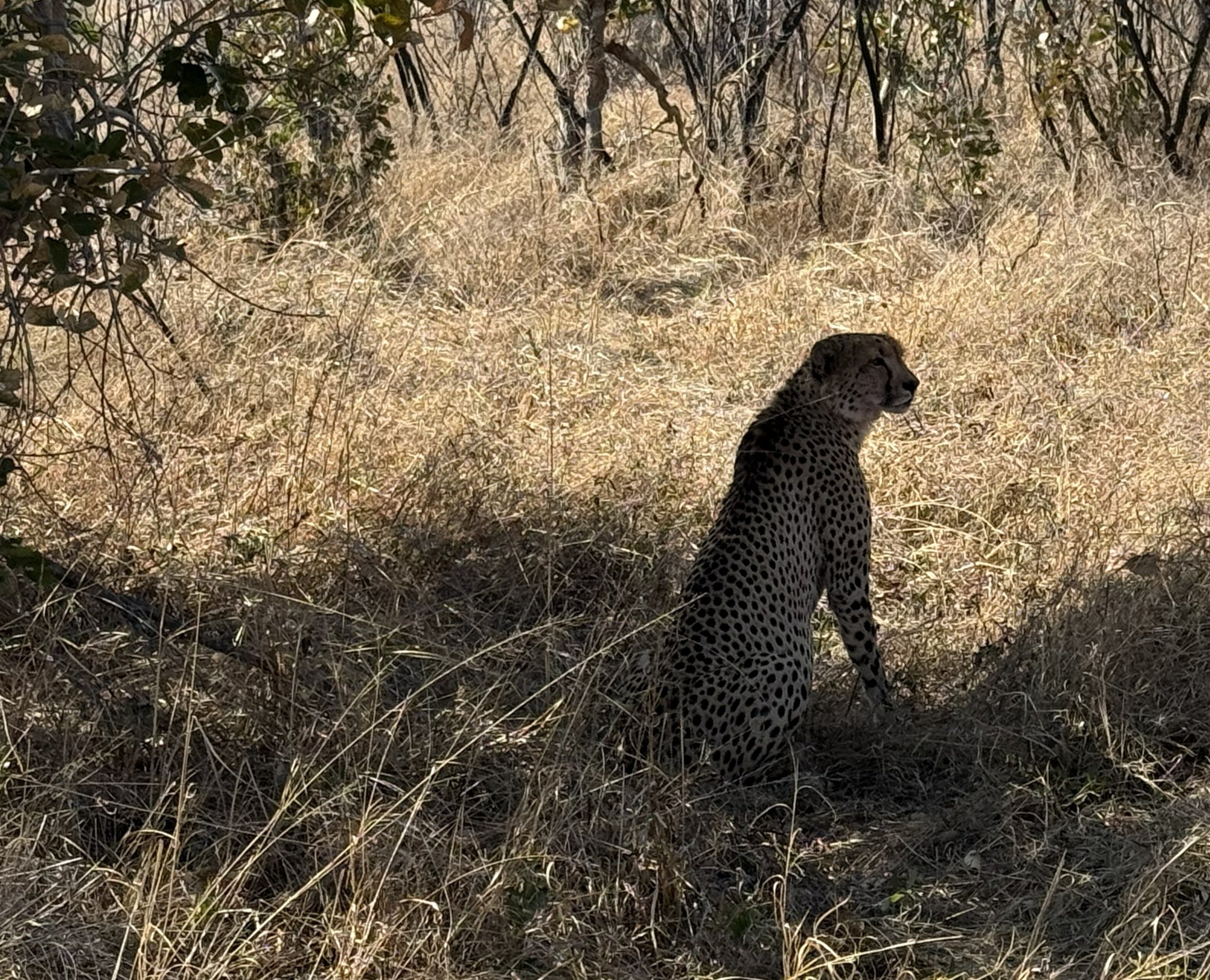
And then the guide did the thing that turned a good sighting into a great one. He remembered where the cheetah had gone, drove us straight back to it, and there it was again — under a tree this time, in the shade, and we got a second, closer, quieter look at an animal most people never see once.
The second view. Same cheetah, new tree, and the distinct sense that our guide was better at this than we had any right to expect.
Giraffe at the Water
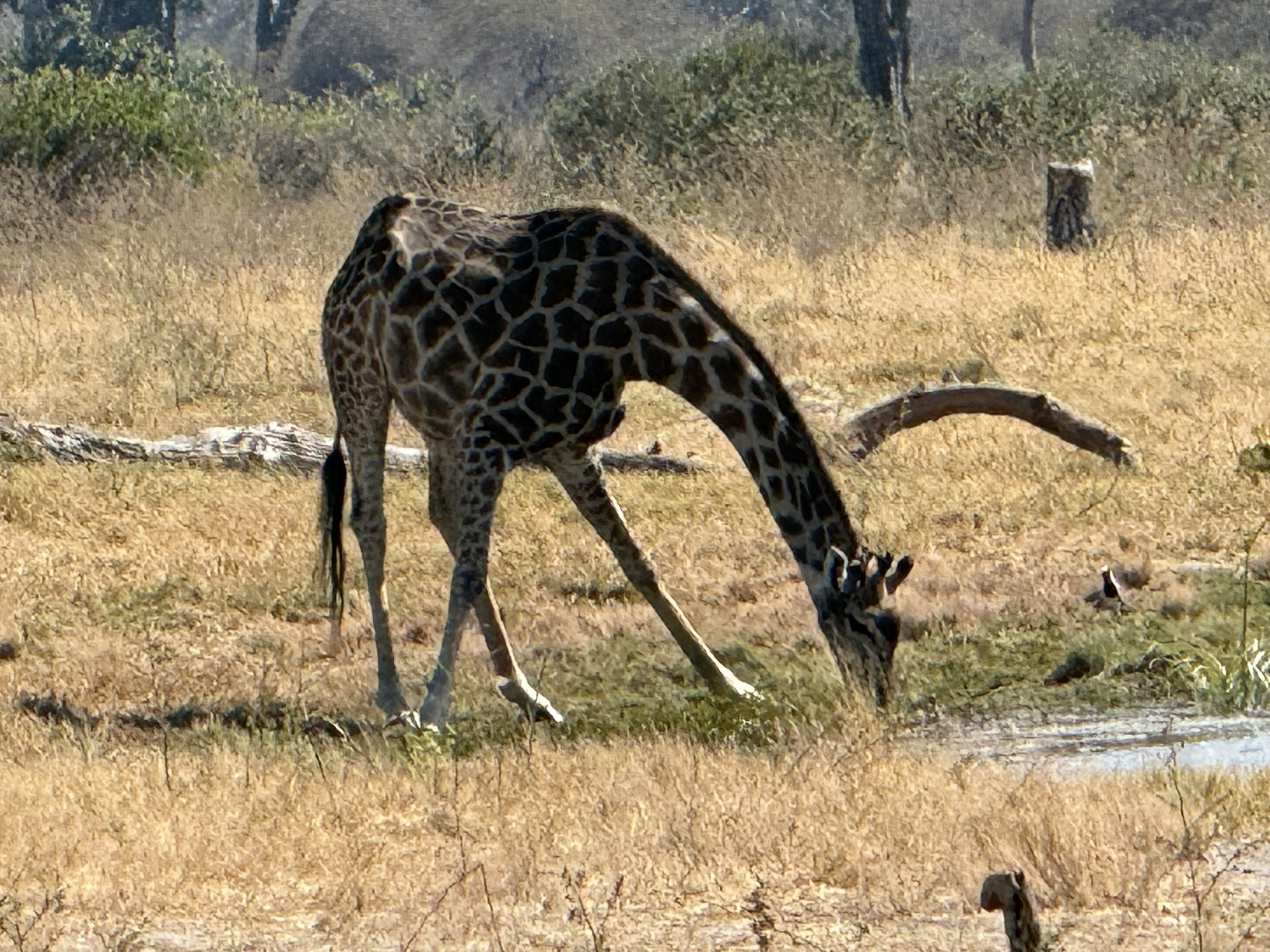
Then, giraffe coming in to drink — which sounds ordinary and is not, because drinking is the hardest and most dangerous thing a giraffe does. To reach the water a giraffe has to splay its front legs absurdly wide and fold itself down, which takes it a long, awkward, vulnerable moment to do and a longer one to undo. They hate it. They put it off. They approach the water and think better of it and wander away and come back. We waited a long time, and finally one committed.
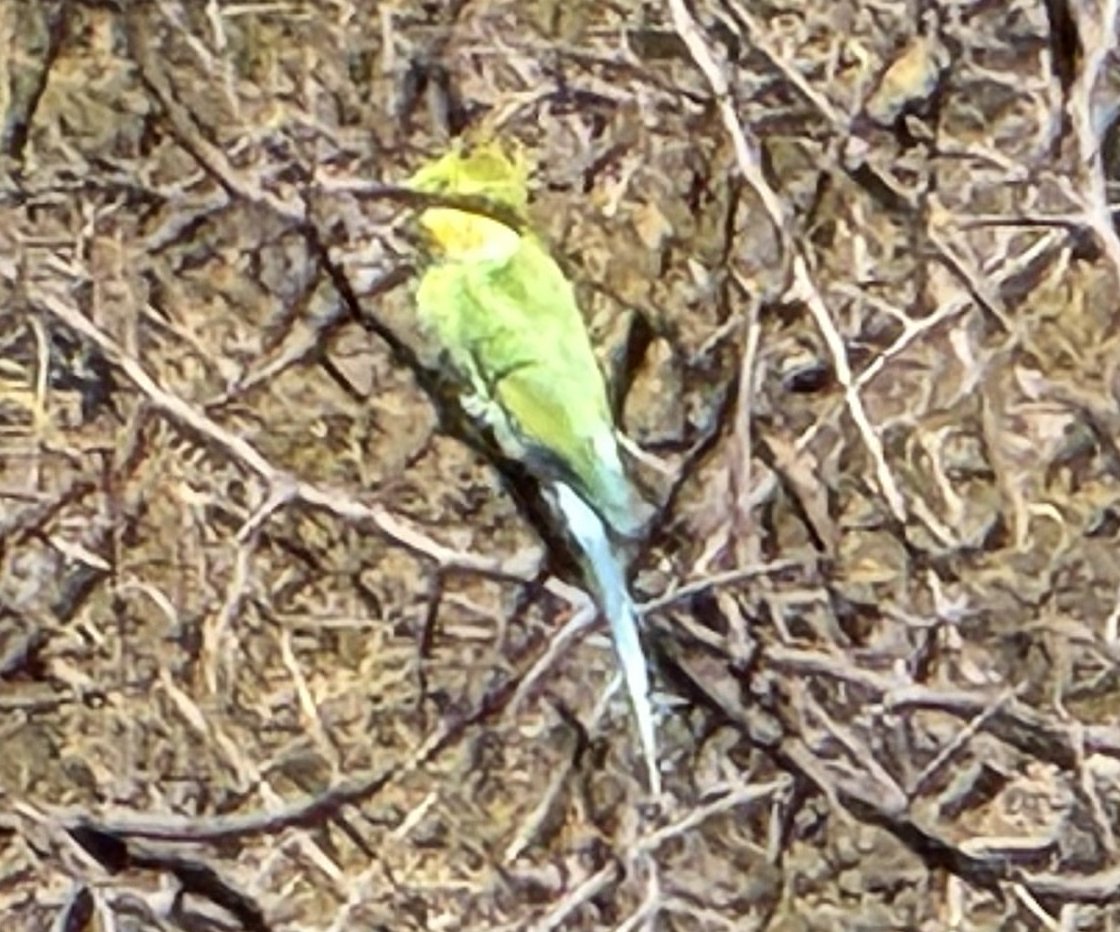
A giraffe, finally down and drinking — legs splayed, neck plunging, the whole ungainly, defenseless miracle of it. This took real patience to photograph, most of it the giraffe's.A little bee-eater, green and impossibly bright, in the thornbush — the kind of small vivid thing you only notice once the big animals have stopped happening.
The Water Platform
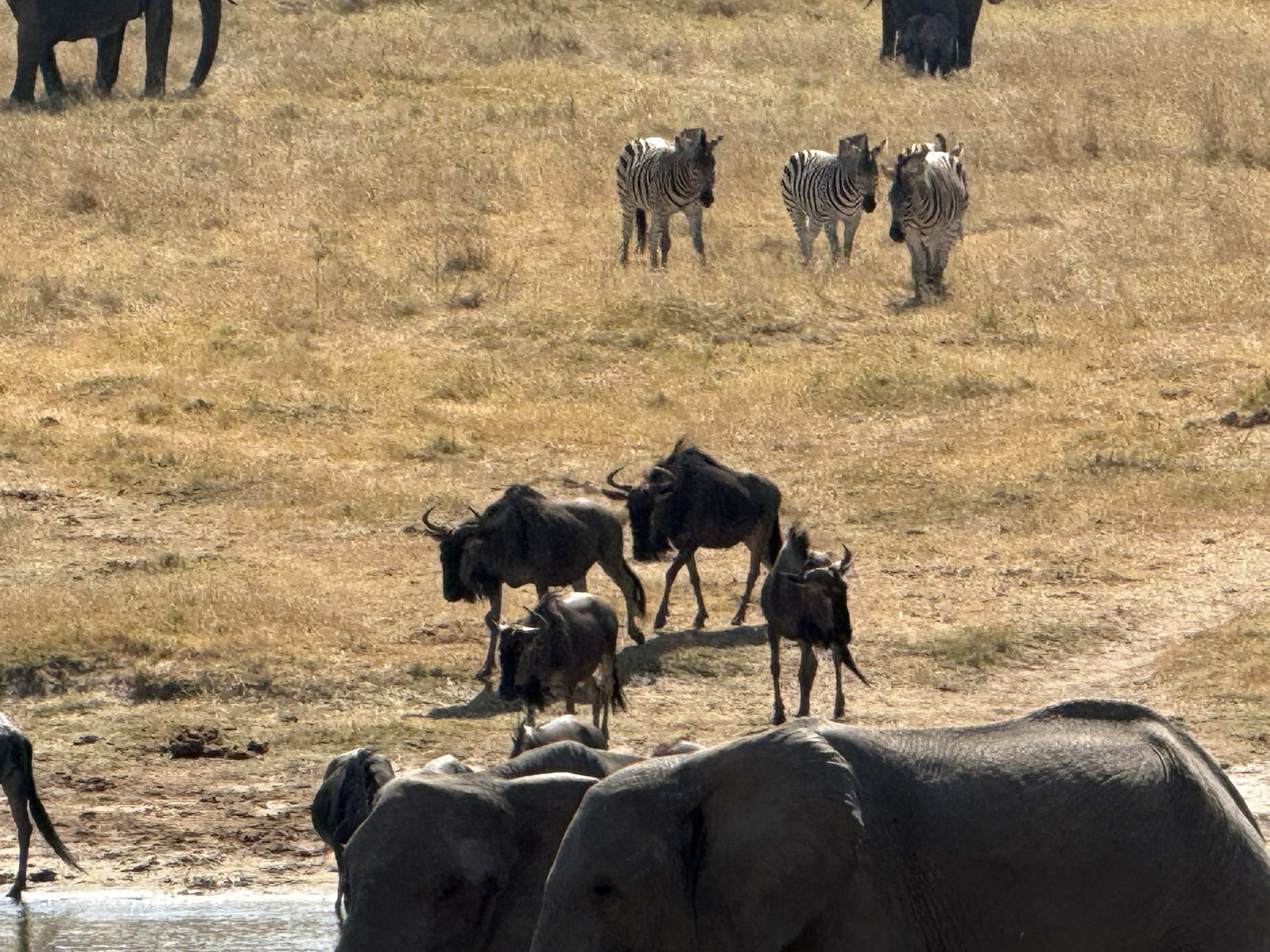
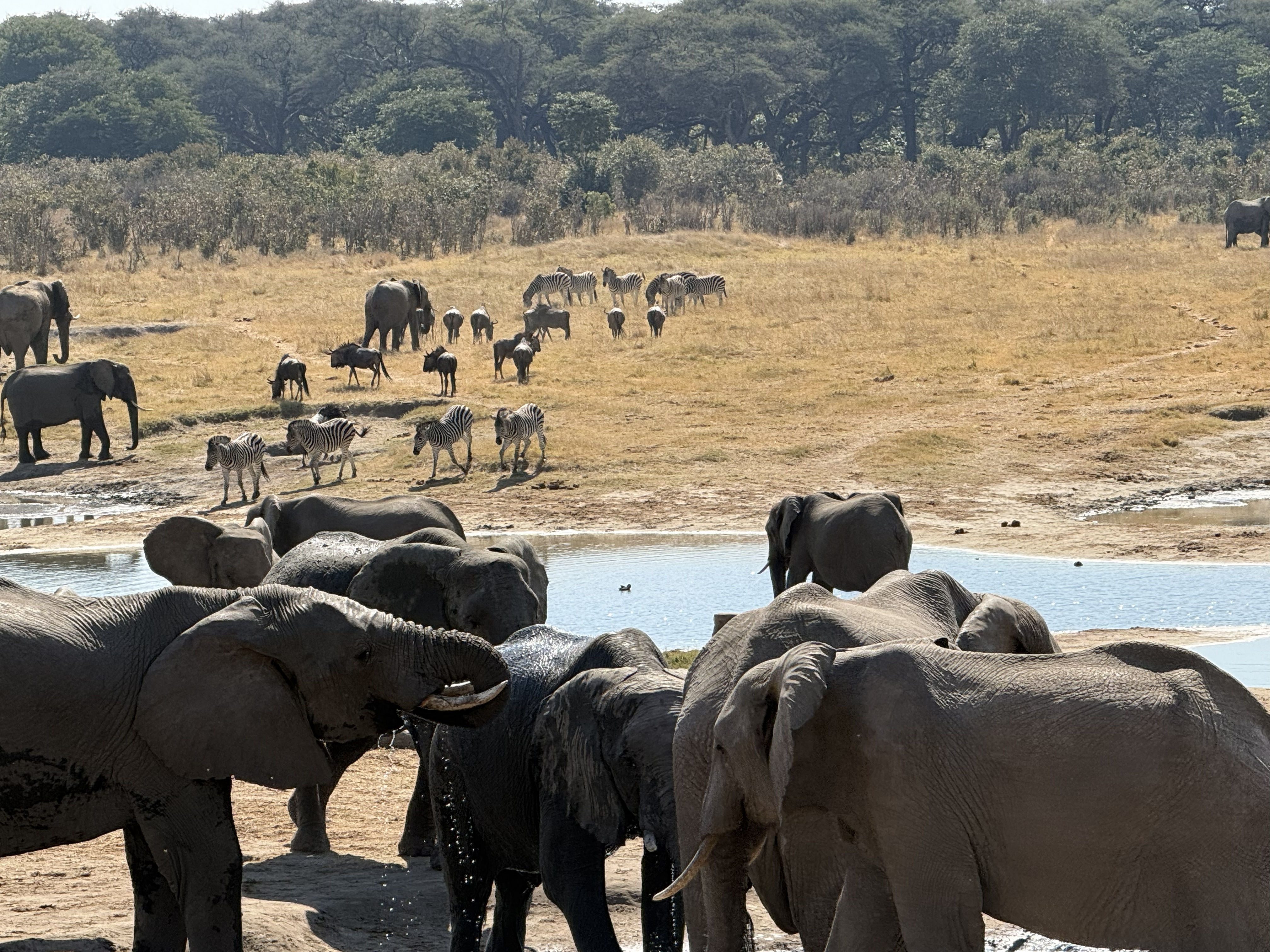
Then something I did not expect at all: a place where they pump fresh water for the elephants, with a viewing platform beside it, and dozens of animals gathered in one place to drink. Lazarus — our guide again today, as he had been the day before — explained the order of operations. The elephants go first. The elephants always go first. They will not let anything else near the water until they have drunk their fill, and everyone else knows it, so everyone else waits. And we watched them wait. Off to one side stood a group of zebra, hanging back, wanting the water and not daring to take it, for a long time. Then a herd of wildebeest arrived, and the wildebeest — either braver or simply less bothered — walked shakily right past the zebra and straight down toward the water, no drama, no permission asked.
The wildebeest arriving: elephants already at the water in front, the wildebeest passing zebras and coming down through the middle. The zebra finally working up their courage to follow.
And once the wildebeest had done it and not been punished for it, the zebra finally worked up the nerve to follow. No fights. Just a slow, careful negotiation of who goes when, refereed by nobody, understood by everybody.
A little later, the standoff resolved — elephants, zebra, and wildebeest all sharing the one reliable water in a dry season, the courage having gone around at last.
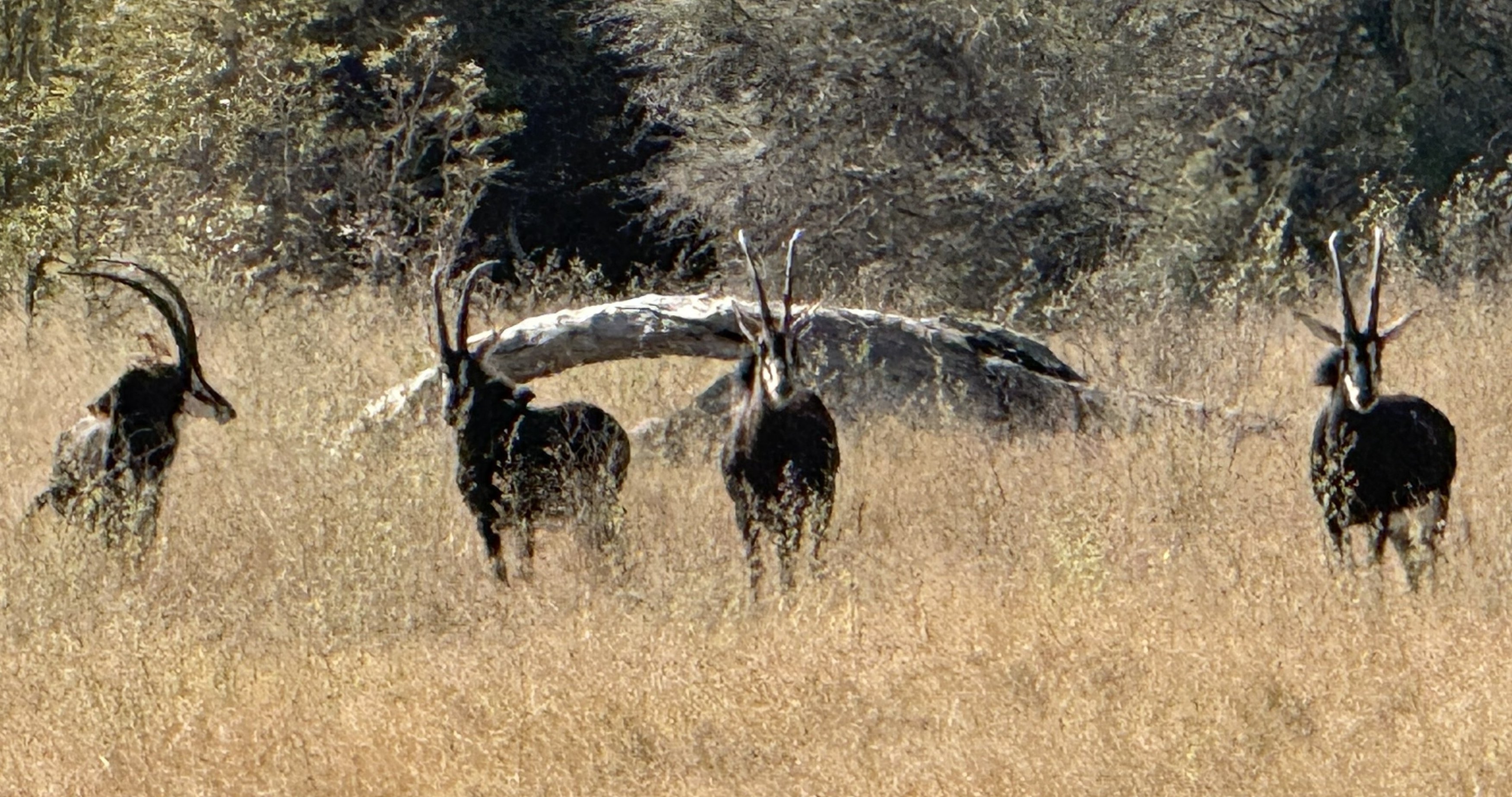
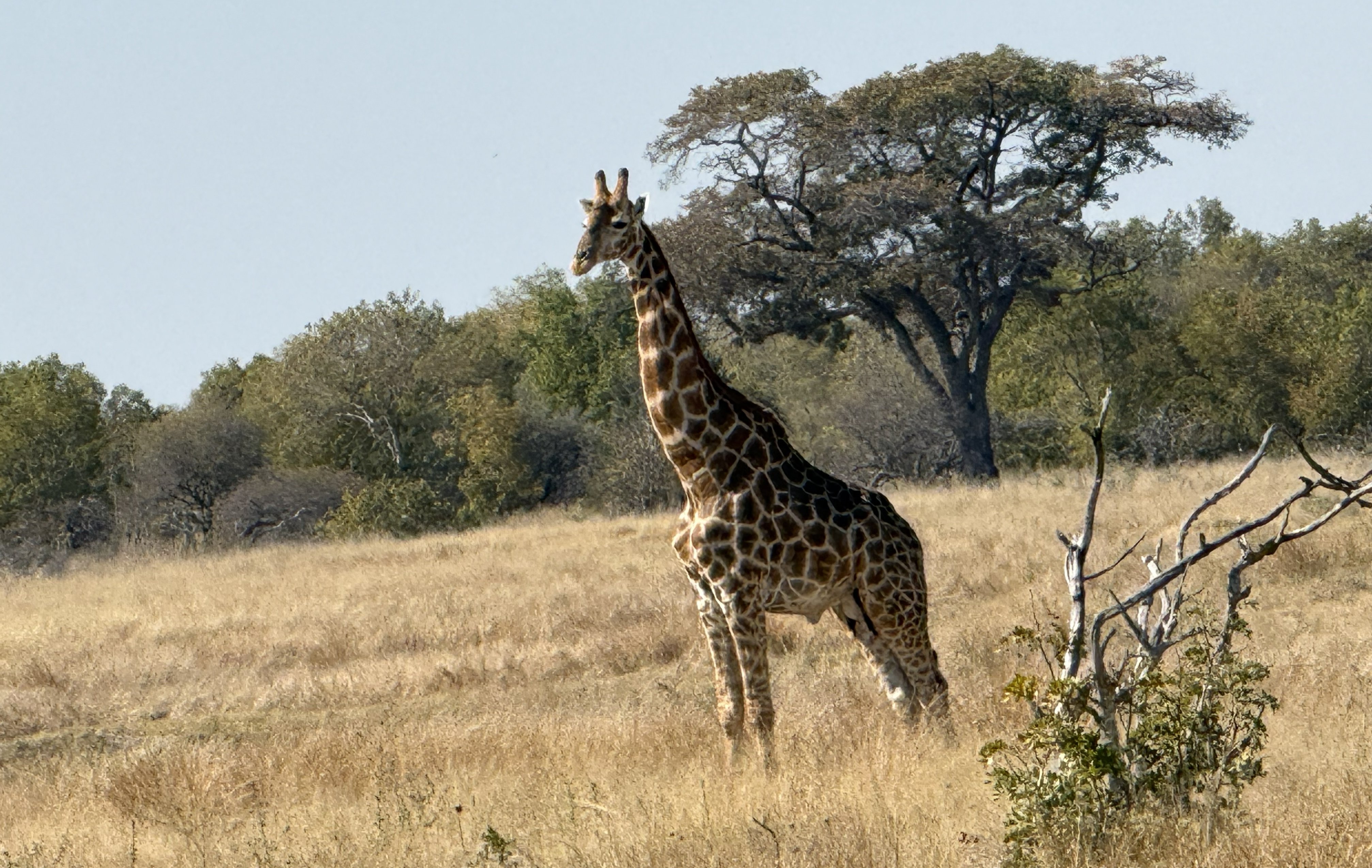
A sable antelope — dark, muscular, with those long swept-back horns curving like scimitars. One of the most striking antelope in Africa and not an everyday sighting.A giraffe against the acacias, in the flat afternoon light.
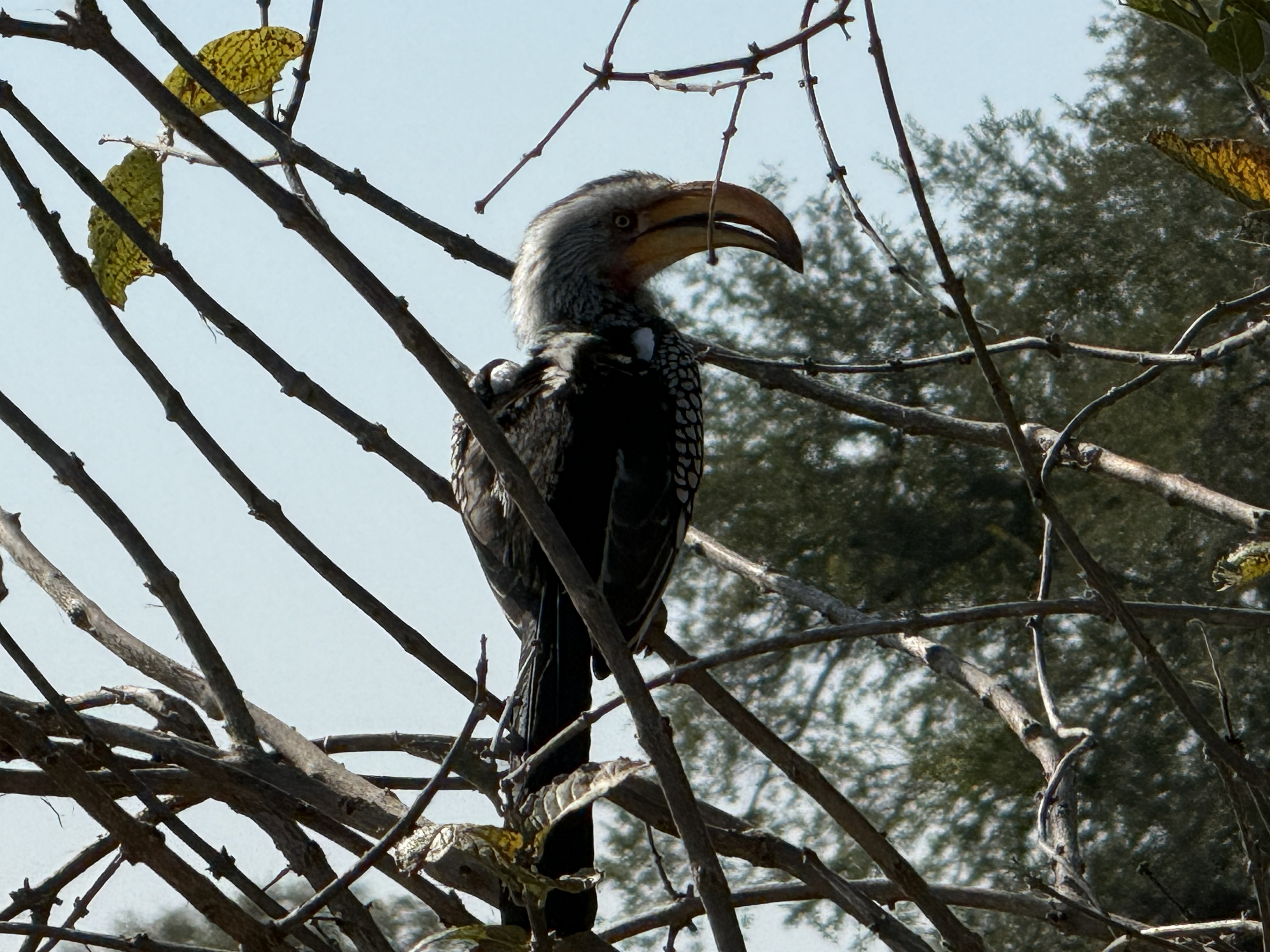
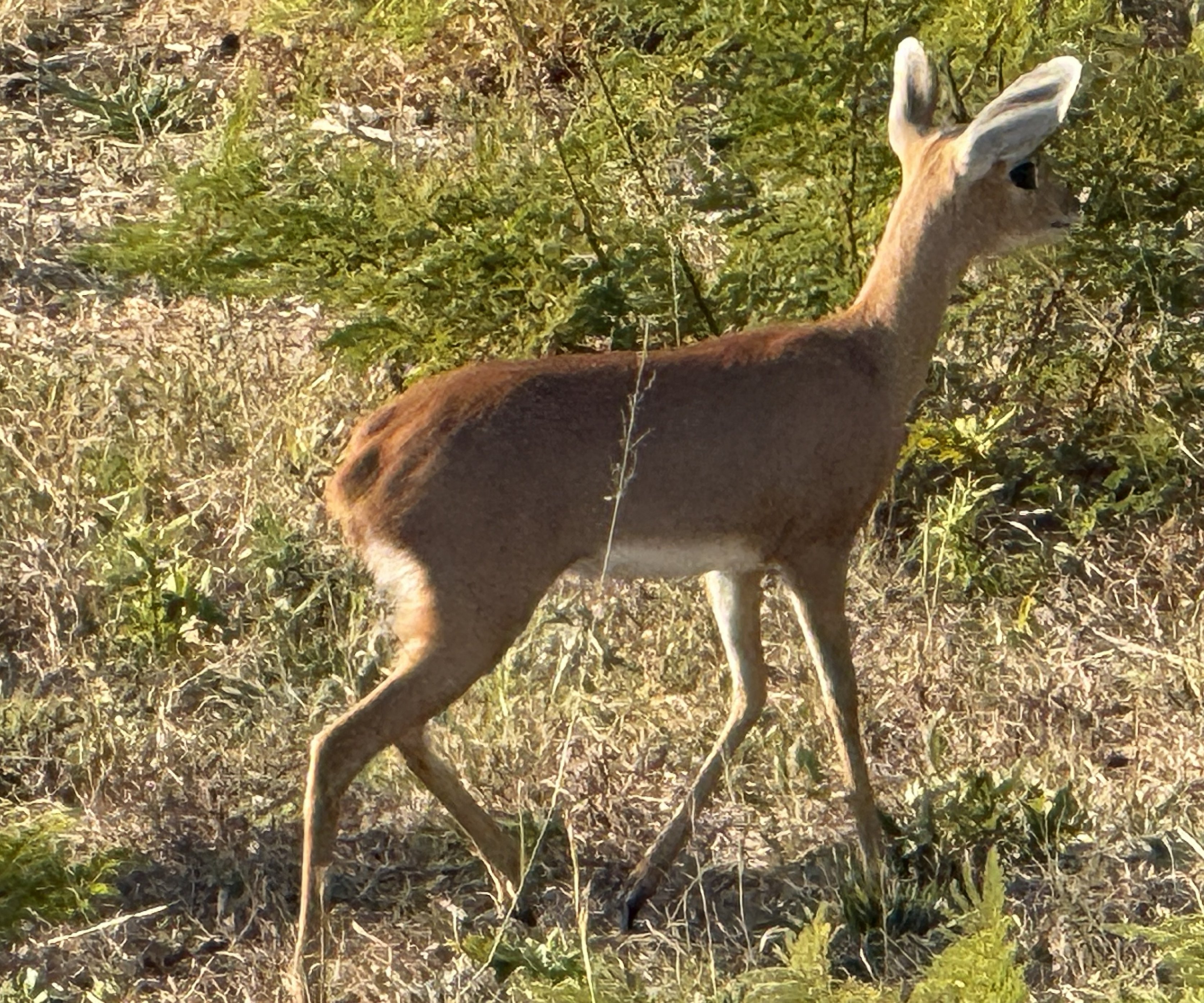
A hornbill, close, in the thorn — the same absurd beak we had been seeing since Kruger.And the little one, one more time. Steenbok. Alone. It is always alone, and by now it felt less like a fact about the species and more like a personality.
Baboons at the Window
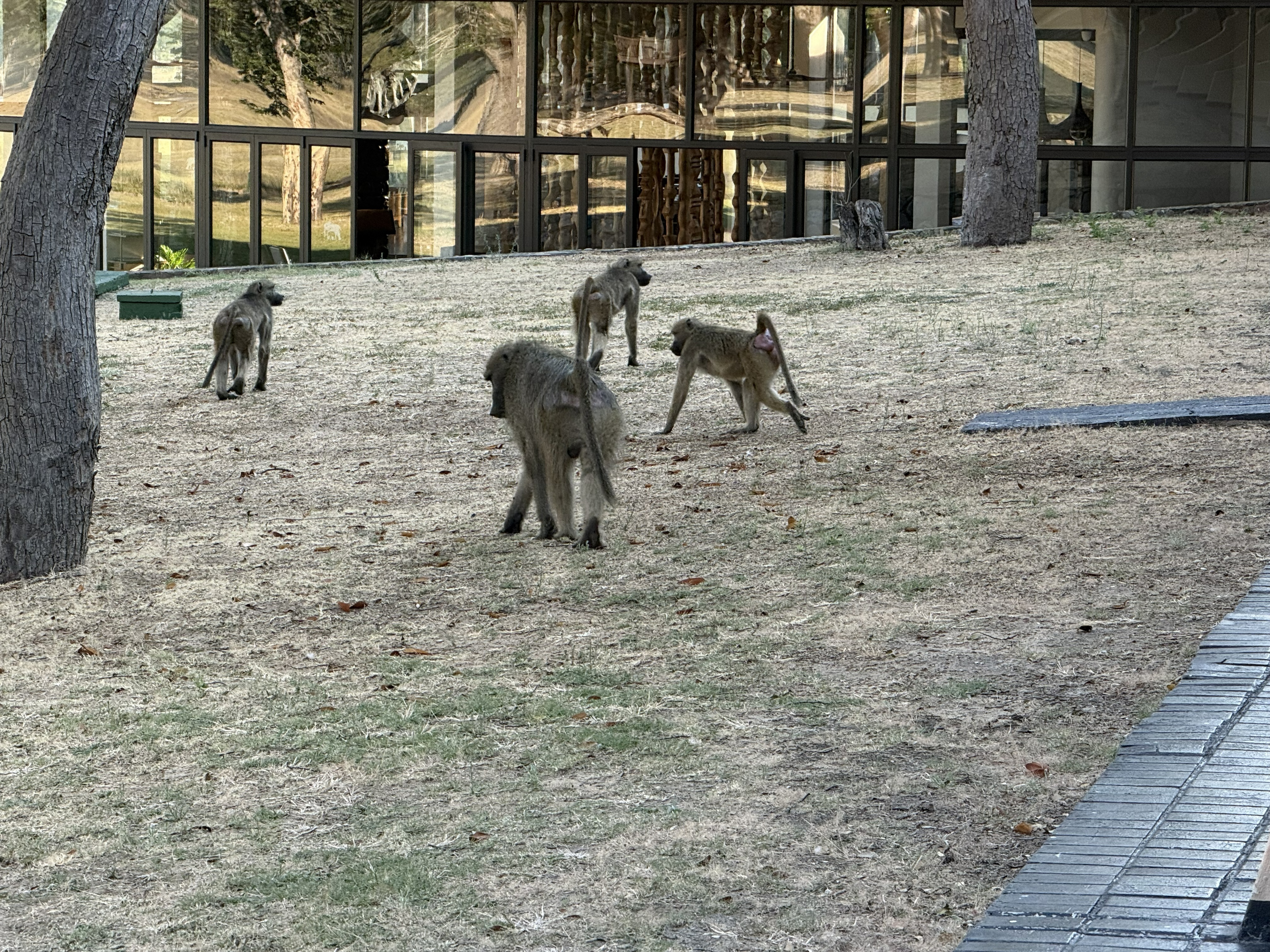
We got back to the lodge and there were baboons outside my room.
Baboons on the lawn outside my window — until the lodge staff came and chased them off, which they do, because a baboon that gets comfortable around people becomes a baboon that goes through your luggage.
One Still Missing
It was, by any sane measure, an extraordinary day: sunrise zebra, a full moon, buffalo herds, a giraffe skeleton five years dead, a sable antelope, giraffe drinking, an elephant water platform, and — twice — a cheetah in the open. And still no painted dogs. Dylan was not worried. There was time, he said; there were more parks, more drives, Botswana still ahead. I believed him about seventy percent. I had come a very long way for one specific animal, and it was the one animal that would not appear, and a cheetah — a magnificent, once-in-a-trip cheetah — is a strange thing to describe as a consolation prize, and yet.